part one
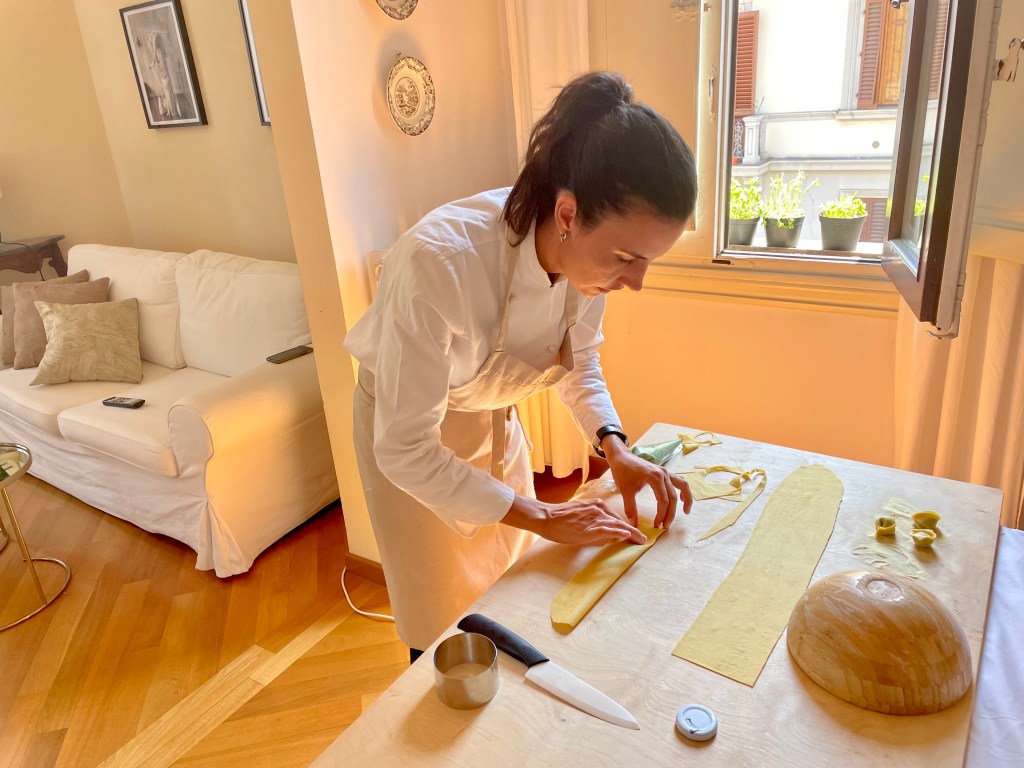
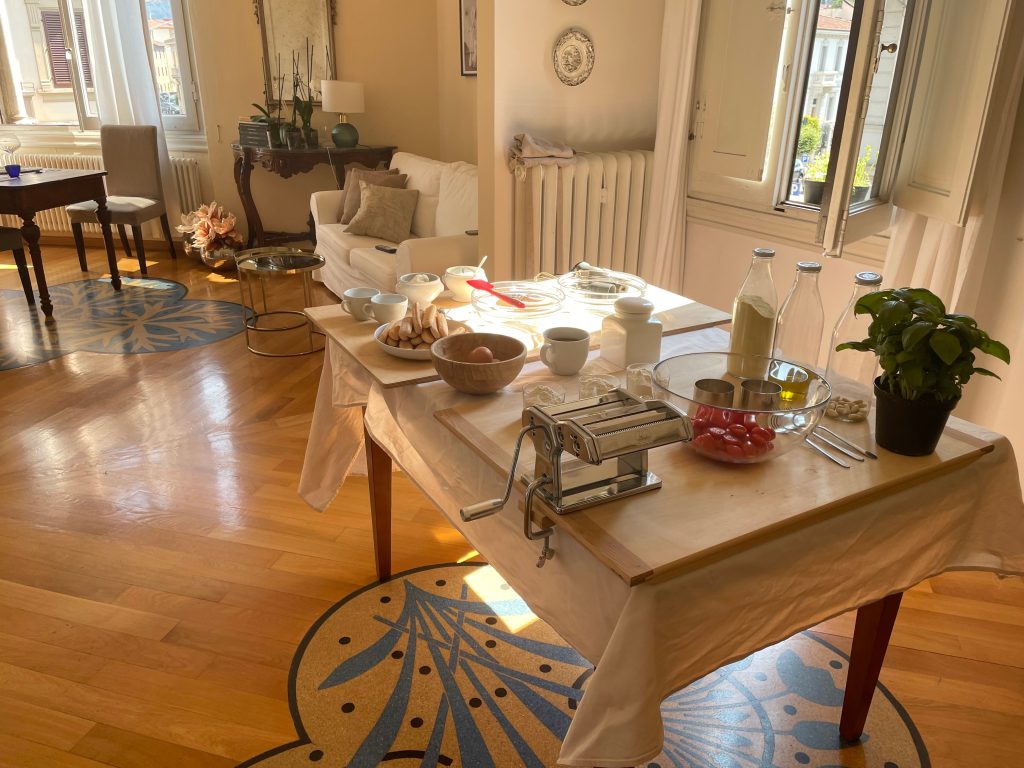
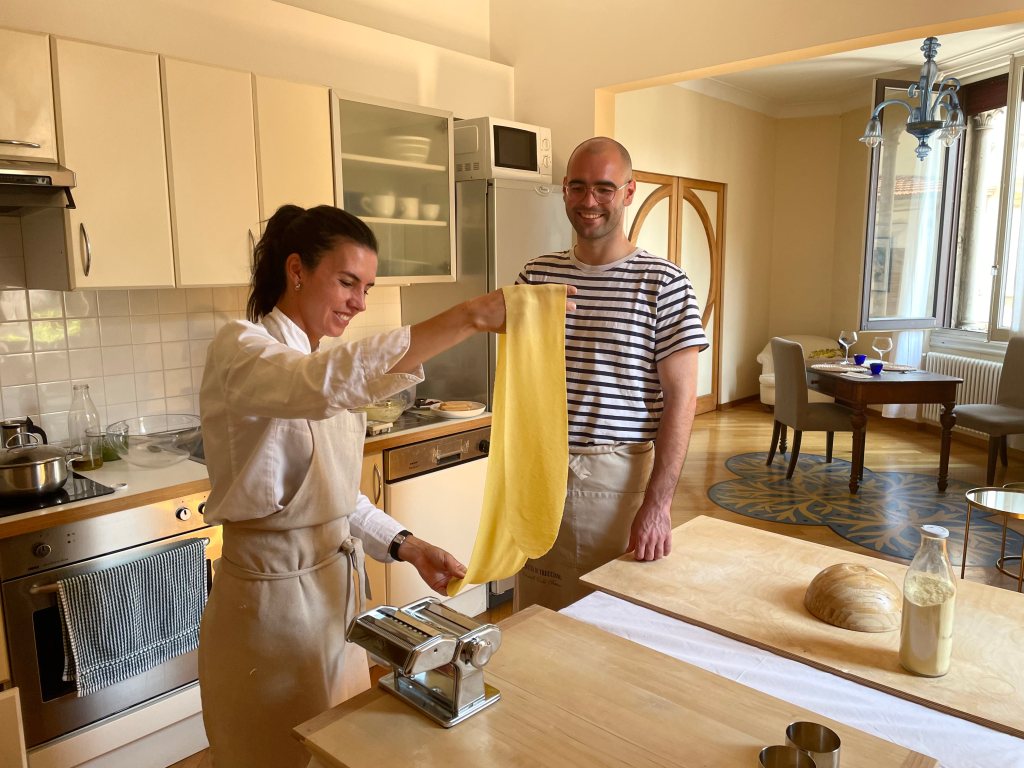
Throwback to a sunny Monday morning in Florence back in July. My boyfriend and I are on our way to Paola Muñoz, a professional chef and cooking teacher, for a three-hour pasta and Tiramisù class. On holidays and ready to explore the city, we found her class via Airbnb experiences. We were delighted by the idea to spend the beginning of the week in such a lavish, delicious, and fun way to learn about Italian cuisine. The class takes place at Paola’s apartment, a beautiful, light and lofty space. When we enter, the wooden table is already prepared. I can spot eggs, mascarpone, sugar, flour, Datterini tomatoes, and a pasta machine. A Basil plant with large, full leaves in the back looks promising. Paola welcomes us to her home and explains the menu of the day: Cappelletti with a spinach and ricotta filling in a tomato sauce, hand-made tagliatelle with pesto Genovese, and finally a Tiramisù for dessert. A straightforward menu, and yet there is lots to do. We put on our aprons and roll up our sleeves. Showtime! While we prepare the Tiramisù and the pasta dough, we learn about Paola’s background, career, and how she came to teach.
Paola is originally from Medellin in Colombia. In her early twenties, she worked in marketing but found her profession unfulfilling: “I didn’t feel that my job was beautiful.” When her sister told her that she would relocate to Florence to study fashion design, Paola decided to join. She knew a little bit of Italian and was interested in Italian art and culture. An avid home-cook, she signed up for a one-month cooking class in Florence. Food had always played a crucial role in her life. When Paola was younger, her father enjoyed taking her to markets and bought her cooking books to cultivate her culinary curiosity. After having arrived in Florence, a friend invited her to the restaurant Ganzo. The restaurant is run by culinary arts students of the Apicius International School of Hospitality. The practical teaching style and the international atmosphere of the school inspired Paola. She decided to sign up for additional cooking classes. And so, what had been planned to be only a month-long cooking programme would eventually turn into a three-year education in culinary arts and a professional career in cooking.
Cooking professionally is demanding. Hours are long, and kitchens often understaffed. After she finished her degree at Apicius, Paola went on to experience the daily realities of working in gastronomy. First, she learned how to perfect her time management. In her first job at Cucina 16, Paola worked all by herself in the kitchen. The lunch menu was expected to change every day, and dinner was ordered à la carte. She also had to wash all kitchen appliances while cooking, as a cleaner came only after 2 pm. In her following job, at the now-closed restaurant Rivalta, she was disappointed by the omnipresent lack of attention to quality. She realised the importance of working with high-quality ingredients and paying attention to their seasonality. Paola aimed for a refined cooking style and secured a position at a Michelin Star restaurant. There, she understood the complex planning, hard work, and many hours that go into cooking on such a high level. The organisation in the kitchen was “like military”. She also faced gendered hierarchies and found the environment to be particularly tough for women. Finally, Paola became head chef of Floret, a vegetable-focused restaurant where she learned how to manage staff, conceptualised menus, and took on responsibility for the whole kitchen. The restaurant was open for lunch and aperitivo, allowing her to have her evenings free. After all her different professional experiences, usually intense, sometimes unpaid, always challenging, she remembers that “At that moment I just wanted to have a balance”.
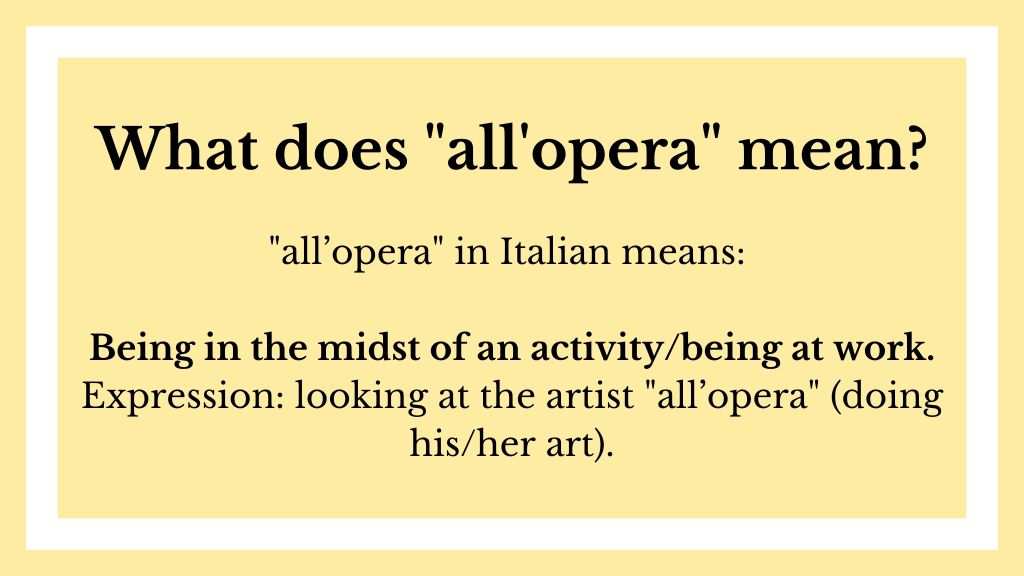
Paola’s strategy for balance is now one of diversification. Currently, she works for the Four Seasons Hotel as a freelancer, offers private cooking experiences, and teaches physical and online classes. The motivation to teach came to her in a curious way. One day, a friend called her and told her that a journalist from Amsterdam wanted to learn how to cook and wished for Paola to design and teach the course programme. For two months, Paola and the Dutch journalist met three times a week for six hours. They would cook three dishes per day; antipasti, primo, and secondo. The experience showed her the rewarding aspects of teaching, and she was determined to explore this path further. Together with her ex-boyfriend Benedetto, she founded the company all’opera in 2019. The company serves as an umbrella for her cooking courses and the private chef service she offers. All’opera’s physical classes, offered through Airbnb, were initially based on the idea of “Dinner in a Chef’s House.”
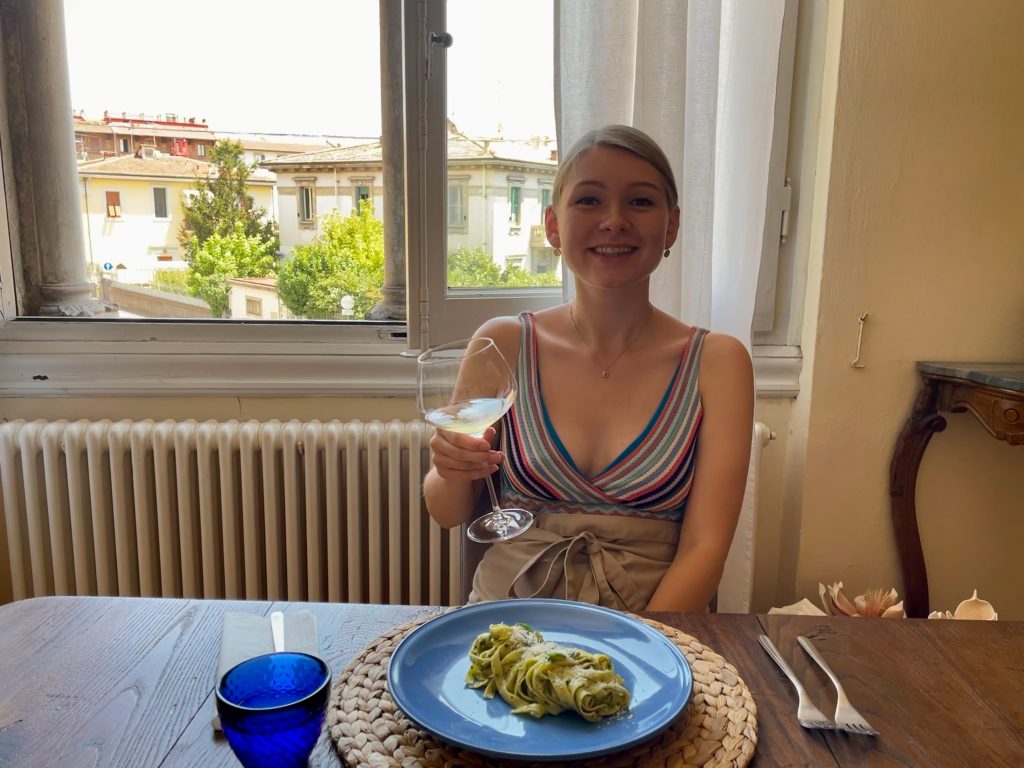
Since my boyfriend and I booked a morning class, we’re not staying for dinner. We’re having lunch at Paola’s place and are feeling fantastic. The white wine, a Falanghina, is crisp and very cold. It fits perfectly with the two pasta dishes we get to enjoy. We are surprised how sweet and flavourful the tomato sauce is and very proud of our hand-made tagliatelle. The Tiramisù is a wonderful finale to our cooking morning. Both a tiny bit tipsy, we agree that there is absolutely no better way to spend a (usually dull) Monday morning than to cook and eat with Paola.
…
part two
The pasta and Tiramisù class with Paola pushed me to consider the option of cooking for myself. I was impressed by her entrepreneurial spirit and her skilful combination of different work modes; creating, teaching, and communicating at the same time. Her internationality felt familiar and rendered the idea to move to Italy with ridiculously broken Italian less absurd. When I arrived in Florence I thus contacted Paola again to catch up and learn more about her work.
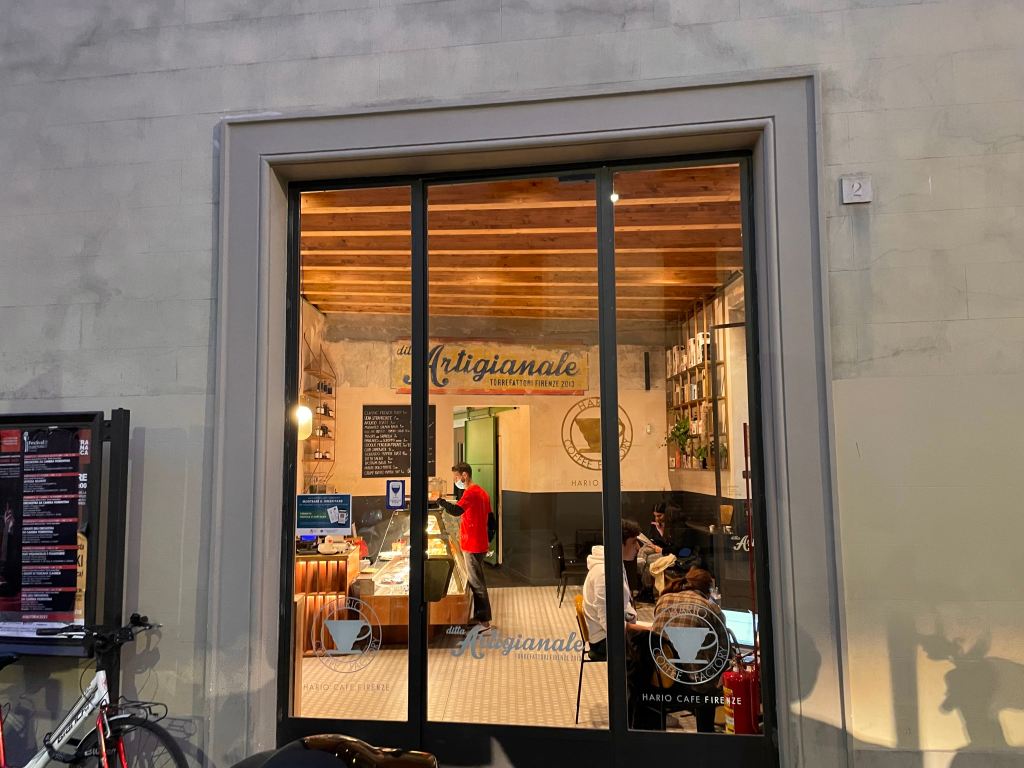
It’s October 21st. We meet close to Mercato di Sant’Ambrogio and sit down at ditta Artigianale, an unusually “hip” café for Florence. We both order Chai Latte, and Paola is eying a Red Velvet Cake. Maybe it’s the modern atmosphere of the place that makes us reflect upon the digital opportunities for chefs and the online classes she had taught over the last months. Like so many online and e-learning projects, she explored the idea during the Covid-pandemic. Lockdowns and travel restrictions prohibited working in restaurants and hosting physical cooking experiences. Paola started her online classes via a WhatsApp group of Colombian friends that grew into a cooking-avid community of around 170 people. Eventually, people from the group would cook with her every weekend. The minimum size for a class was nine people, the maximum amount twenty. Slowly, she professionalised her online courses. She invested in technical equipment, such as lights and a microphone. She got a professional zoom account and began to upload her video classes. Teaching digitally allowed her to explore a completely different mode of communication.
Providing online classes harbours lots of challenges, Paola shares. You have to be very precise, descriptive, and slow in your descriptions. There are lots of parameters out of your control. First, you have to address the differences in kitchen appliances. The oven of your student might be weaker or stronger, smaller or larger, affecting the time your meal has to cook inside. The same goes for other machines, like the stove. Another challenge is that you don’t know the quality of ingredients students buy. Paola records a massive Tiramisù fail. In one live class, her students’ mascarpone mysteriously separated and turned into a watery, unpleasant texture. Mascarpone cheese is expensive in Colombia, and the available product’s water percentage was too high. Paola recalls how nerve-wracking it was to sit far away in front of your camera, witnessing the drama unfolding, unable to resolve the situation. Another aspect to keep in mind when teaching online globally concerns the different seasonalities of products. Conceptualising and executing online classes broadened Paola’s knowledge of teaching in ways completely different from her in-person workshops.
Online classes allow Paola to reconnect with her Colombian community, but she is in Florence to stay. For the future, she dreams of creating an open space for private dinners and classes, where she seeks to explore her other big interest; art. She wants to combine culinary events with art exhibitions, allowing people to mingle, eat, and communicate. Until then, you can explore the restaurants and food shops Paola has recommended for us or take a look at her website for any classes and cooking services she offers!
where to go in florence? paola’s recommendations:
Restaurants:
Food & Wine Shops:
- Mercato di Sant’Ambrogio
- Enoteca Alessi
- Pegna (for premium products, like Bottarga)
I hope you enjoyed this article on Paola! 🙂
Alla prossima!
Lilly

 lilly's menu
My husband and I did a small cooking class with Paola in February of 2020. We found it through Airbnb. We loved the class and still use her recipes for making pasta at home!
LikeLike
Hi Sherry, so glad to hear you had a great cooking class with Paola – we really enjoyed our class with her as well! 🙂
LikeLike