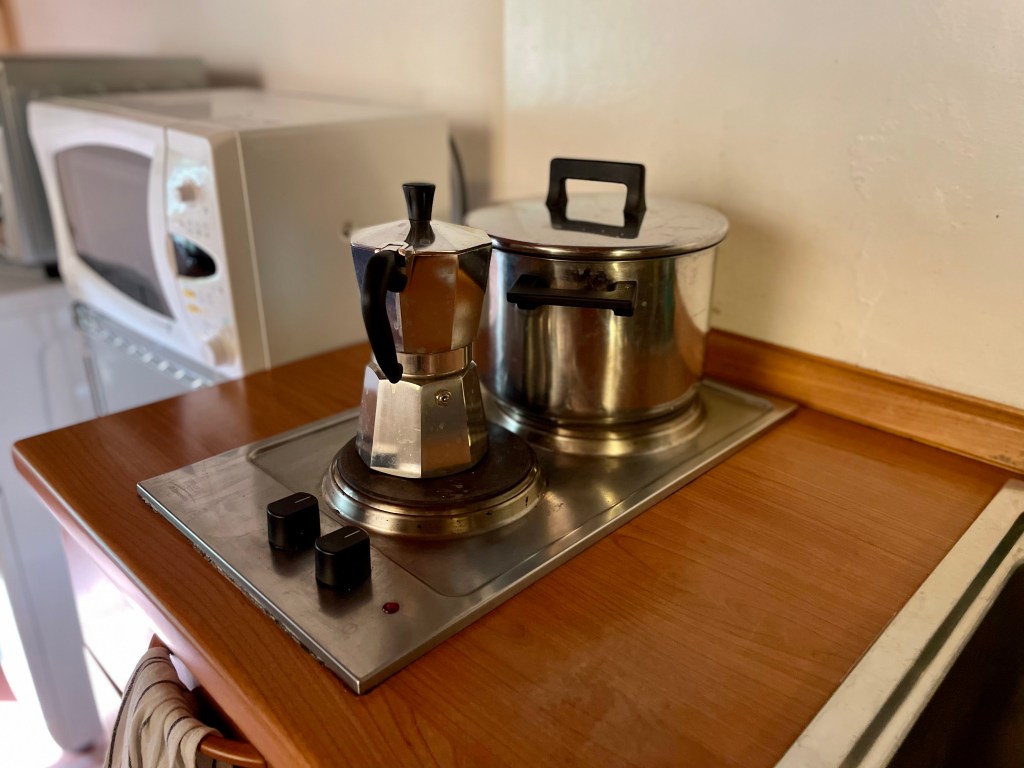
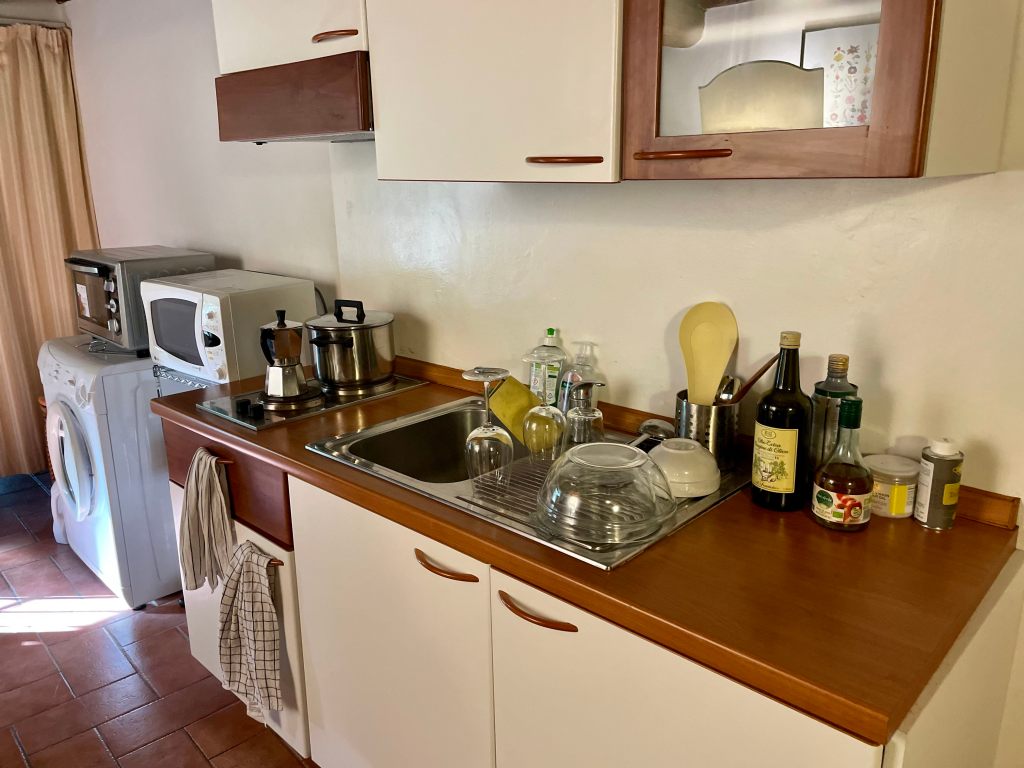
It’s been only a few weeks living in our new Florentine apartment and the kitchen situation looks rather poor. I knocked my head numerous times at our low hanging range hood. Electricity switched off around 6-7 times as I keep forgetting that you can only use one electronic machine at a time (it’s an old house). I broke our only salat bowl when it fell out of our tiny stuffed shelve, and I gave up using our countertop oven (an initial symbol of hope) when it took one hour rather than 25 minutes to cook zucchini. In addition, we only have two stove plates, relatively small and very close to each other. That means I cannot place our one mid-sized pot next to our one (small!) pan to cook simultaneously. If I want to boil pasta and prepare a sauce at the same time, I already have a problem.
To complicate things even more, I cannot prepare a dish or an ingredient in advance and quickly warm it up when needed. Recently, I was cooking a crema di ceci, a chickpea cream, for dinner. The chickpeas were cheerfully boiling in a small pot, the vegetables—mangold, zucchini, tomatoes—were calmly simmering in the big pot. The chickpeas were almost done and ready to be mixed when I realised I had forgotten to prepare a broth. I needed the broth to smoothen the texture of the crema and to deepen its taste. Unfortunately, there was no space to heat water to dissolve a broth cube, or unfreeze the self-made broth that was happily chilling in my freezer. It felt like one of these final text questions at a high school maths exam: “You have to cross the river with one boat with only two seats, and X can’t sit next to Y who can’t be left alone with Z…” I could not solve the riddle. That night, the crema di ceci just had to be eaten without broth. A tiny kitchen certainly is puzzling.
Cooking in a professional kitchen, however, I learned about a helpful concept I now apply to my private kitchen: mise en place. The French term roughly translates to “put in place” and describes an approach to cooking in which you consider all the steps to be taken in advance. This allows you to prepare and store your ingredients in a way that maximises and facilitates your cooking efficiency. It further helps you organise your kitchen space so that your tools are accessible and ready to support your cooking adventure. Before you start working with heat and thus accelerate the speed of cooking, pause and think of what you can prepare. What vegetables can you clean and chop in advance? What other components can be made beforehand to prevent having to do too much simultaneously later? For example, while you don’t want to wash salad leaves too early, why not already mix a vinaigrette and have it ready for use? Mise en place is all about thinking ahead to take off some steam once it gets busy.
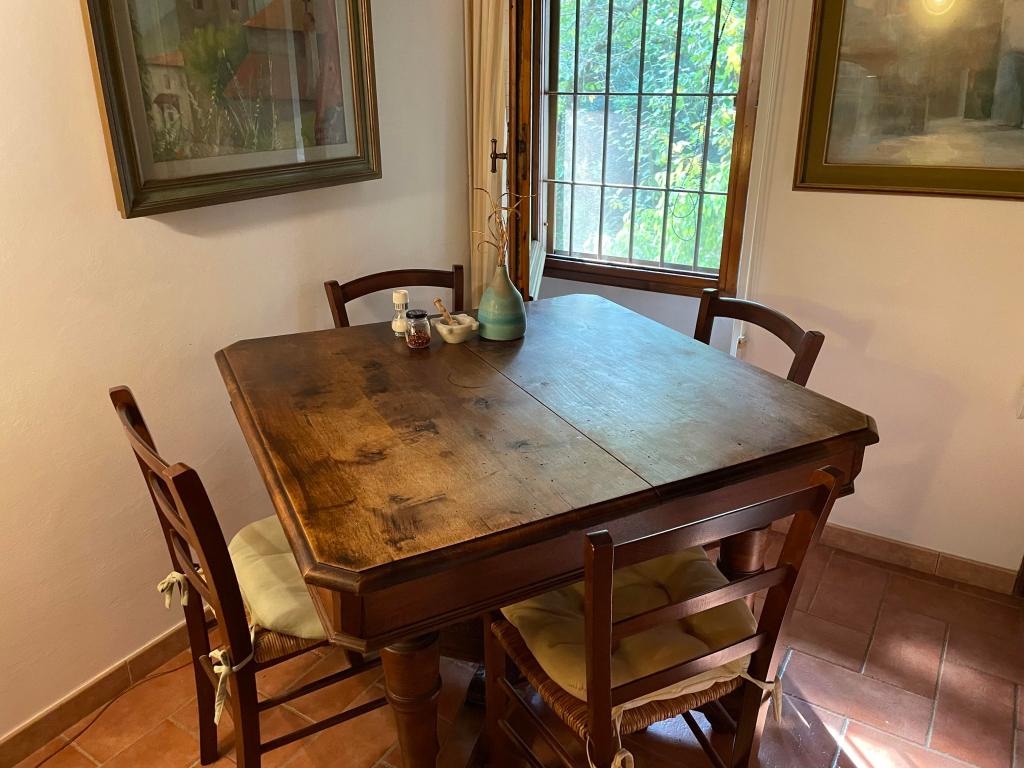
Mise en place motivates me to realistically assess what I can cook in my tiny kitchen and what I can’t. No, I cannot use the oven to make Tuscan roast pork, a fish in salt crust or bake any of the delightful Italian pasticceria. Impossible. I also cannot rely on the stove to prepare all components of a dish such as a fish fillet with creamy potato puree and braised spinach on the side. However, what I can do is to relocate most of my cooking from the stove to the dining table. The table is big enough to easily prepare pasta of all kinds of shapes. I also have sufficient space to chop and create varieties of salads and raw dishes. What also helps is to cook ahead by preparing a hearty ragù on one day, and then use the next day to make fresh pasta.
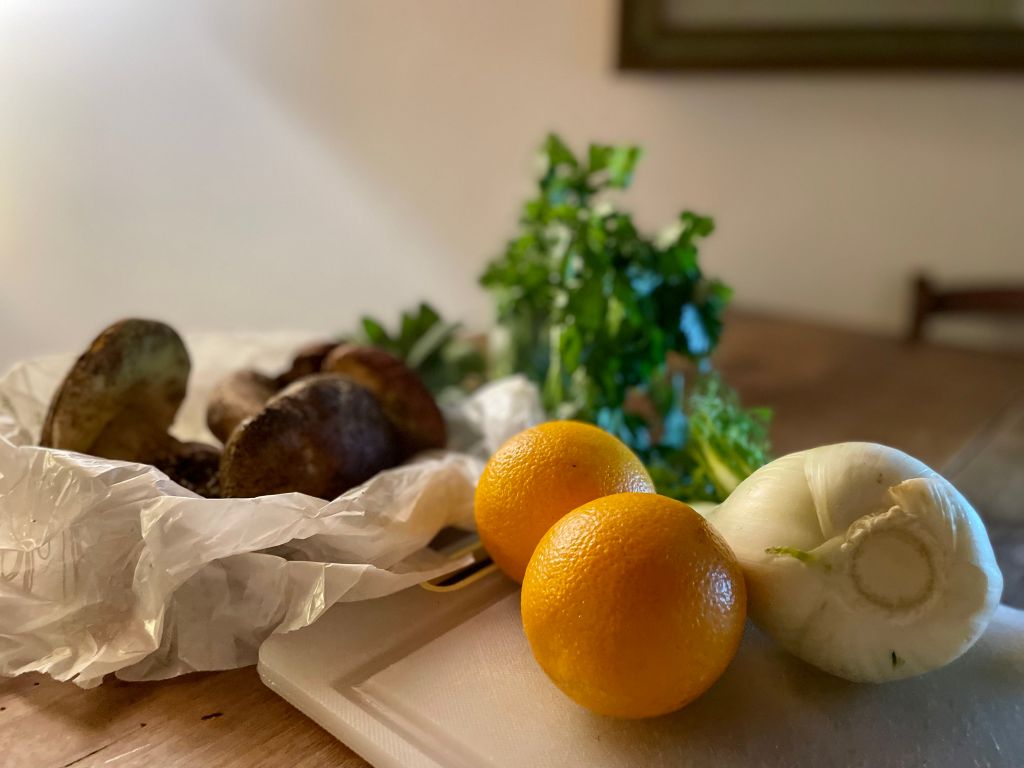
If I want to cook something more complex, it is also doable. I need to go through the dish’s different components and preparation steps attentively and make sure I create a timeline that fits my kitchen while never compromising on taste. If I plan accordingly, I can make gnudi con ricotta e spinaci with porcini mushrooms in sage butter, or ravioli filled with egg yolk, in a pumpkin gorgonzola sauce with toasted almonds.
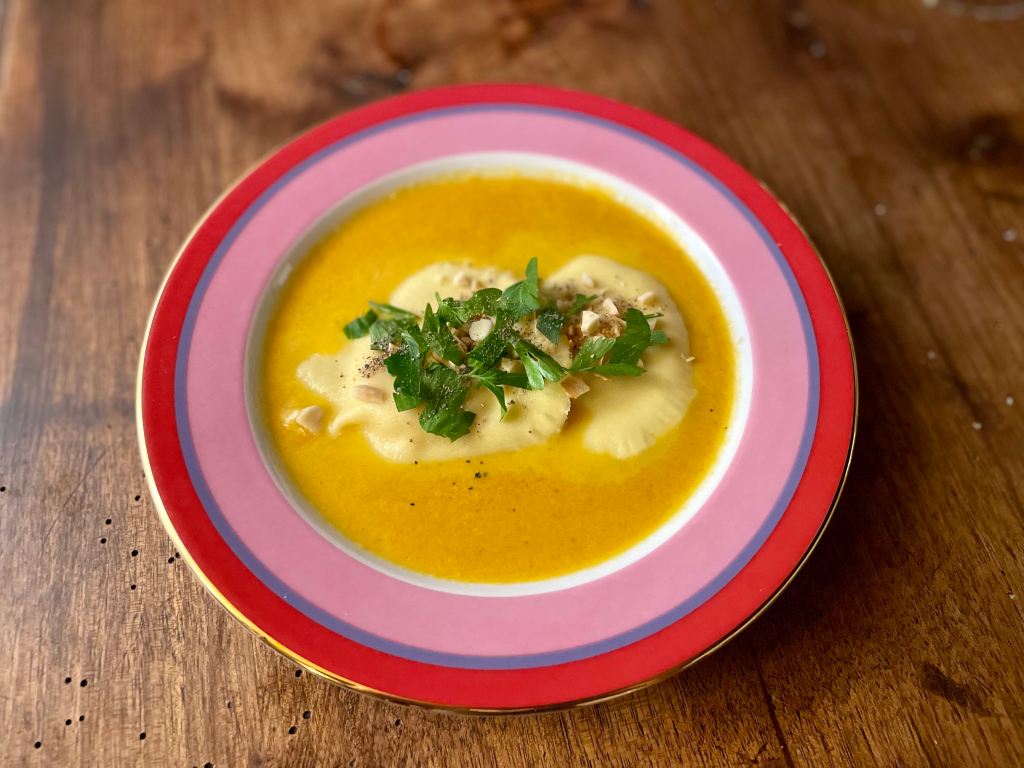
If you have a small or large kitchen, live in a cramped student dorm or a spacious house, mise en place is a useful concept to explore. In my tiny, half-dysfunctional kitchen, it helps me improve what I can do, be realistic of what I can’t, and pushes me to think of cooking techniques and ingredient combinations previously untried.
mise en place do’s:
- organise your kitchen in a way that minimises your steps to be fast and efficient
- know your kitchen organisation – have a set place for every tool and ingredient
- make sure you maintain your kitchen organisation
- invest in lots of different-sized bowls and containers to store your prepared ingredients and prevent any ingredients to fall on the floor (oranges, lemons, apples, etc.)
- keep you fridge organised and know your ingredients’ expiration dates
- know the date you opened a jar or product container – use a marker to write down the date on the container
- understand your recipe and the order of all cooking steps before you start (you might need to adjust the order of preparation depending on your kitchen)
- think ahead – what can be prepared in advance? What needs to be prepared in advance because later on you won’t have sufficient space on your stove anymore?
- clean while you cook – especially in a tiny kitchen it’s essential not to waste any space with pilled up dirty dishes
Now go ahead, Dear Reader, prep and organise!
Alla prossima!
Lilly

 lilly's menu
Thank you for the suggestions! I am no chef, but I intuitively understood mise en place in a rough way. Now I know the name and some excellent rules of thumb to make it all gel. I guarantee I will eat better because of this post.
LikeLike
Thank you for your feedback. It’s so great to know that the article has been useful to you! 🙂 There will be more articles coming soon.
LikeLike