blog

finding truth in clay

Credits: Karina Klages

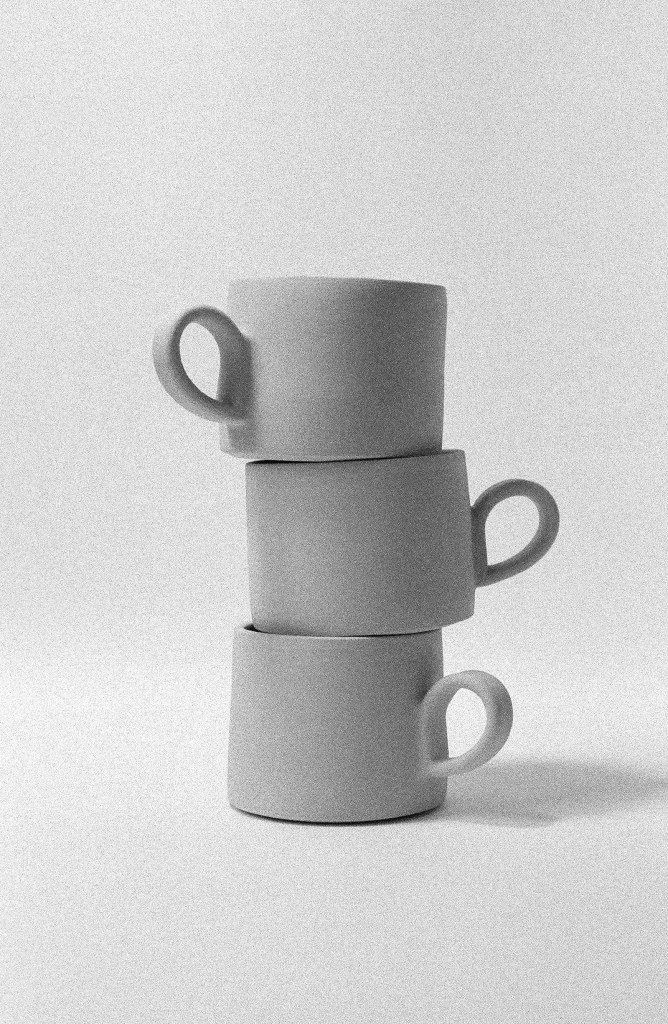
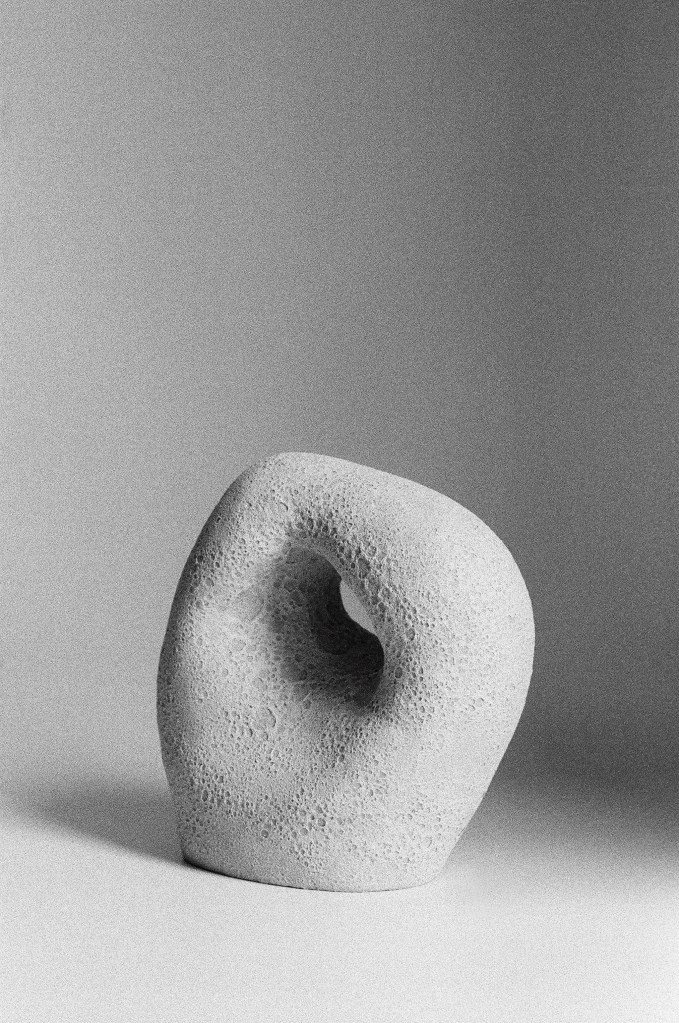
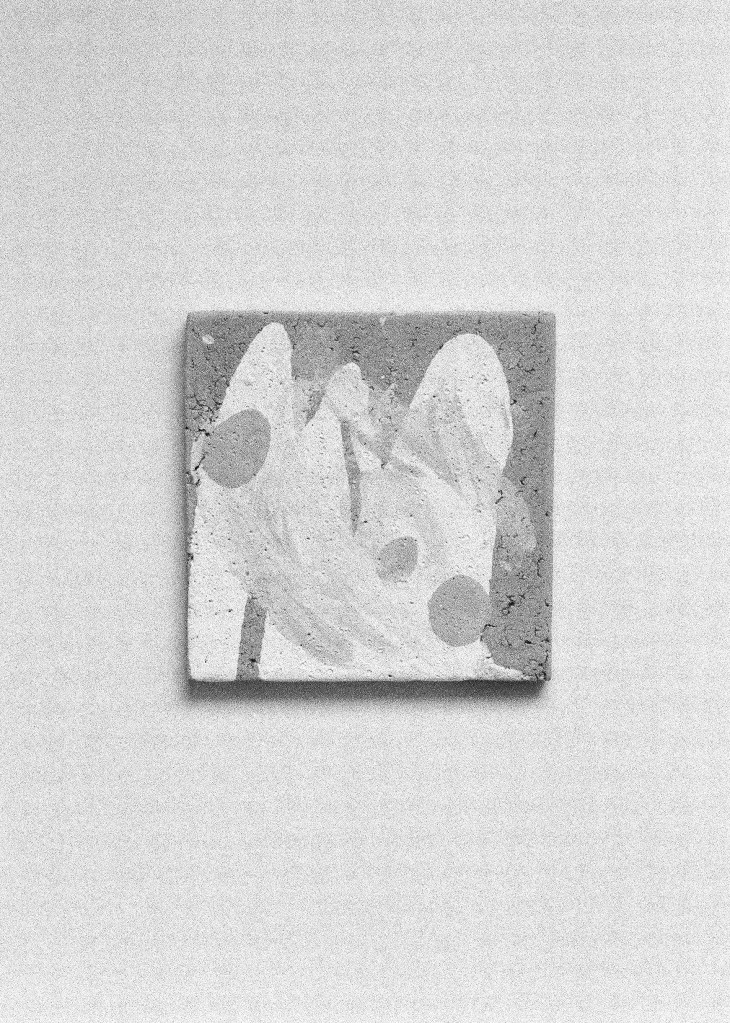
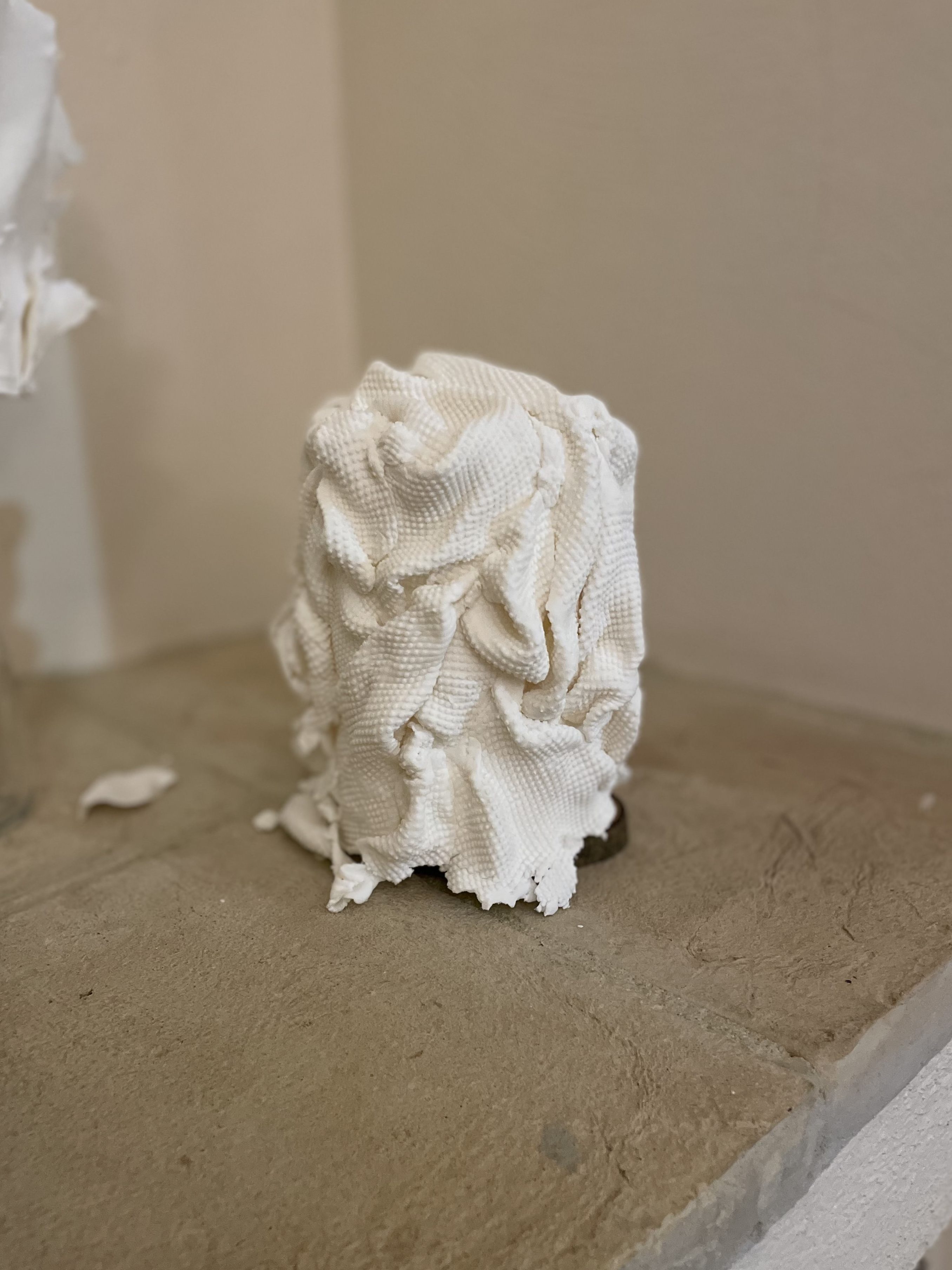
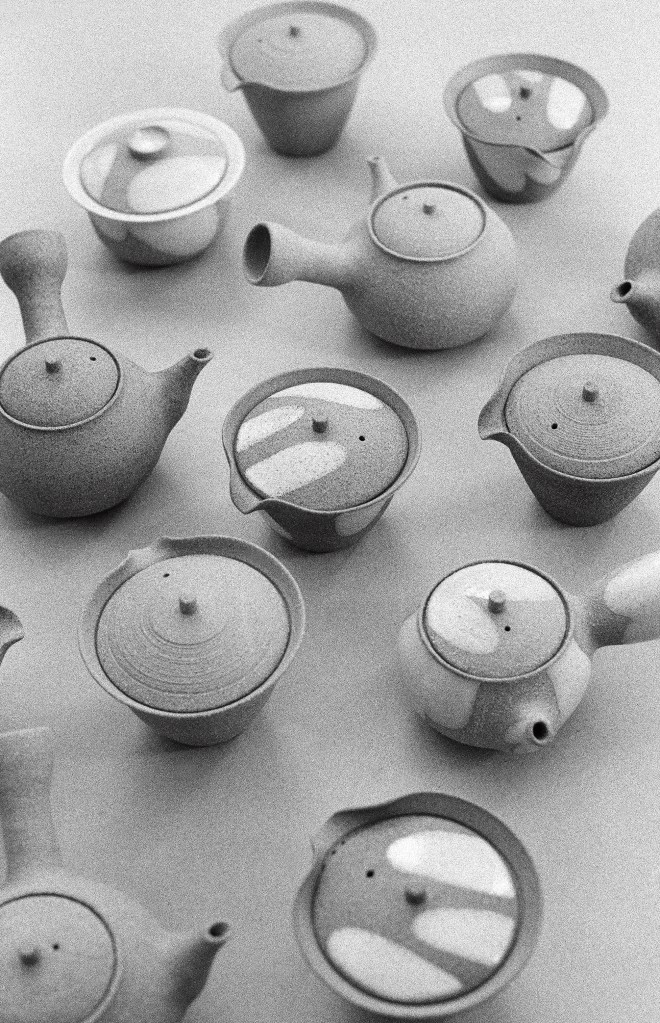
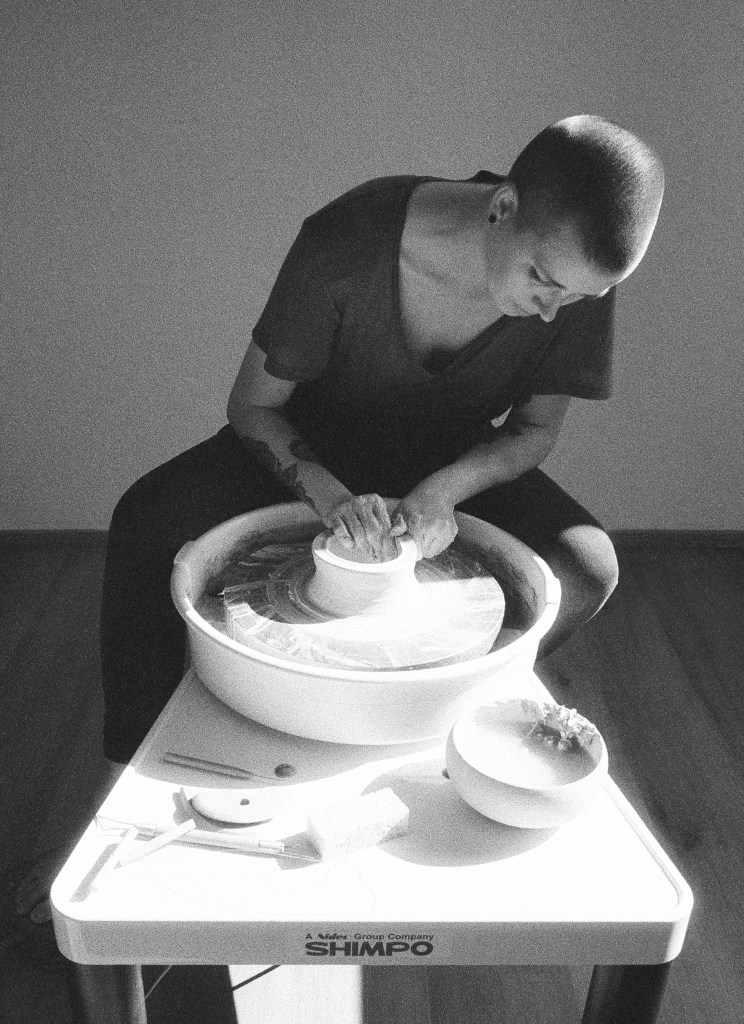
Ceramics of all shapes and glazes have been a source of interest and inspiration to me. Every piece is slightly different and must be treated with care and attention. The passion and work that went into their creation, poured in by the artist, wedged into the clay, demand one to act kindly and respectfully. To observe closely and feel the surface – sometimes rough, sometimes soft and smooth.

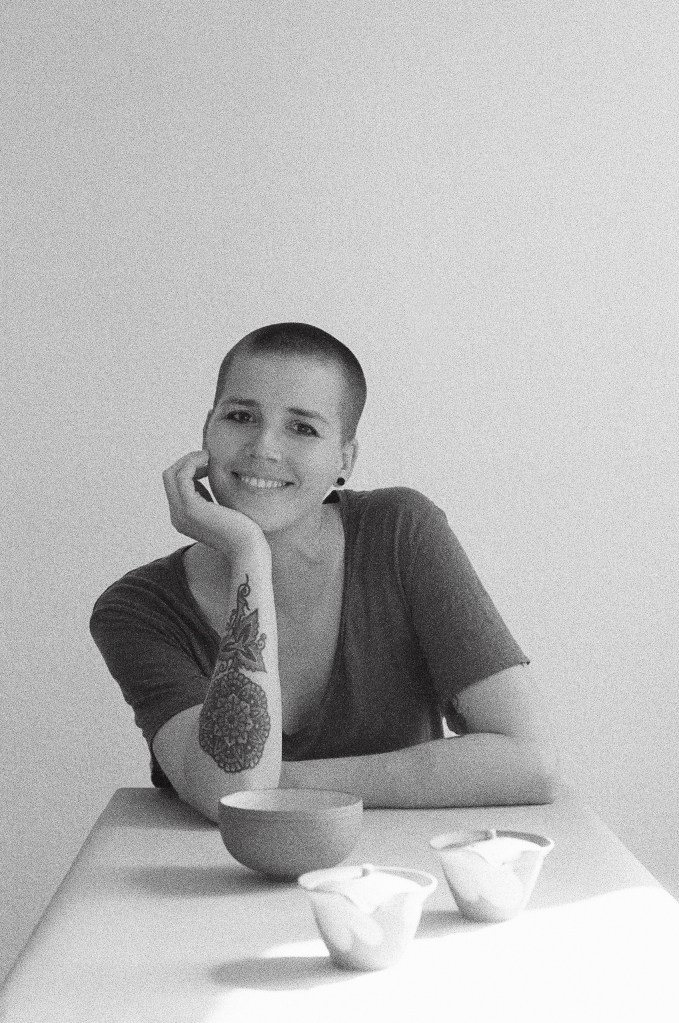
Karina Klages‘ works are particularly enchanting. Her designs radiate clarity, tranquility and balance. I have been wondering about her creative process for a long time. I reached out to Karina and she has kindly agreed to answer my questions.
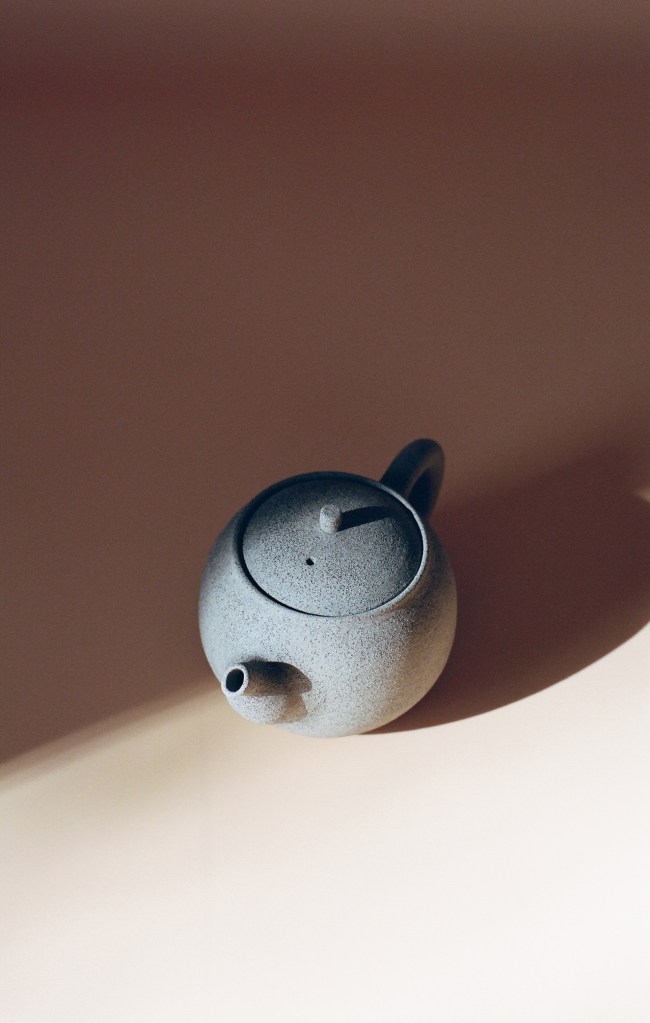
credits: Karina Klages

Could you please elaborate on your background? What made you chose to work with clay?

Karina: My sense of beauty and my strong passion for aesthetics led me to the University of Hannover (Germany), where I completed my graphic design studies in 2008. Creativity in many forms is part of my life like the air I breathe. It always came very easy to me and revealed a certain freedom and joy within me. From childhood till now you often found me drawing, painting, creating with different materials. I’m totally in love with film photography also. Since university I worked as a freelance graphic designer and a few years ago I looked for an artistic, manual balance to my computer work and then started creating with clay. I didn’t plan to sell my work, this was an organic process – and honestly it does not feel like a new „business“ at all, but like a new medium to transform what I have in mind. In a secret way clay completes me – more than any other material in the past. And I feel a strong shift into new creative ideas, they are pretty endless. It came slowly but steady that I feel more as an artist now, than a designer.

As far as working with clay goes, I’m using my artistic background and education to educate myself here. I read a lot, watch videos about techniques, observe other artists, buy ceramics to explore techniques and learn from them. This is all an important process for my work – even if I often feel like I’m making slow progress.

Through highs and lows I give myself the freedom to be a learner – and that makes my paths exciting and adventurous.

Do you experience different stages in your work? How do you feel confident with your designs?

Karina: Sometimes I work over weeks on techniques or sets of tests that I can’t complete successfully and that don’t produce the desired results. These times are sobering. But then it turns out that months or even a year later I can use this experience for further work. Failures and ideas combine to form new paths. Everything is a long process and also a lifelong journey, I think, to give expression to one’s own inner voice. Through highs and lows I give myself the freedom to be a learner – and that makes my paths exciting and adventurous.

Please walk me through your design philosophy & process. How does the Japanese concept of Wabi-Sabi inform your work?

Karina: I would name authenticity as a key philosophy. This topic drives me. I want to be and live authentically myself – and my art should also radiate this. I’m looking for the real, the true, the beautiful. This can be expressed in many ways, in many different forms and I love to follow the flow. Trying out different ways and techniques is very educational and I can find out along the way what it is where I am most drawn to creatively. For me working with clay is also very spiritual. It was that special moment in my life where I was struggling with loss and brokenness when Wabi-Sabi’s aesthetic concept resonated with me strongly. I was looking for the real and for the truth and found it also in the Wabi-Sabi aesthetic at that time. I saw it in great Japanese teaware and in pieces that came out of wood firing kilns. I was blown away by its beauty and imperfection. Nothing is disguised here to make something apparently beautiful, there are no masks here – on the contrary – the old, the broken and the imperfect are seen as beautiful. There is a subdued but also fertile beauty. A beauty of impermanence and a beauty of maturity. These images and feelings became a deep inspiration for my work.

Till now I love to work with rough surfaces the most. But nevertheless I feel more color for my work in the future and I think that some new perspectives are developing in myself. At the moment I do a research and some tests about the technique Nerikomi. I often feel that I’m not there where „I want to be“ – but honestly I cannot name this final „goal“. It is just an inner longing to work on, to try new things and to grow. To grow my inner artistic voice even more. 
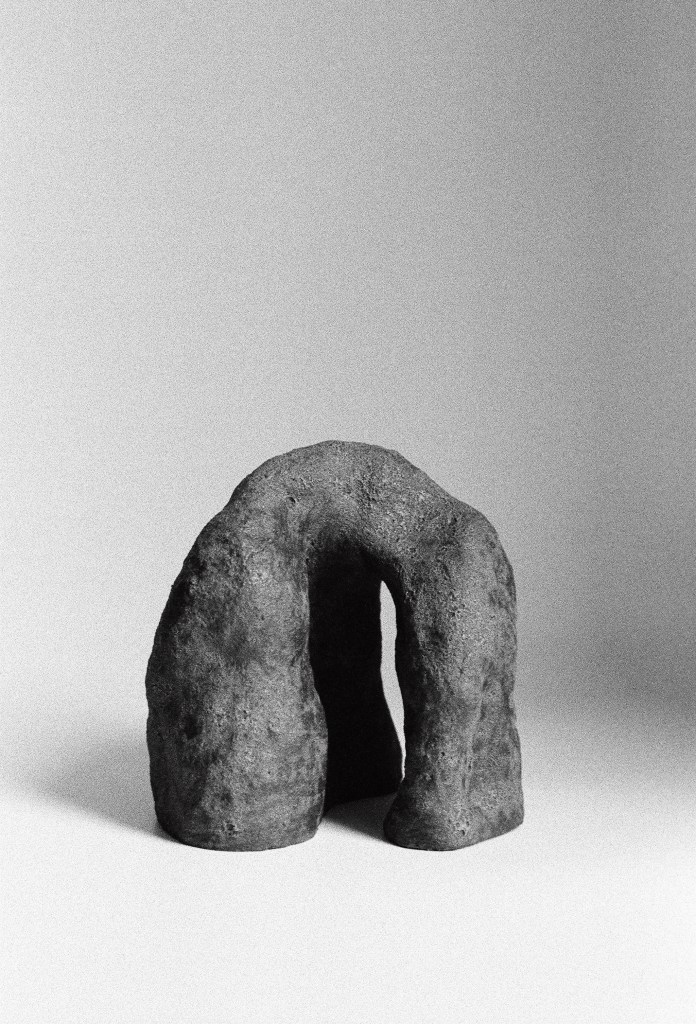
Credits: Karina Klages

How do you differentiate between sculptural works and works that serve a practical purpose?

Karina: I recently read about the thesis that the boundaries between applied and fine arts seem to be becoming more fluid again. Applied artists work more and more freely, while the others like to take on the craft. I often find these boundaries to be fluid. Of course, there are some of my pieces that are objectively intended to be used, but I don’t want to see them just as useful objects, but as something that has a certain artistic value, so that they can also be perceived as a “work of art” in their own right. In this way, vessels that are created more freely can certainly acquire a sculptural character. Pure sculptures are works that serve no purpose other than to be viewed. I am working on all these forms of expression and when the time is right I will show more of them.

I really appreciate working with the freedom to design individual pieces. I’m most comfortable with this idea, even though some things may be similar or repeated in a similar way. I could never get used to the idea of bringing out collections on a regular basis. When series are created, they should grow entirely out of freedom and the moment.

It is a great privilege to be able to work with a raw material from this earth.

What materials and techniques do you work with & why?

Karina : It is a great privilege to be able to work with a raw material from this earth. Clay is a weathered layer of rock that is taken from the ground. It is a product of the past, will be processed by me in the present and will survive as a fired vessel in the future. That is why it is very important to handle this material mindfully. I work with „Westerwald“ clay from Europeans biggest clay mining area located in Germany – it is perfect for any use.

What glazes do you use?

Karina: Over all I love to work with raw surfaces the most. If I would have the opportunity to unlimited knowledge from master potters and unlimited access to wood firing kilns I would prefer that 😉 – but for now I fire with electric kilns. I sometimes use commercial and self mixed glazes when I find their outcome could please my idea on the ceramics, but in general I’m looking for ideas to „paint“ the clay without using any glazes, to go further with rough surfaces. I’m a big fan of more natural tones and natural surfaces. 

How do you feel about failure?

Karina: The whole process of working with clay is a big journey of failures and takes a lot of patience to go on. I totally understand, when someone is quitting her/his clay journey at that point. The production of a piece alone takes up to several days or weeks to await the drying stages. When the firing finally takes place and the glaze gives an unexpected/bad result at the end, then you have sometimes wasted a lot of time. Here you have to be patient, persevere and just keep going.
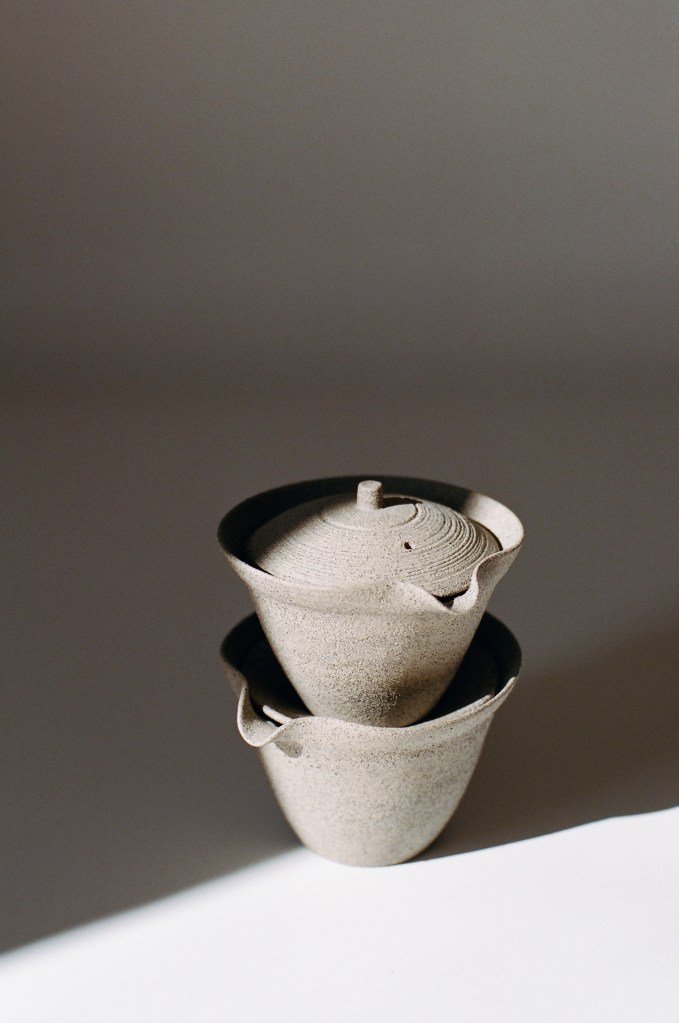
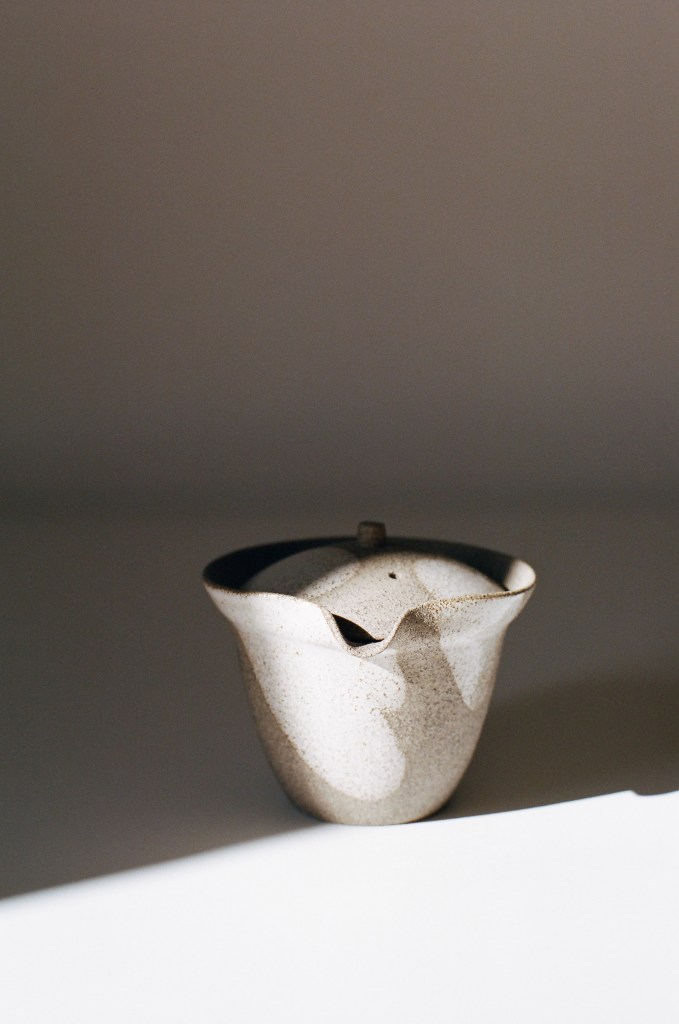
Shiboridashi. Credits: Karina Klages

What role does tea play in your work?

Karina: My first association with tea came from a graphic design job creating a corporate identity for a Japanese green tea label. I remember the day we photographed all the different teas and then got to taste them cup by cup. This was a nice and new experience. After that I started drinking tea and when I started working with clay, the first thing I wanted to realize was teaware. To this day tea ceramics are a big source of inspiration for me.

I started with an idea of a Shiboridashi und repeated it many, many times to find a useful and aesthetic shape for me. Over the time it developed more and more (and still will). Afterwards I started with Gaiwan forms, different cups, tea bowls and tea pots. And all these forms still change and grow to a better version every time. 

When does a piece feel finished?

Karina: Recognizing when a piece is finished is not always easy – but I can feel it. Often I can recognize that at a certain point in time, with certain knowledge, a certain result can be obtained. I try to accept that. Of course I’m evolving and looking back I don’t like my old pieces that much anymore – but I know that at that time I made a positive decision to sell the ceramics. So I acknowledge my decision and know that I will continue to develop over the years. That is a normal process for every creative. 
Credits: Karina Klages

What do I like and what not? Which technique, color, surface do I want to continue with? Do I like the aesthetic?

What other artistic practices to you pursue? How do they inform your pottery?

Karina: I find it helpful to work with different materials in parallel with the clay, so I can make different sketches/ideas and incorporate them into my work with clay. I also prefer to be open to art in general, to find new inspiration and to expand my work with incentives, techniques, colors and shapes. Important is to be brave and to play, experiment and outline any idea. The key is to work. If you work, it will lead to something. And then the decision-making process is always there: What do I like and what not? Which technique, color, surface do I want to continue with? Do I like the aesthetic? If not, then I keep experimenting until an inner voice agrees with what it sees.

How would you like your work and pieces to be understood?

Karina: I like the idea of very unique pieces. I like the idea, that every customer/collector choses the pieces that resonates with her/him. And I want to look them on my ceramics as art pieces – even if they can „use“ them in their daily life. I don’t want to be perceived as someone who produces masses of identical objects – because the world has enough of that already. I want to trigger a differentiated view and make aesthetic demands on my work.

Beauty is always found where truth is found. As an artist/creator/designer I always want to follow the path of making the practical beautiful. After all, who likes to use objects that aren’t beautiful? Rather, we should always surround ourselves with beautiful things in everyday life, because they make our hearts smile. We then use objects with more mindfulness and joy – in this way we honor the object and the time and love that the creator put into it.

Gaiwan. Credits: Karina Klages

How does it feel to let go of the pieces?

Karina: The artist enters into a special connection with his material and his work of art. This process is important and happens silently between the artist and the object. This is where the final expression forms. The artist puts in everything that is necessary to follow a certain aesthetic image. When I finish an art piece, it belongs to the people. But the inner secret process always belongs to me as an artist. I really love to feel when a piece is ready and when there is a buyer who resonates with this special piece – this is pure joy. 

When I finish an art piece, it belongs to the people. But the inner secret process always belongs to me as an artist.

What sources & books do you recommend for aspiring potters?

Karina: I recommend every young creative to use Instagram as a platform to get started. Here you will find everything about art, orientations, techniques and a variety of artists. Many potters have already written books about their work, so you can buy a book right away, which also corresponds to the style you prefer. I have found books by Melissa Weiss, Stefan Andersson, Phil Rogers and John Britt to be very helpful for my own learning. I also love to watch different artist statements (mostly by Goldmark Gallery on YouTube). 


You can find Karina Klages’ beautiful works via her online shop or Instagram.

Thank you very much, Karina, for giving such a detailed insight into your work!

boutiqua portuguesa

Food trade is a global business. When you wander along the shelves of a German supermarket, you find products from all over the world—Chinese noodles and sauces, Mexican wraps, American peanut butter, Italian pasta, Polish pickles, English biscuits, French jam. These products transgress vast geographical distances and weave together a global food network. This food network is alive. It expands and retracts. New brands and food products are constantly developed, further market niches explored, and culinary codes widened. What are these products? Where do they come from? How to sell them?

Giuseppina and Marc decided to add to the global food trade. On their online shop Boutiqua Portuguesa, the young entrepreneurial couple from Germany sells both new and traditional Portuguese brands, including food and cosmetics products. Their food portfolio includes all types of canned fish. In beautiful, brightly-coloured tins, you will find Bacalhau with chickpeas, tuna with pimientos, sardine paté, and octopus in olive oil. In addition, a mouth-watering range of honey, coffee, marmalades (pumpkin confiture!), and chocolate awaits you. Marc and Giuseppina also produce their own tea lines with tea from the Azores. With Boutiqua Portuguesa, they want to bring Portuguese flavours to your plate.

marc and giuseppina with their azorean green tea line

meet the founders

Marc and Giuseppina developed their idea for Boutiqua Portuguesa at university. After obtaining her high school degree, Giuseppina studied Industrial Engineering with a focus on logistics. Marc studied Business Administration. When they finished their bachelor’s degrees simultaneously, they enrolled into the same master’s programme in International Marketing and Sales at the University of Münster. Besides their studies, both worked in different companies to gain work experience. They often dreamed about starting a project or business together. Why? When working for others, they share, “you can’t follow your own ideas as much. Especially now with our online boutique, we can finally live out our creativity.” In addition, many business working environments “often lack something human. Everything is focused on reaching financial goals without focusing on human relationships or superior goals with a certain non-financial purpose.” Giuseppina and Marc wanted to make their own decisions to cultivate a business that fits their values.

While both grew up in Germany, Giuseppina has Italian and Marc Portuguese roots. One evening, the two sat together with Marc’s family after dinner: “It was a regular Friday evening when my father told us about a popular Portuguese toothpaste he had already known since childhood. Reissued in a classic retro design, it is now celebrated in parts of Asia and around the world.” Couto, founded in 1932, is a well-known company in Portugal. However, when Marc’s father tried to order Couto toothpaste online, it was surprisingly complicated. Marc and Giuseppina noticed a possible market niche. On subsequent trips to Portugal, they spotted further interesting products that were difficult to purchase from Germany. When they signed up for a course in e-commerce at university, the idea to import Portuguese products to Germany materialised. 

In the summer of 2020, the couple started to build Boutiqua Portuguesa. It took them roughly two months to design the online shop and its logo, research the many legal, financial and administrative requirements, and find potential brands to sell. How do you set up a brand relationship, I wonder, when you are just starting your business? Giuseppina and Marc laugh—you need to keep sending emails. Some brands did not respond to them at all. Others were interested and shared price lists. When the shop went online in November, it had four brands in its portfolio: “Besides the Couto toothpaste, we started our journey with tea from Cha Gorreana and canned fish from Acor as well as Nazarena.” Once the shop was running, it was easier to contact brands. Finally, they could present a tangible selling platform to partners.

the products

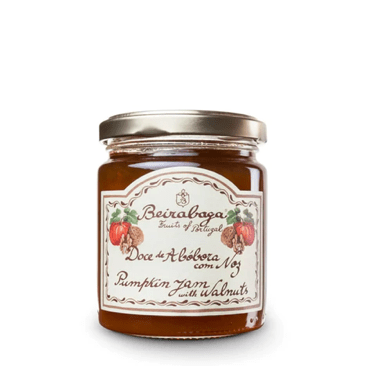
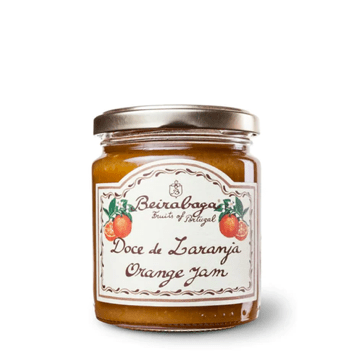
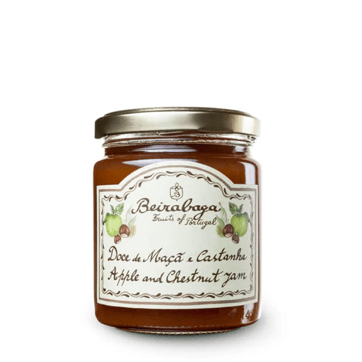
Boutiqua Portuguesa now sells a wide range of Portuguese foods, focusing on products “with which one can identify and which stand for fair, transparent & high-quality Portuguese craftsmanship with a unique story behind each product”. Beirabaga jam, for example, is manufactured by the Portuguese couple Rita and Federico Horgan. Among their family documents, they discovered old cloister recipes for jam. These recipes don’t need added colourants, preservatives, or flavour enhancers. The jams’ mouth-watering flavours range from apple with chestnut, fig, pumpkin with almonds to raspberry with honey: “We love all of them, but if we have to decide for one, it would definitely be the fruity raspberry jam. It is sweetened with honey instead of sugar which gives this jam a unique taste and a special texture. It serves perfectly as a topping for pancakes or waffles.” 

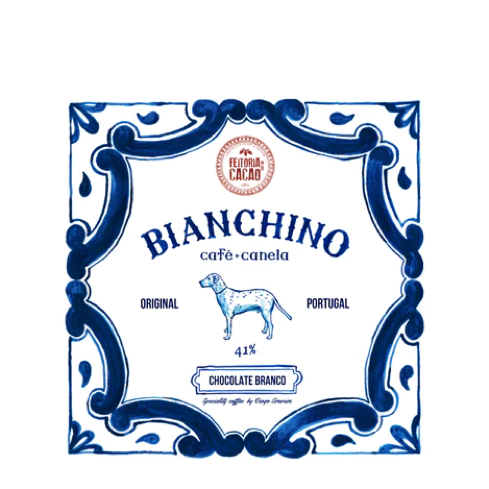
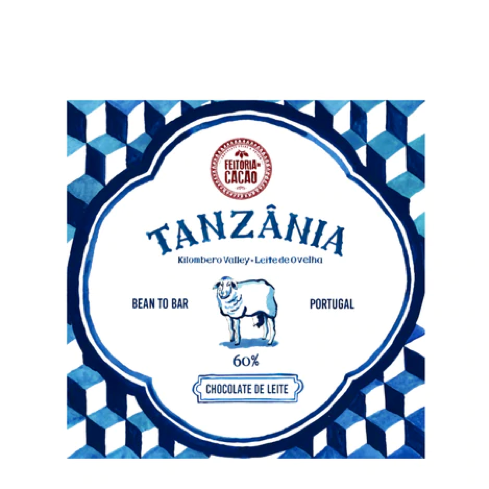
Another of Marc and Giuseppina’s lucky finds is the brand Feitoria do Cacao, founded by Tomoko Suga and Sue Tavares. On a trip to São Tomé and Principe, the two founders learned about the process of cacao production but also saw the dehumanising conditions present on cacao plantations. They decided to pick up the craft of chocolate making to develop fairly-produced chocolates. In Giuseppina’s and Marc’s online shop, you find a range of tastes of their chocolates, including white chocolate with coffee & cinnamon 41%, milk chocolate with sheep’s milk 60%, or dark chocolate with Fleur De Sel 72%. “It’s so much fun working with Tomoko and Sue, two chocolate lovers who continue creating every chocolate by hand. We are happy to accept a relatively long delivery time of four weeks for this unique chocolate.” From young start-ups like the peanut butter producer BlissOUT or the canned fish producer OQOPO to established producers like Acor, there are many exciting food brands to explore at Boutiqua Portuguesa.

Giuseppina and Marc are passionate tea aficionados and have dreamed of their own tea line for years: “We drink tea on a daily basis”. They were intrigued when they learned about Portuguese tea plantations on the Azores. The tea is fairly produced without pesticides. The first time they tried the green Azores tea, they “were really surprised”. Usually, when green tea brews for too long, it tastes bitter. The Azorean tea “is not bitter at all, but mild”. Hence, their tea production journey began.

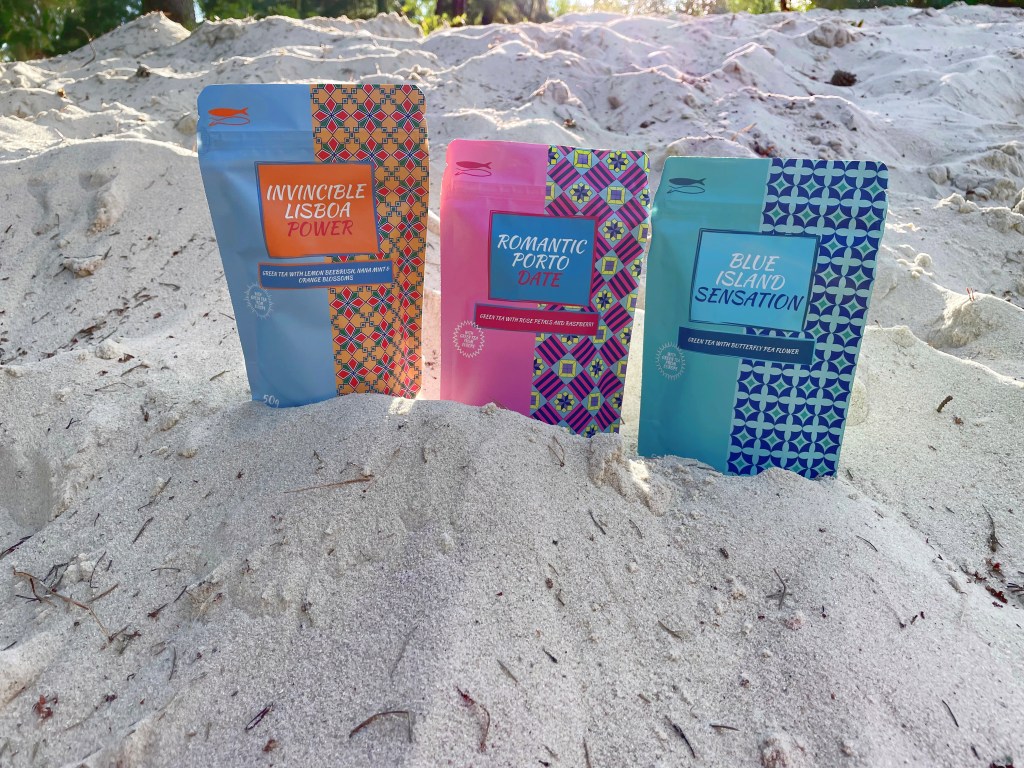
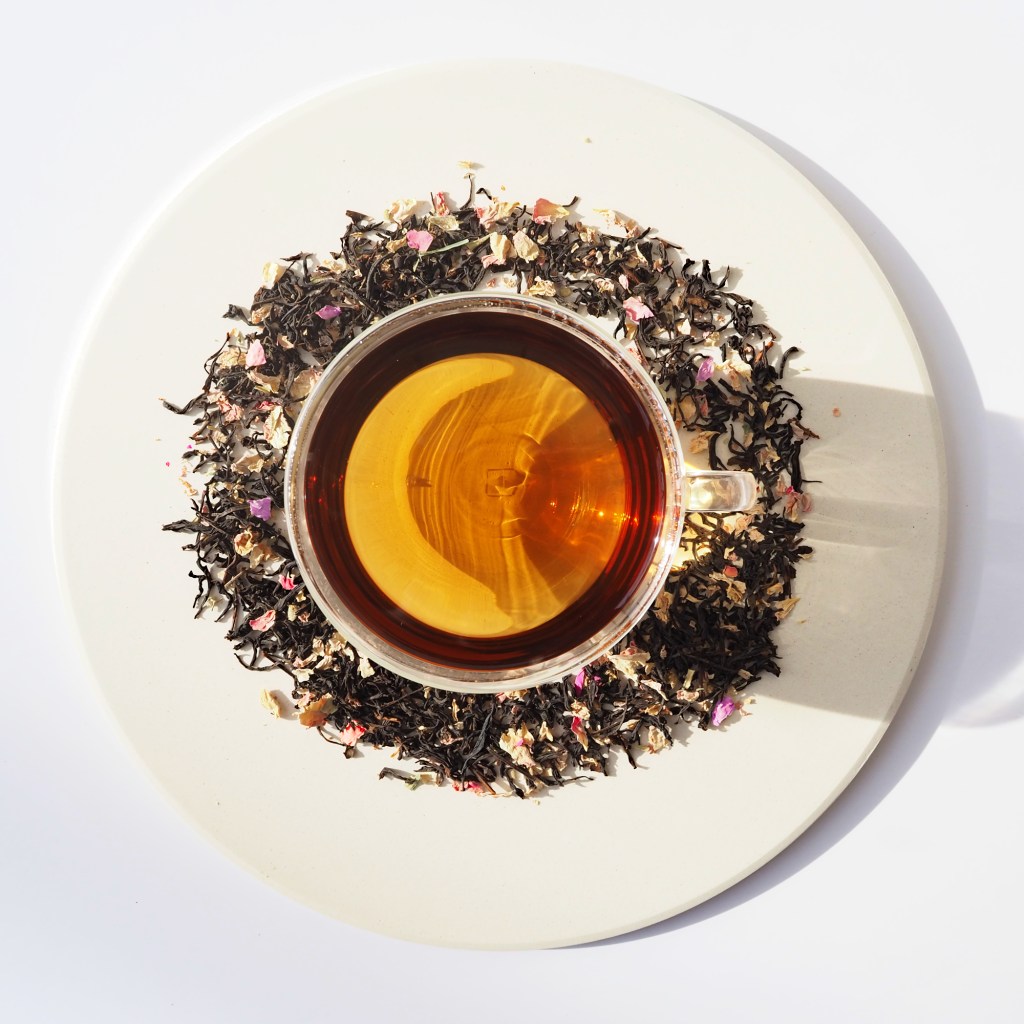
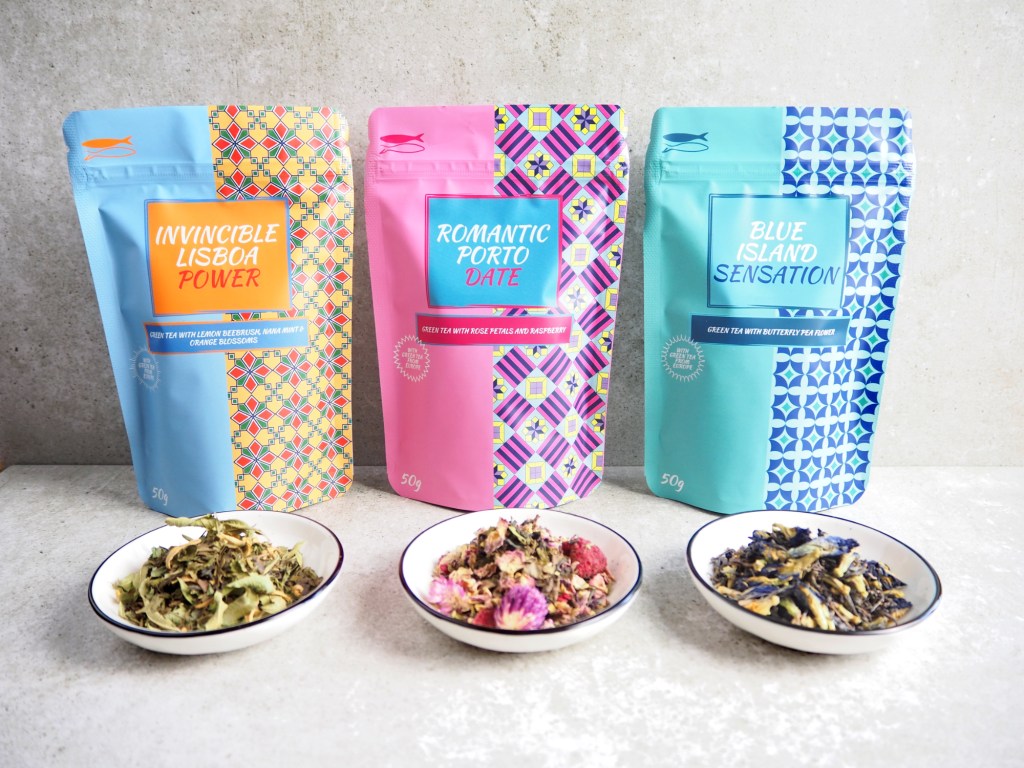
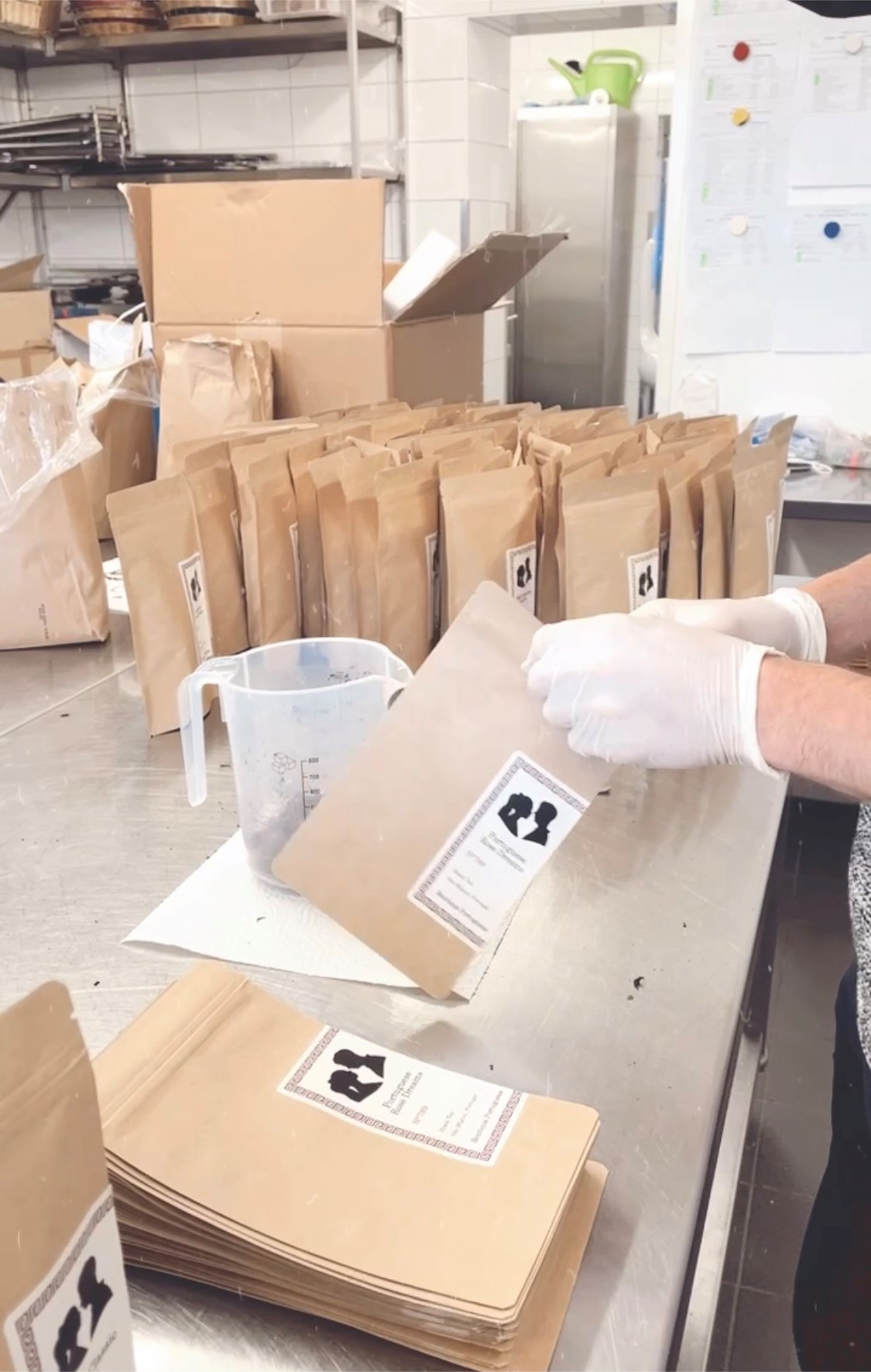
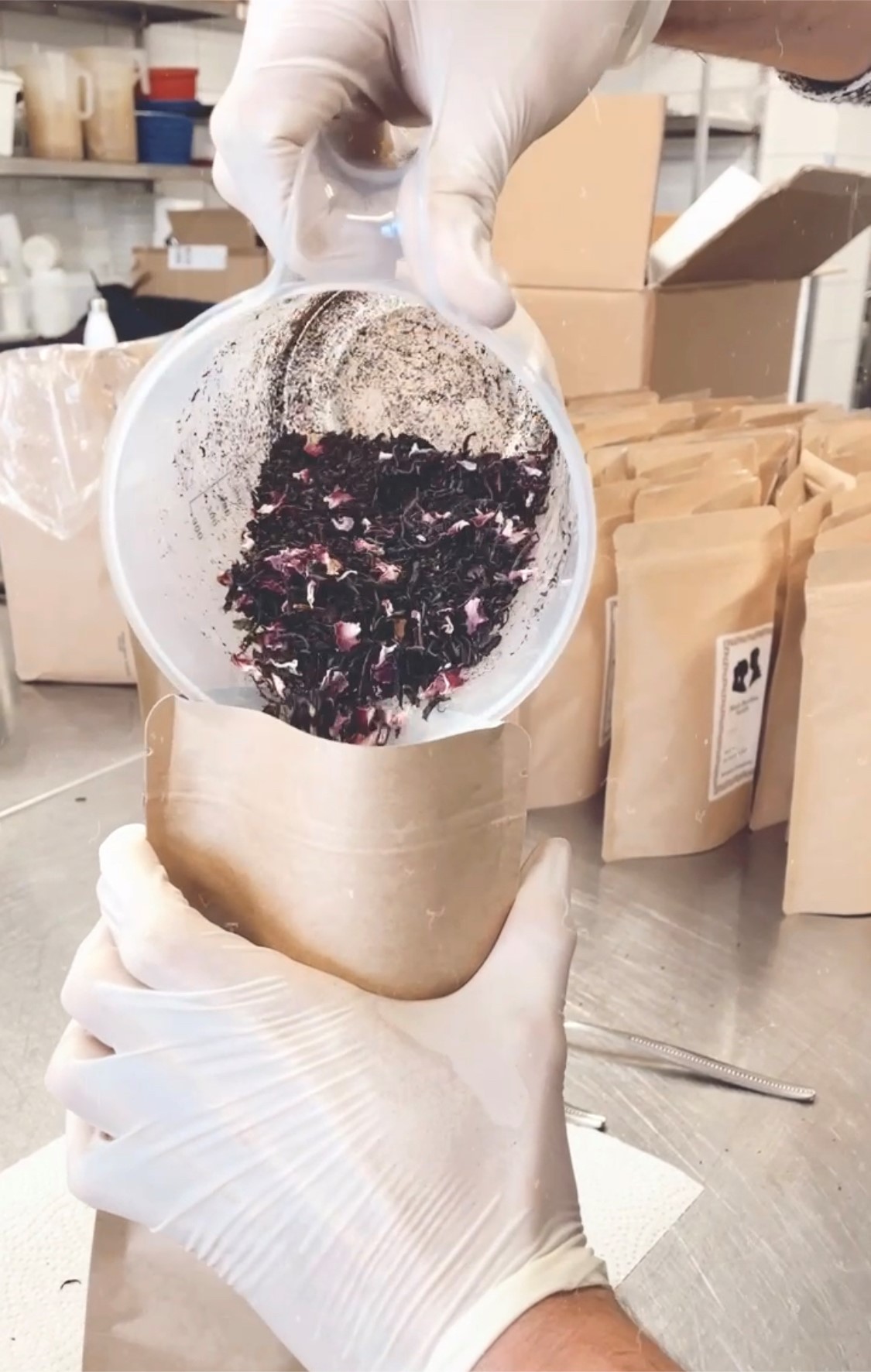
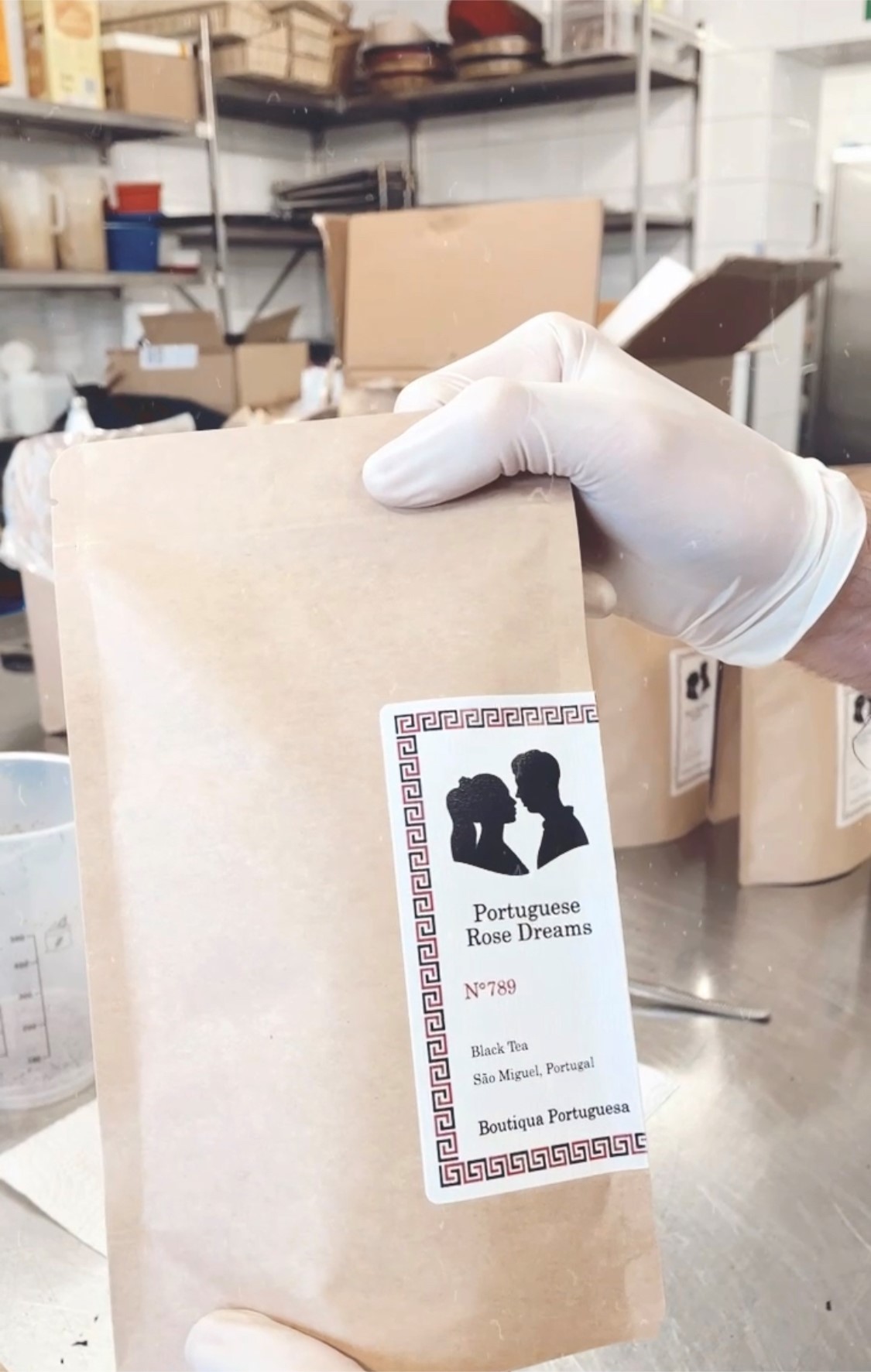
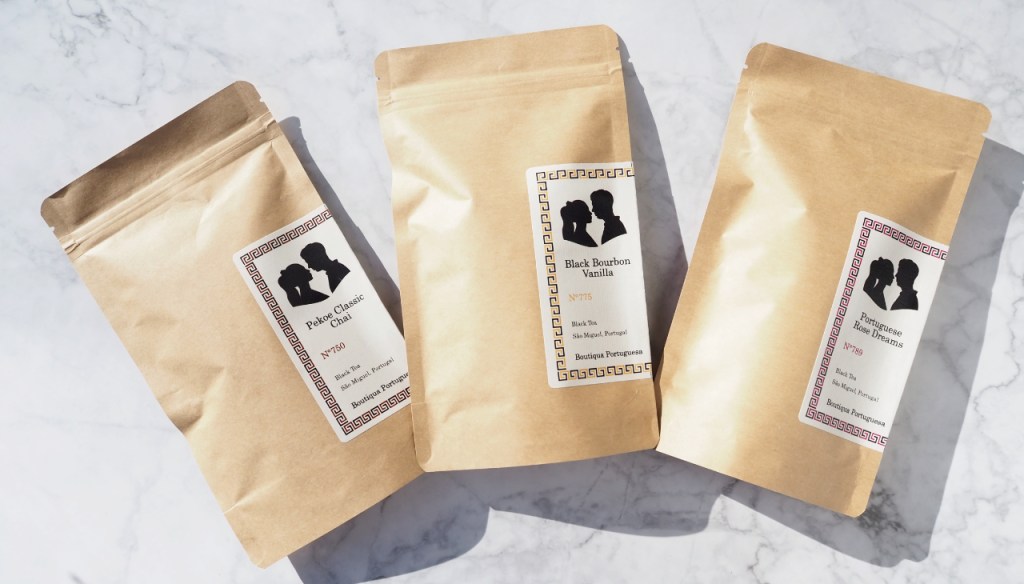
The two import Azorean tea and combine it with ingredients such as pink pepper, cardamon, ground ginger, rose petals, and clove. They mix the tea and spices in a local industrial kitchen. Giuseppina is responsible for the teas’ flavour profile and likes to play with flavour combinations. So far, they have produced three types of green tea, wrapped in brightly coloured packaging. Where did the inspiration for the design come from? From Portuguese tiles, they respond, the so-called Azulejos. Their tea endeavour didn’t stop there. The young couple just launched five flavours of black tea: Dark Azorean Pekoe, Dark Orange Pekoe, Pekoe Classic Chai, Black Bourbon Vanilla, and Portuguese Rose Dreams. The packaging is inspired by a different type of Portuguese tiles, named Calçadas. In the future, the two dream to create even more products and sell them internationally at Boutiqua Portuguesa

giuseppina and marc’s azorean green tea line
marc and giuseppina’s azorean black tea line

Marc and Giuseppina have kindly gifted me a selection of their products—the Black Bourbon Vanilla tea and two delicious-smelling soaps from Ach.Brito. I also received a hand-written postcard from Algarve, a charming personalisation they add to every order. A warm cup of comforting Black Bourbon Vanilla tea next to me, I look at the postcard. Maybe it’s time to book the next holiday? I picture myself sitting in the sun, eating tinned sardines and Bacalhau, my feet resting on warm Calçadas.

archaeobotany and food history

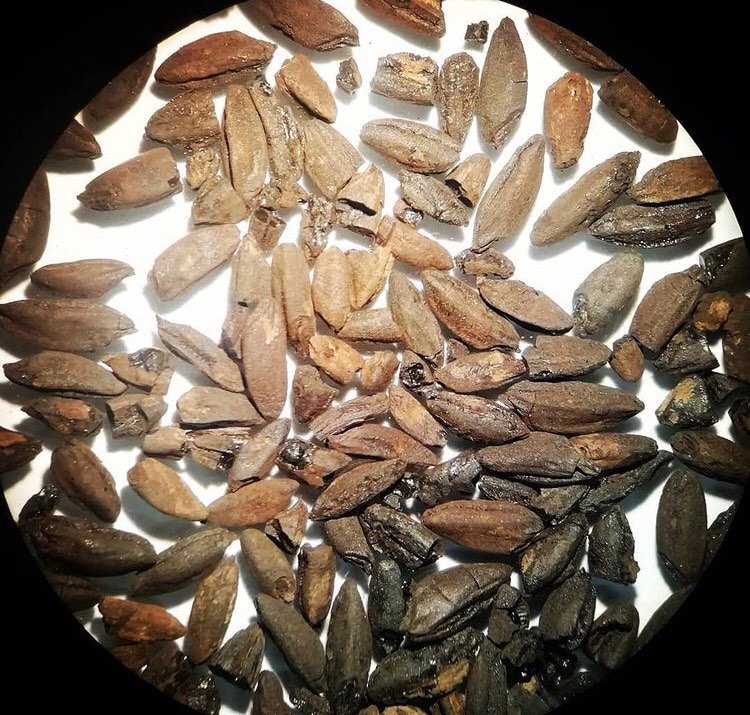
charred cereal grains

With monumental buildings giving way to the dusty dominance of time, would you believe that the seed of a salad can survive centuries?

Traces of the past appear in many shapes. To reconstruct the realities of long-gone people and societies, historians and archaeologists usually seek to collect and contextualise written sources and objects. Yet, natural and man-made forces frequently eradicate even the most sturdy, massive structures. However, between all the dirt and crumbled stones, a grape pit or cereal grain may still lay intact, providing a window into the culinary traditions of a different time and place.

The archaeological study of old plant remains is called archaeobotany. Archaeobotanists analyse fruit and vegetable pits and seeds to better understand past societies’ cultural, culinary, and economic habits. Food consumption, after all, penetrates every layer of society. Every single person has to eat. Applying archaeobotany, therefore, can illuminate spaces sometimes overlooked—the small but busy storage room instead of the grand dinner table, the rubbish deposit instead of the foyer. Through an archaeobotanical analysis of food, according to Charlotte Molloy, one can generate “a more intimate, and truthful insight into how people were living.”

archaeobotany can give you so much about everyday life and ordinary life.

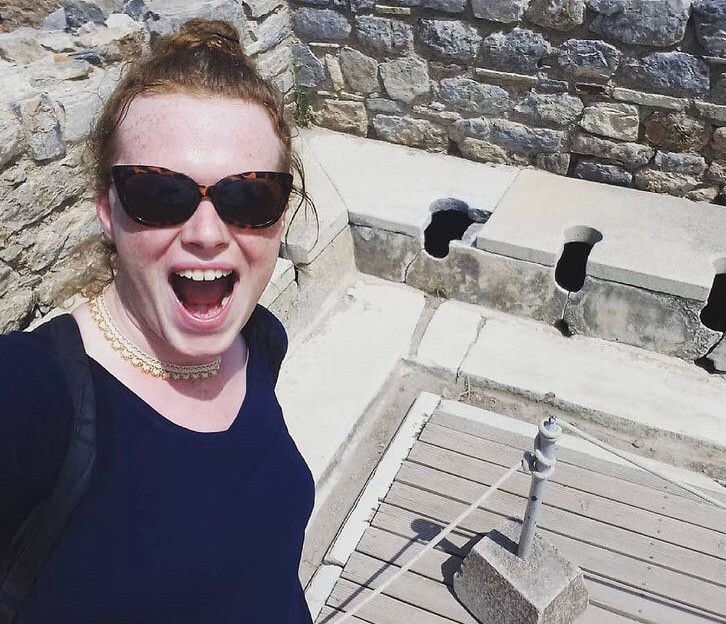
Charlotte Molloy is a practising archaeobotanist. We met at the University of Oxford, where we both completed our master’s degrees. Charlotte’s interest in classical studies and old empires began at the end of high school. She profoundly enjoyed reading Homer’s Odyssey and following Odysseus’ travels. Encouraged by her tutor, she decided to study Classics at Royal Holloway University in London. In her first year, Charlotte learned about ancient Greek and Roman history but was hesitant to explore archaeology: “I knew that Indiana Jones probably wasn’t a realistic representation of archaeology. I thought it was people with long beards and crazy jumpers.” She also felt that the profession wasn’t very welcoming for young women. She admits, “I couldn’t have been more wrong.”

When Charlotte encountered archaeobotany, she was fascinated by the possibility of investigating everyday culture through ancient diet. In her second year at university, Charlotte signed up for a course on Roman Britain, which included a session on food history with archaeologist Dr Lisa Lodwick. This session was eye-opening. Charlotte learned how much the food people ate—and the way that they ate it—could tell you about an individual or a culture. Employing archaeobotany, one could explore habits as small as a daily meal and spaces that are “not linked to these grand monumental gestures”, usually shaped by elite classes. Archaeobotany, she realised, has the potential to create a wider, more inclusive path into the past.

The summer she completed her undergraduate degree, Charlotte joined archaeologist Dr Erica Rowan on the Sardis excavation site in Turkey. For four weeks, Charlotte worked as Dr Rowen’s assistant. Under the burning sun, they studied plant samples from the early bronze age to the Byzantine period, spanning almost 3000 years of history: “With these samples, you can track food through millennia.” Charlotte came back to the Sardis excavation site the following summer. This time she could study plant remains from the late antique to late Roman period, from the 4th to the 6th century CE. Working in the field solidified Charlotte’s excitement for the profession—her path as an archaeobotanist was set.

charlotte in action

how does archaeobotany work? how do archaeobotanists find, contextualise, and interpret tiny plant remains?

Plants can find their way into the archaeological record by four different ways. The most common way is through charring; after contact with fire, a carbon fossil of the hard parts of the plant—seeds and grains—are left behind. Imagine an accidental domestic fire or a natural disaster—these kinds of events often create charred plant remains. Plant remains can also be preserved by mineralisation; when they come into contact with substances like phosphate or calcium. To decay, plant matter needs moisture and oxygen. Take one of those away and it does not decay. Therefore, if a plant is left in an extremely arid environment, it can be preserved through desiccation. There exist astonishing examples of this process from the Amheida excavations in Egypt, where entire baskets full of dates have been found buried in the sands since the Roman period! At the other end of the scale, if the plant matter stays submerged in a waterlogged environment, it can also remain very well preserved. For instance, two iron age wells excavated in Silchester in England contained the waterlogged remains of the oldest coriander found in the country! When preserved through charring, mineralisation, desiccation, and waterlogging, it is astonishing how plants and their remains can survive for centuries.

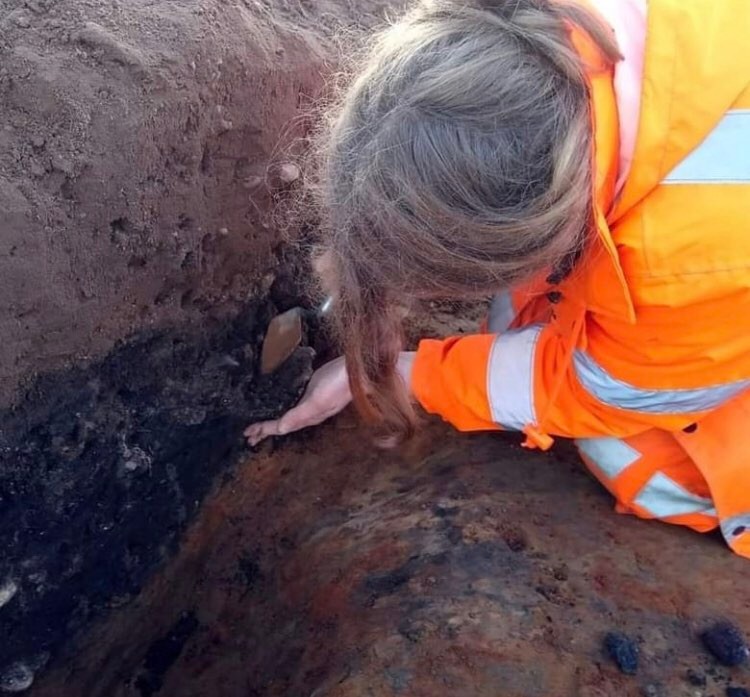
charlotte at work

Plant remains are found within soil samples—a so-called fill. After its excavation, the fill is processed to separate the plant remains from the soil. Processing either involves wet or dry sieving in the case of waterlogged or desiccated remains or flotation in the case of mineralised or carbonised remains. Because the carbon or mineralised remains are lighter than the soil that they are in, they will float to the top whilst the soil and rocks sink to the bottom when dropped in water and agitated. Separated from the soil, the plant remains will be dried and are ready for closer analysis with a microscope.

the flotation tank used by charlotte and dr erica rowan at the sardis excavation in turkey
analysis of plant remains under a microscope

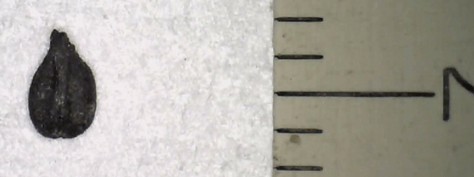
Although these are quite literally very small discoveries, as the mm scale in the picture illustrates, the excitement of recognising food and plants that are still common today is palpable for Charlotte: “I love finding grape pits because they look like the skulls in those wild west bars, the skull of buffalos […] it’s so cool.”

a charred grape seed

how do you analyse the plant remains? how much can you actually learn from a small grape pit?

Charlotte sees archaeobotany as “a way of communicating with ordinary people in the past”, seeing not just into their store cupboards but into their mindset. Plant remains can give astonishing insight into people’s culinary habits and their relation to their land. Archaeobotanists can trace what cereals people were consuming, how these cereals were stored, and where they were processed. For instance, “if a sample is particularly rich in just grains, the evidence leans toward cereal processing or agricultural processing. In contrast, if a sample has very few grains in comparison to how much charcoal there is you can infer that it is more likely that the grains were just windblown. If there is a very wild range of different types of food, edible food, and a lack of charcoal, it can be evidence of food storage.” Further, if there is a rare seed that one didn’t expect to occur in the specific area and time excavated, “you can track seed travelling”. Through food, archaeobotanists are able to study cultural and culinary habits of past societies with remarkable detail.

charlotte’s research: using archaeobotany to analyse roman houses

Charlotte uses archaeobotany to better understand how space was used in Roman houses. When it comes to these houses, there is a lot of space archaeologists tend not to analyse—spaces that are not grand dinner rooms or entrance halls. Charlotte intervenes: “wouldn’t it be interesting to use archaeobotany to figure out the use of these spaces?” One place she investigated was a house in Sardis, Turkey. This house had been destroyed by a fire in the early 7th century, leading to a rich amount of charred plant remains. Now the detective-job of the archaeobotanists begins. Charlotte explains to me that there was one room where many pots, pans, and pottery were found. Yet, there was no evidence of a former stove. She wondered, could it be a storage room? Or was it a kitchen, despite lacking traces of a stove? Looking at the archaeobotanical evidence, she found a high concentration and wide range of edible plants; olives, figs, nuts, barley, and peas, but no evidence of crop processing. That suggests that the activity being carried out in the room at the time of the fire was food preparation. She finally concluded that the room may have served as a kitchen.

As part of her research, Charlotte investigated another case study, a villa in Saglasos, built originally in the 2nd century CE. Archaeobotany could reveal that the estate was sub-divided and used for agricultural activities in the 6th century. In one room, excavators had found a press for mulberries and evidence for making mulberry jam. Another room showed evidence of grain threshing, a third room traces of burned rubbish, including food. Together with analyses of space, Charlotte summarises, “archaeobotany can help us to reveal and tease out those hidden histories that are told through food.” Asked where the most fruitful fills for archaeobotany are usually found, Charlotte responds: “You would be surprised about the amount of remains we find from toilets.”

it’s true. we are what we eat—it says so much about us, our personality, and our background.

How will future archaeobotanists reconstruct current culinary cultures? Chances are they will have a hard time. Food mobility, sewage systems, and genetic modifications of seeds will make it very challenging to formulate hypotheses on food cultivation and consumption. Just think about genetically modified seedless grapes. What should the archaeobotanists analyse under a microscope without any hard plant remains? To be honest, I now feel compelled to refrain from eating any more seedless grapes or tangerines. I want all these tiny seeds and pits to continue to defy the devastation of time, the angel of history. Half-joking, half-serious, Charlotte concludes, “The real shame about modern toilets is the u-bending of the flush […] all the modern archaeobotany is flushed into a sewer.”

romagnoli – wooden pasta tools since 1918

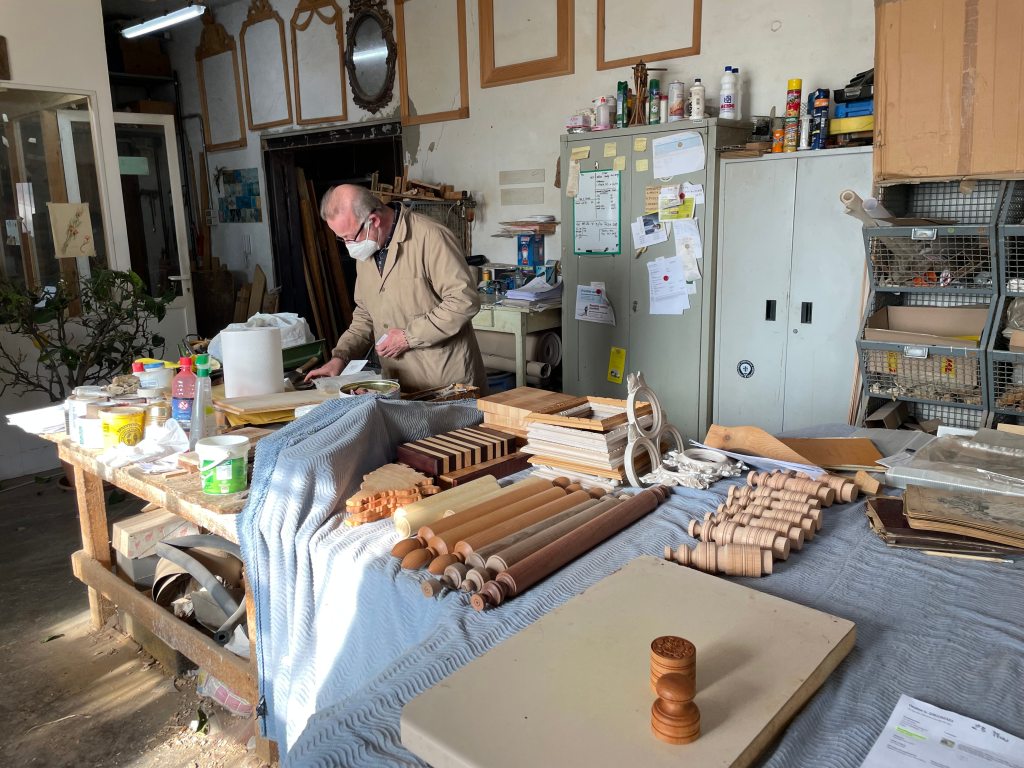
filippo romagnoli in his wood carving workshop. on the table are cutting boards, rolling pins, and pasta stamps.

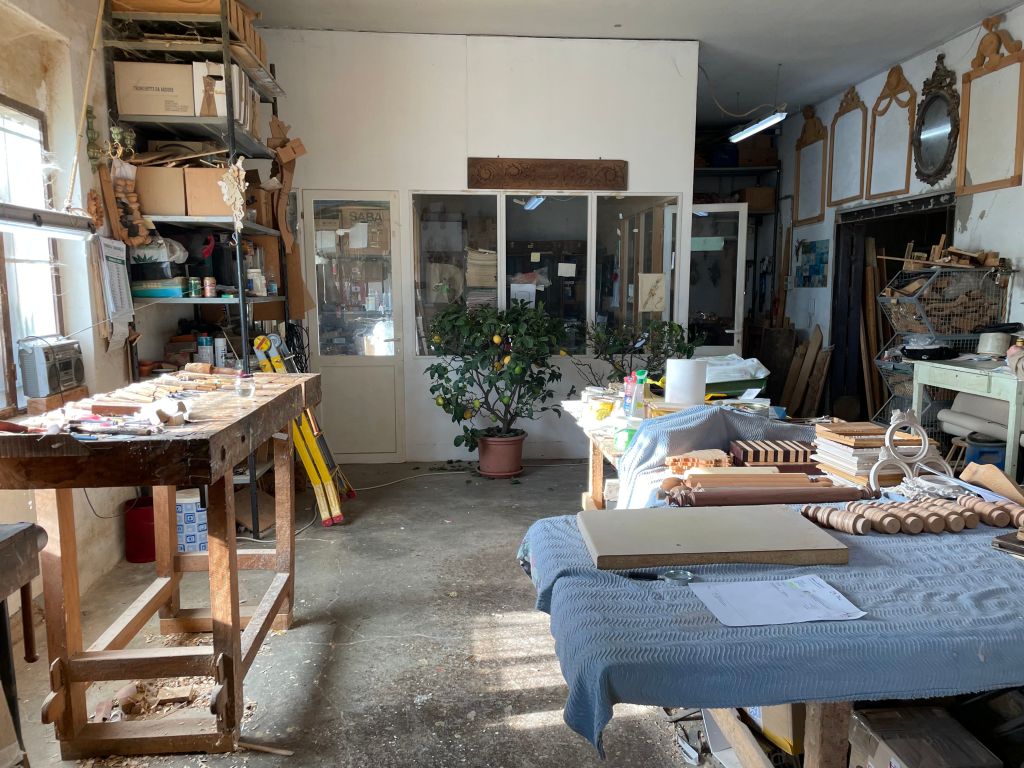
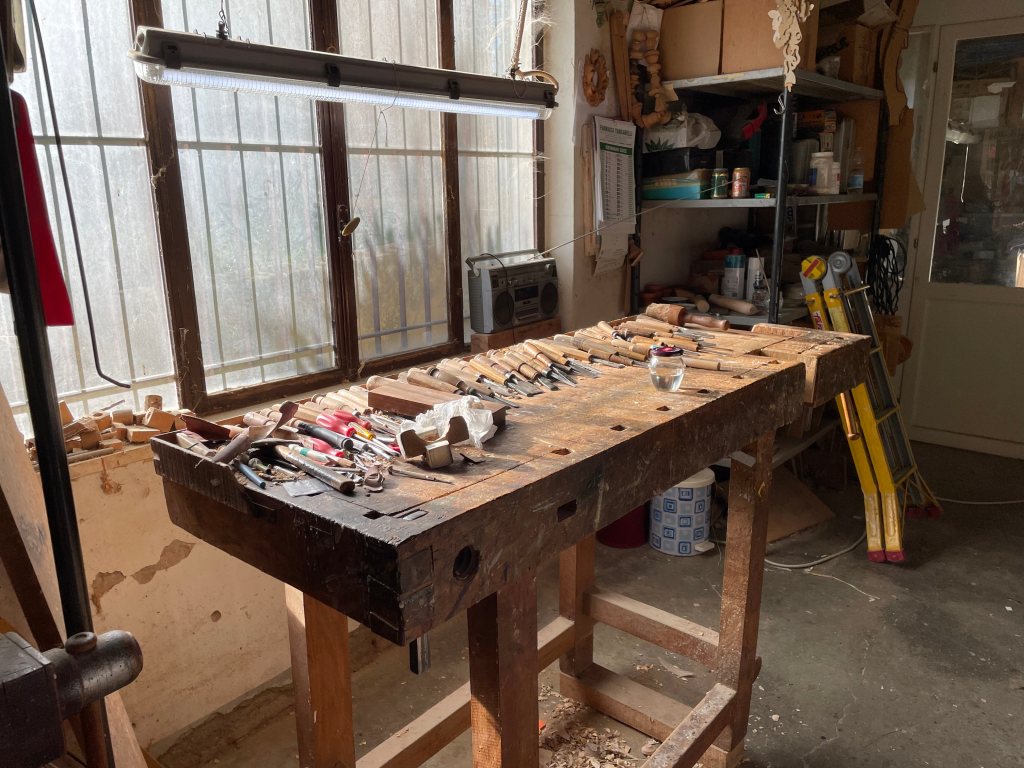
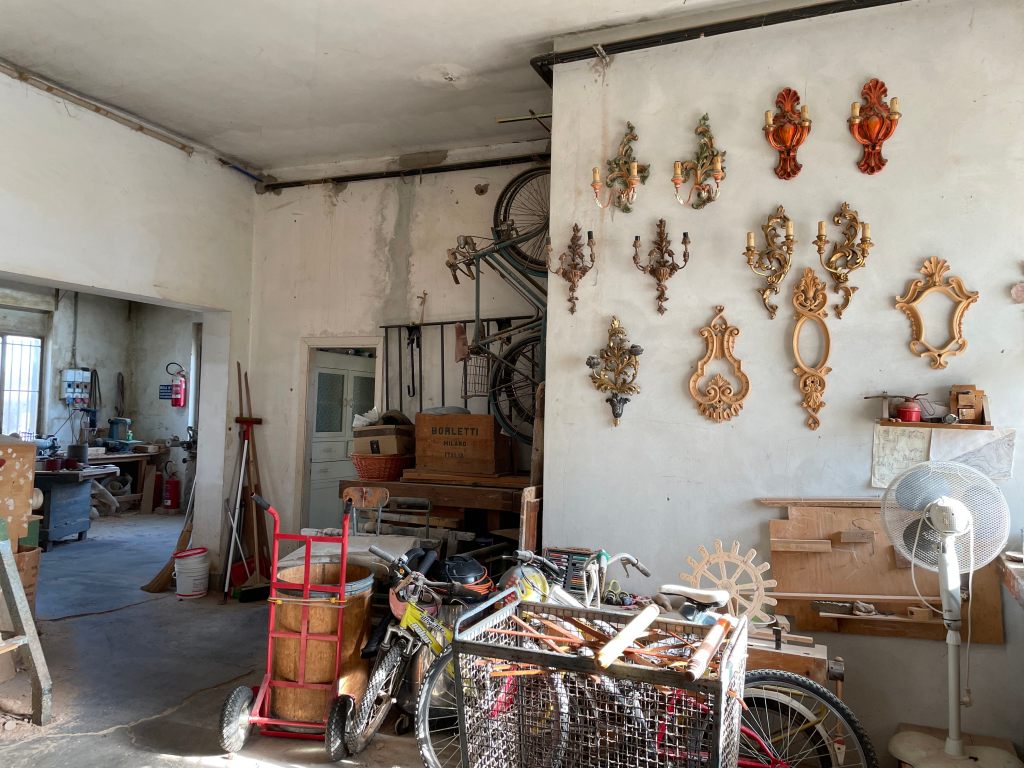
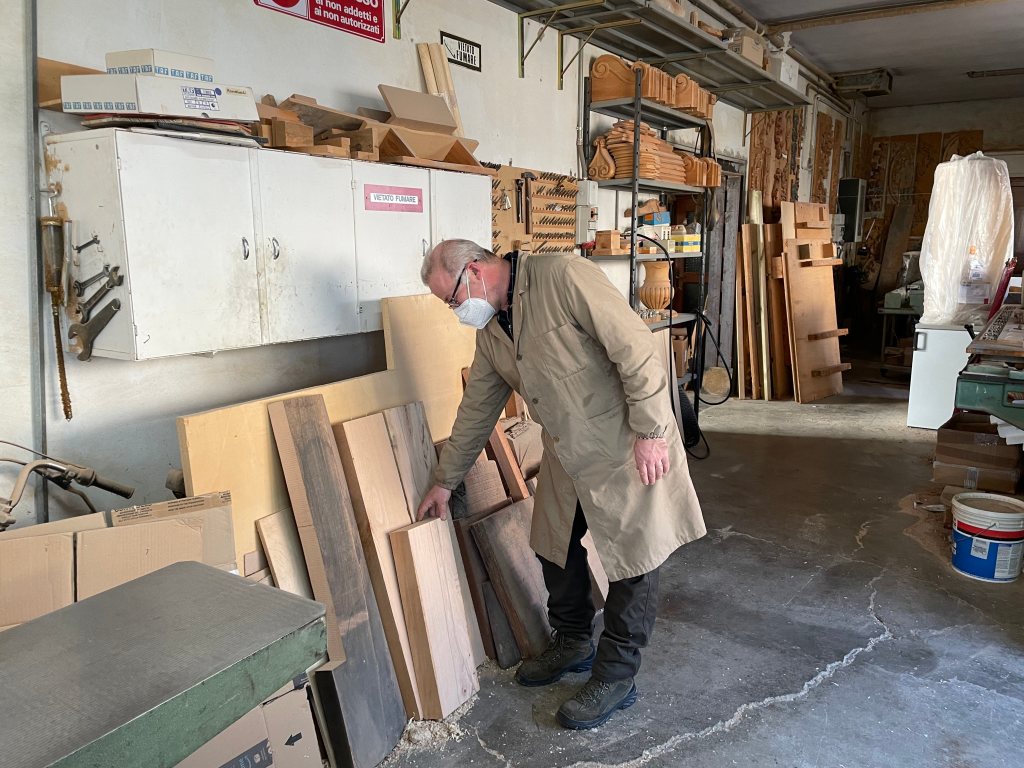
In Tavarnelle Val di Pesa, a small town in the famous wine area Chianti, I park my car to visit the wood carving workshop of Filippo Romagnoli. From the outside, the building looks like a normal family house in a residential neighbourhood. The workshop is on the ground floor, and Filippo’s family lives above. When you enter the first room, you notice wooden frames and candelabra that hang on the workshop’s walls. Large shelves are packed with wood and carving projects in various stages. A big table stands in the middle of the room. On the table lay refined wooden rolling pines, beautiful cutting boards, and pasta stamps. The stamps are still waiting for their final finish. Bright sun beams illuminate the carving table on the right side of the room. It must carry about a hundred little carving tools from Italy, England, and Germany, among other places. The producers of these specialised tools are small artisanal businesses as well. Next to the carving table stand two delightful little lemon trees that have found refuge inside from the colder winter days. The second room of Filippo’s workshop is filled with bigger tools that he uses for the initial carving stages of his wooden products. Planks of different types of woods are leaning on the wall, waiting to be transformed. The workshop’s atmosphere is calm, and warm wood dust flies peacefully through the air.

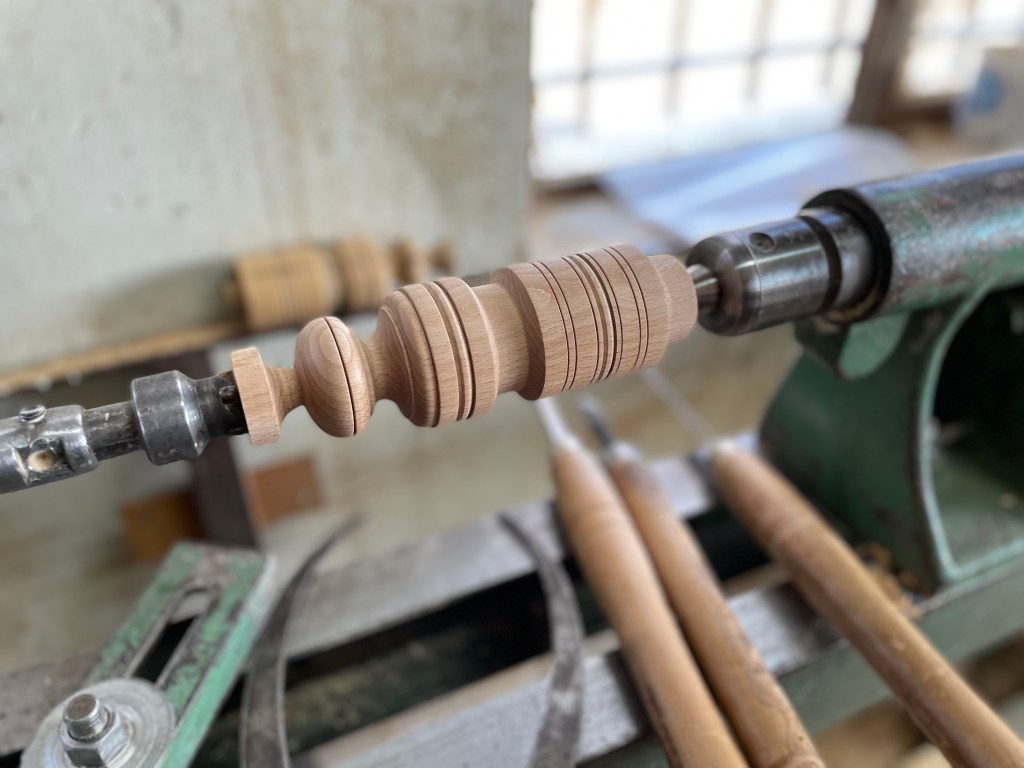
the outer shape of the corzetti pasta stamp is carved

Filippo Romagnoli is the third generation of a Tuscan family of wood carvers. His grandfather Ferrando learned how to carve wood at the age of 11. In 1918, he joined a workshop in the artisan neighbourhood in Florence named San Frediano. At the time, Florence was one of the most important cities for wood carving in Italy. The city was filled with Renaissance-like workshops, the so-called “bottega”. These workshops were places of teaching and learning and collaborative work. A wider network of workshops ensured the excellence of craftsmanship in the city. If a student was very good at designing but less skilled at wood carving, the master would put him in contact with workshops of a different craft. This supportive structure allowed students to maximise their talents. Reflecting on the bottega’s communal organisation and with a critical view on today’s individualisation of artistic genius, Filippo explains: “there is no one-man dance in art”.

At the bottega, apprentices would start at a young age to learn the craft and responsible work behaviour. Filippo shares with a twinkle: “at 11, they’re very smart, at 12, a bit less.” The learning process was long and slow, the weeks filled with hard work. A crucial point of the young wood carver’s education was understanding that similar shapes may occupy different meanings. For instance, the numbers 6 and 9 have the same shape but symbolise different quantities. One defined form possesses a broad expressive quality. To project this kind of knowledge onto a three-dimensional object and to plan and play with its effects was challenging: “It’s like a rebirth.”

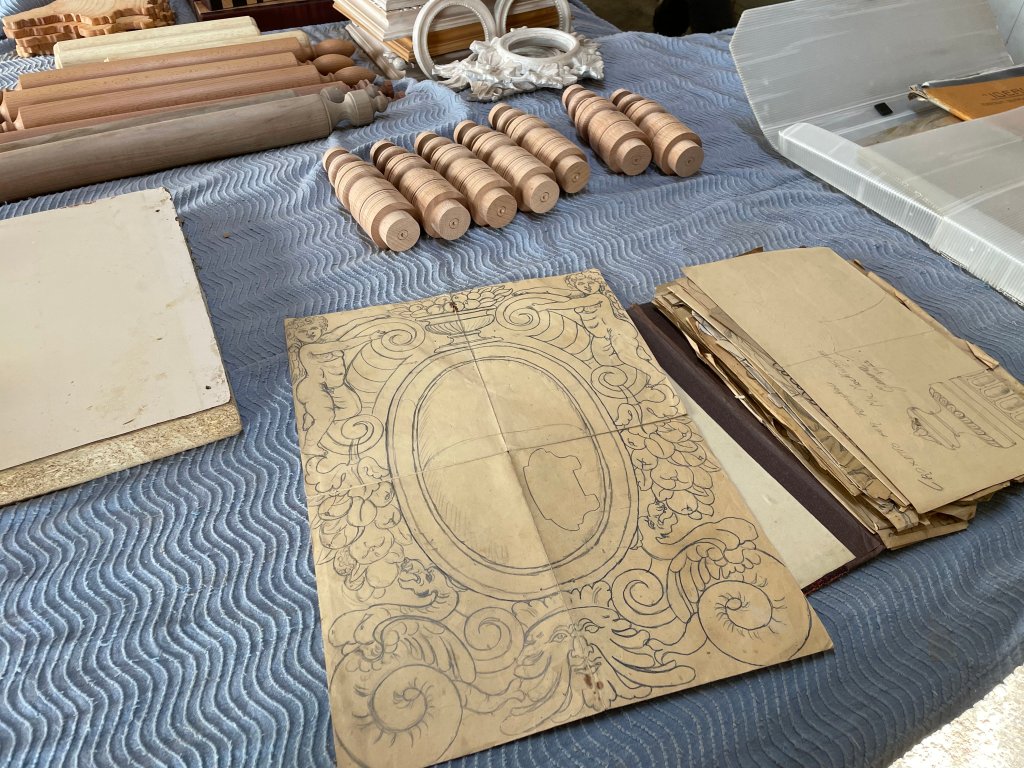
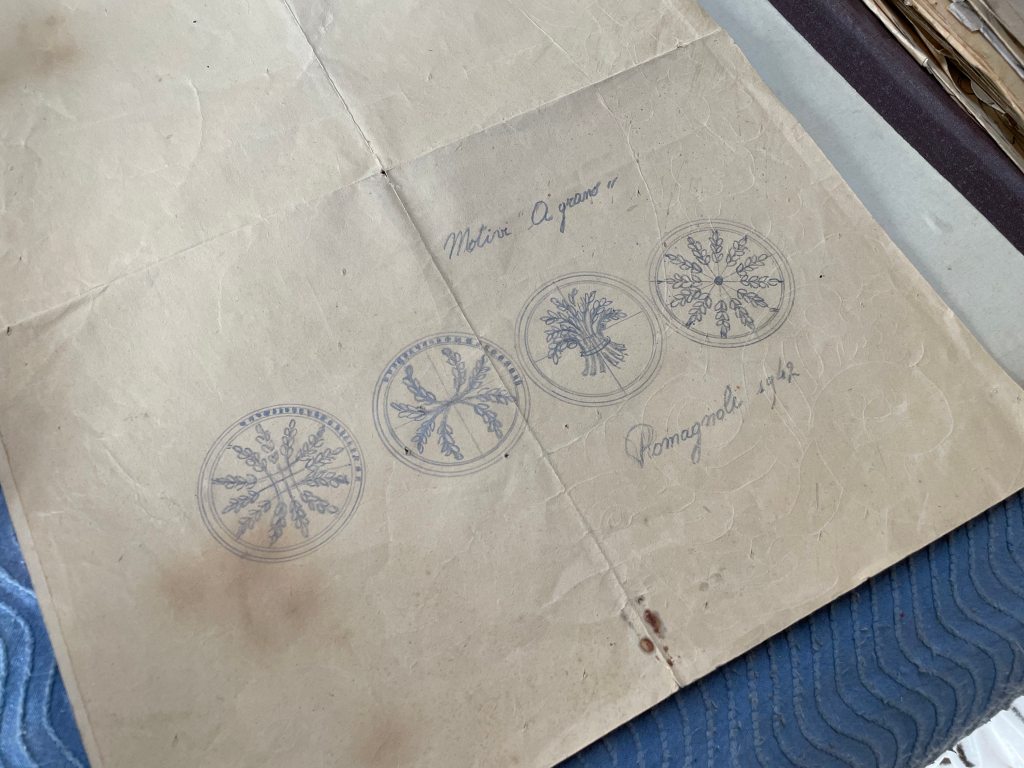
this paper shows drawings of giulio campolmi, the master of filippo’s grandfather. they convey a lesson on different wood carving styles. 600 luigi 13 stands for 1600, louis 13th (king of france) – style
designs from the workshop of giulio campolmi
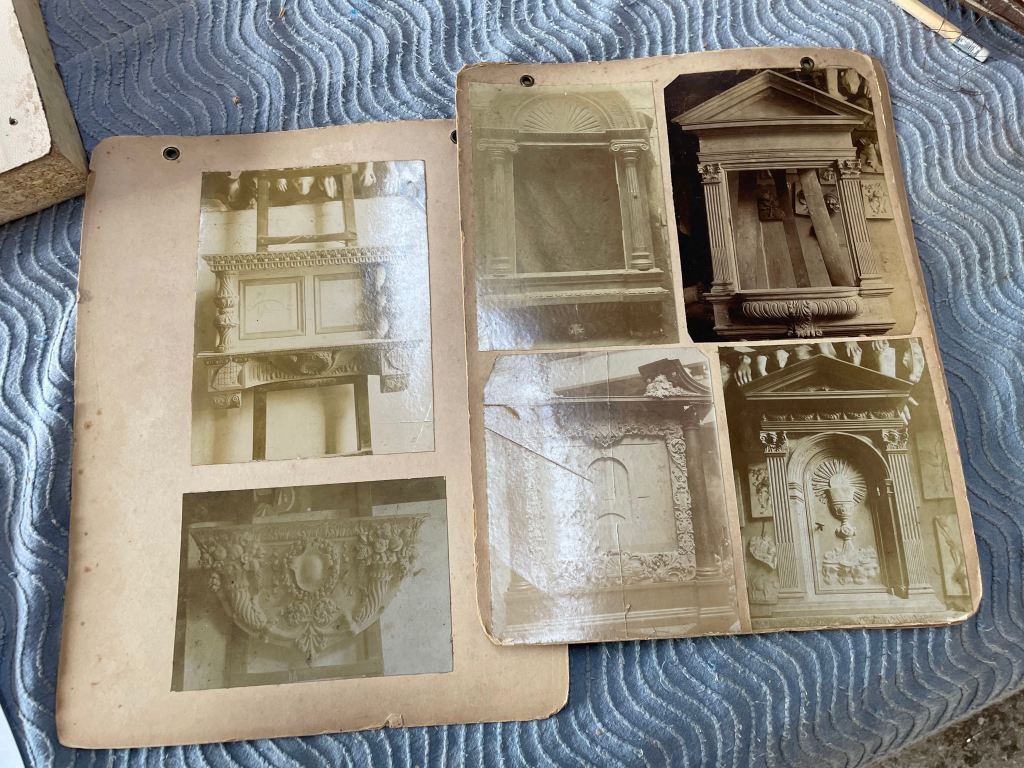
old photos of giulio campolmi’s workshop in florence. the hands on the top left and bottom right photos are casted from young children and poor people from the neighbourhood who would get breakfast in return

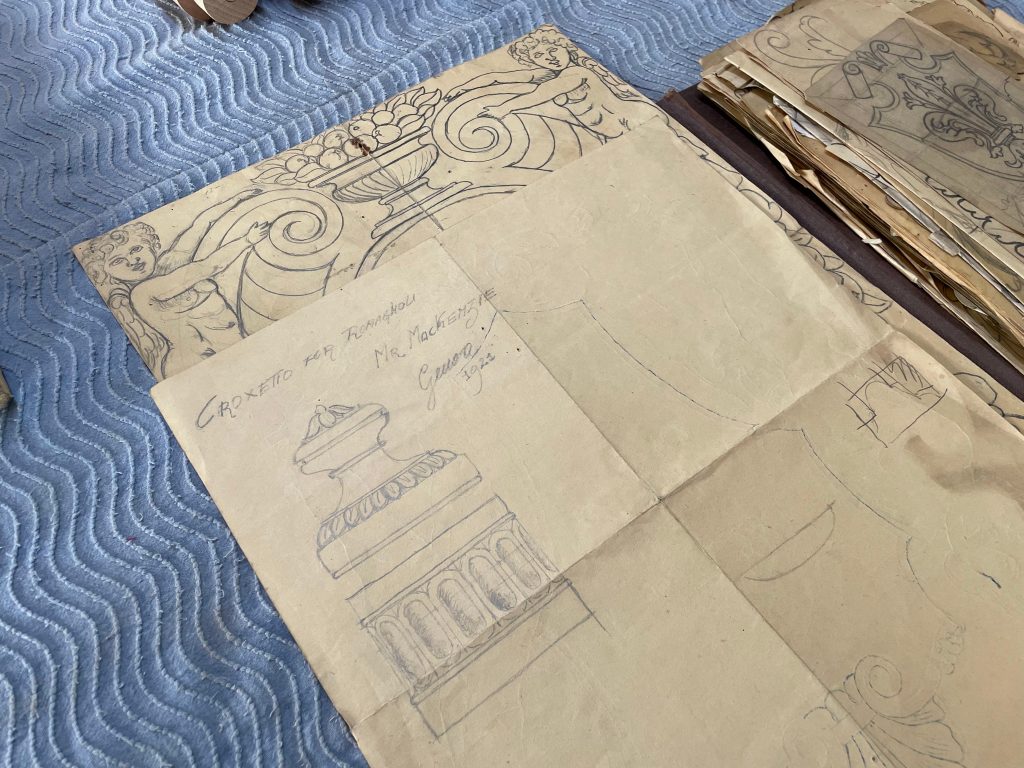
Filippo’s grandfather was trained at the workshop of master Giulio Campolmi. It was located at the Via Santa Maria in San Frediano, near the Teatro Goldoni. The workshop represented a novelty of industrialisation—Campolmi was paid by bigger factories to train apprentices to eventually become their employees. He collaborated with many famous architects at the time, which gave his students the chance to work on more advanced and intricate projects. In the early 1920s, an architect who rehabilitated an old castle in Genoa brought pasta stamps to Campolmi and asked for their restoration. The apprentices were laughing at this curious object, since they usually worked on larger pieces. However, this marked the moment when Filippo’s grandfather began to carve pasta stamps. A hundred years later, the family tradition of carving pasta stamps lives on in Filippo’s workshop.

corzetti pasta stamp design for ferrando romagnoli, commissioned by mr mackenzie from genoa, 1921
corzetti pasta stamp designs, inspired by grains, by ferrando romagnoli, 1942

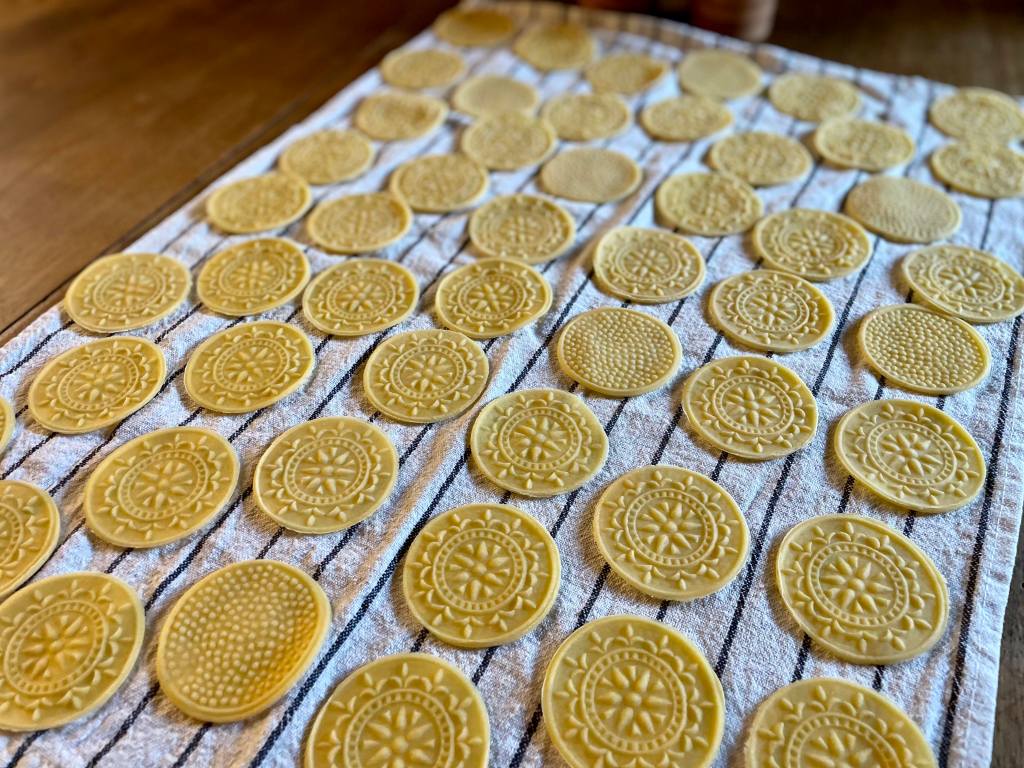
Romagnoli pasta stamps are tools to make Corzetti. Corzetti is a type of round, flat pasta, resembling a large coin. One side of the Corzetti shows an intricate design while the other displays a simple pattern. The decoration allows for a beautiful individualisation of the pasta. It also enables the sauce to better hold on to it. Corzetti come from North-East Liguria and date back to the Mediaeval Period. Nowadays, Corzetti are difficult to find. Since the profession of wood carvers is slowly disappearing, fewer and fewer pasta stamps are available to buy: “I found Italians had totally forgotten this item.” The wood-carved stamps, however, are vital to making the pasta. Filippo explains: “We’re part of the ingredients.”

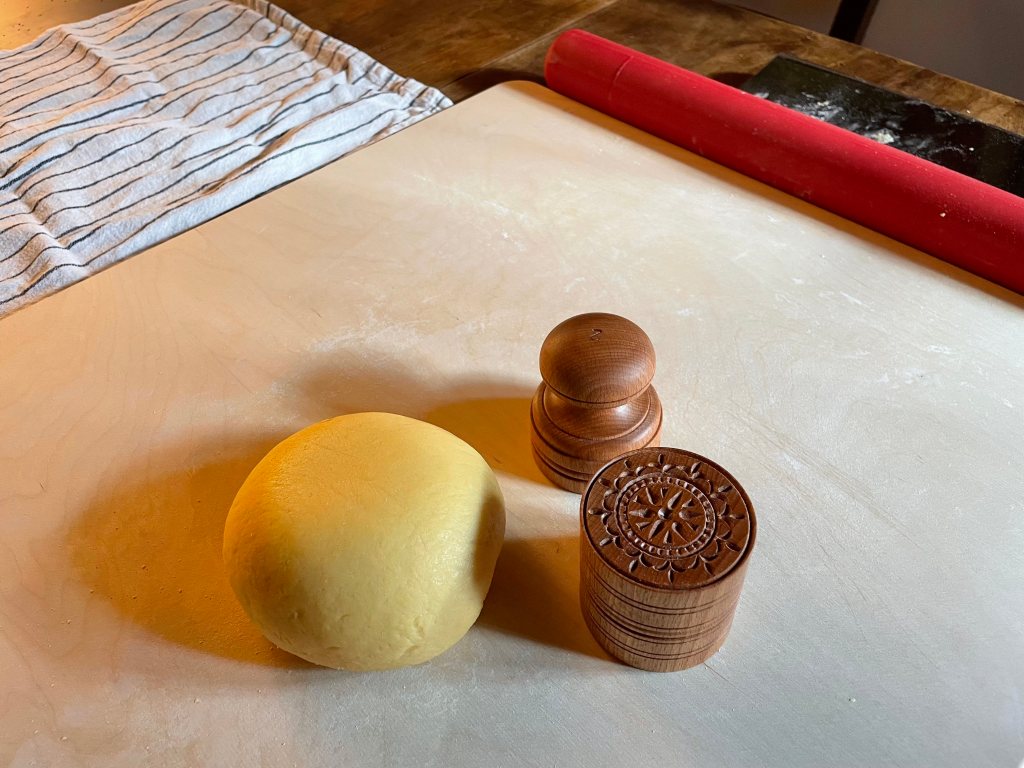
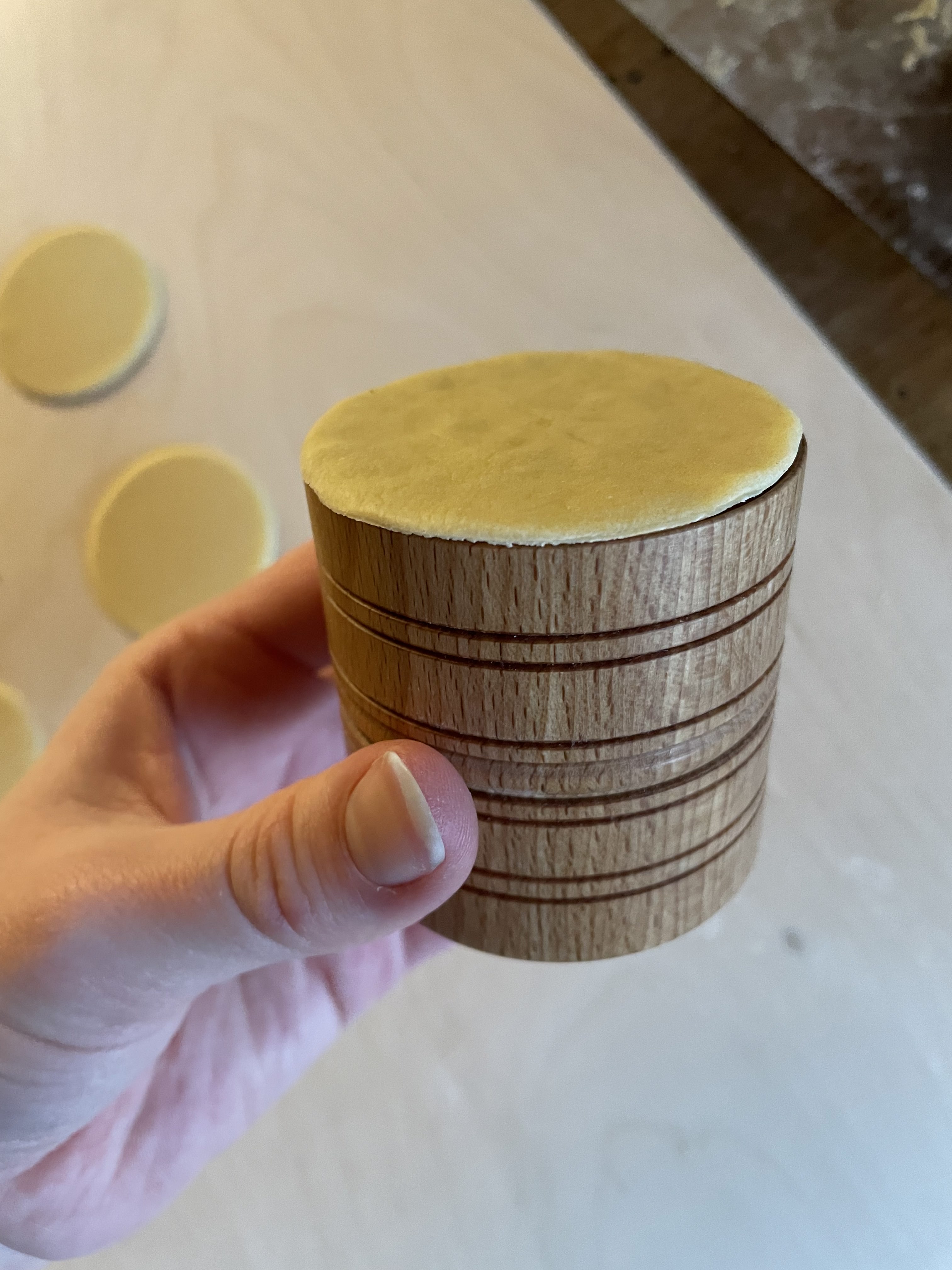
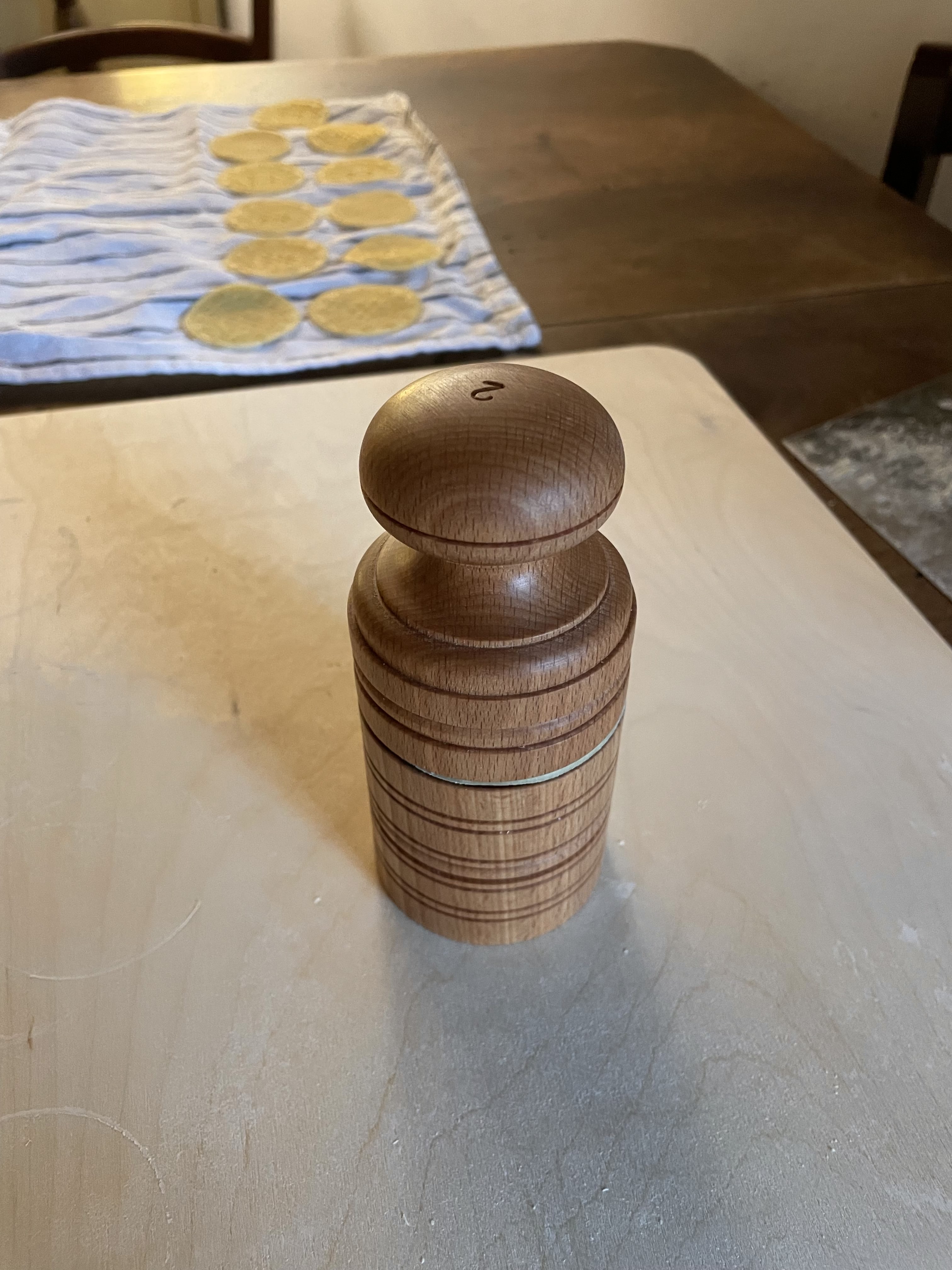
The Corzetti pasta stamp is a beautiful and very specialised kitchen tool. It consists of two parts. The lower part has a sharp edge to cut the rolled out pasta dough into round shapes. To create the decorations on the Corzetti, the round pasta disc is pressed between the two parts that have engraving imprints. Filippo carves the Corzetti stamps out of beechwood from the Casentino forest between Florence and Arezzo. The Casentino forest is a stony territory. The wood grows slowly, rendering it very solid. One cubic metre of Casentino beech wood weighs about 1200kg, making it much heavier than, e.g., beech wood from the German Black Forest. The high density is particularly important to stabilise the stamp’s cutting edge which is its most fragile part. The wood’s sturdiness is also essential to maintain the shape of the imprint. Filippo’s pasta stamps come with a range of different motifs; the Florentine lily, the bee, and an octopus, among others. Customers can also contact him for individualised designs.

When Filippo wondered how to carry his profession into the 21st century and the world of e-commerce, he found a market niche for pasta stamps. Especially American clients were interested in his work. Now, they make up his largest group of clients, followed by Australians and Brits. Filippo sells his pasta stamps, rolling pins, and cutting boards on Etsy, a platform that aims to sustain small creative businesses. This is not an easy task. The first difficulty lies in the fast process of making online purchases which stand in stark contrast to the slow process of hand-carving the pasta stamps. Luckily, Filippo finds his clients to be understanding. The other difficulty relates to the bureaucracy of shipping. His products have to fulfil tight and extensive regulations since they come into contact with food. The many certifications he has to provide keep Filippo occupied and take away essential carving time. He is very critical of how Italian and European bureaucracy burdens artisans who do not have the human resources to keep up with the paper work: “How can you make it difficult for mini businesses?”

Filippo is also worried that young people won’t find the profession of the wood carver attractive anymore: “If you want to do something with your hands, it’s very, very difficult.” The bottega workshops have disappeared, the master-student relationship now mostly lives on within families. Filippo studied at an art institute in Florence and was taught how to carve wood by his father: “you learn the beauty and the hardness of the work”. He believes that current school education is too mind-focused and fails to connect intellectual knowledge and artisanal craftsmanship. Students are not encouraged to consider physical professions. He asks, “Where is the artist to connect mind and body?”

i don’t want to make it by machine. at least one in the world has to do it by hand.

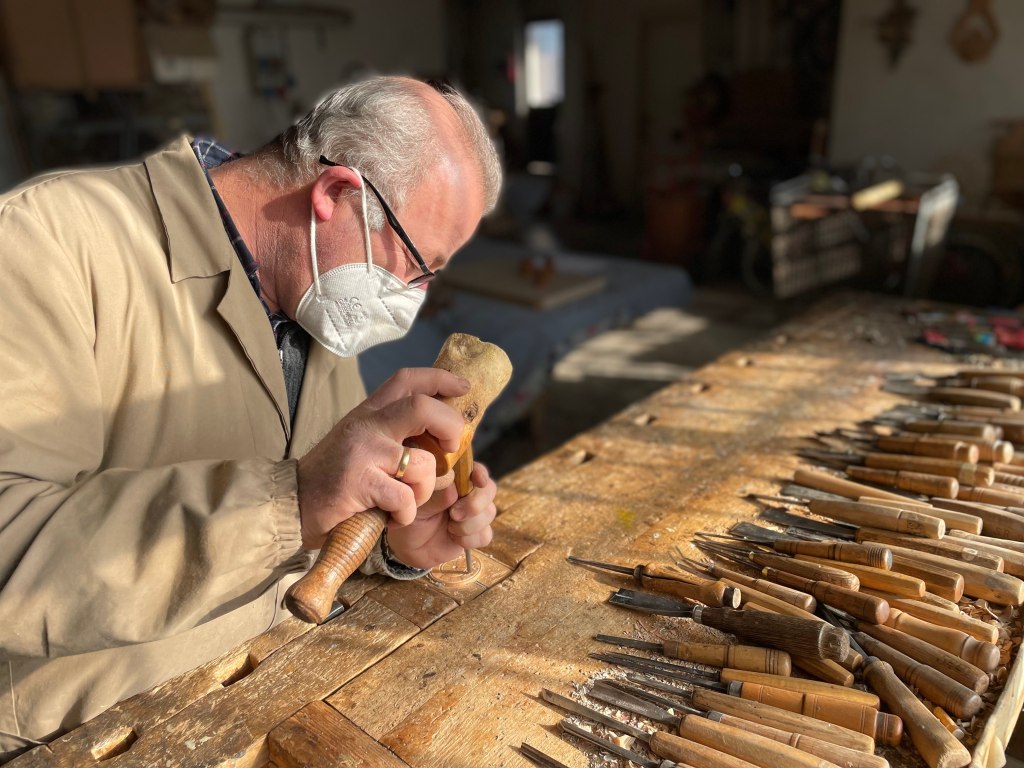
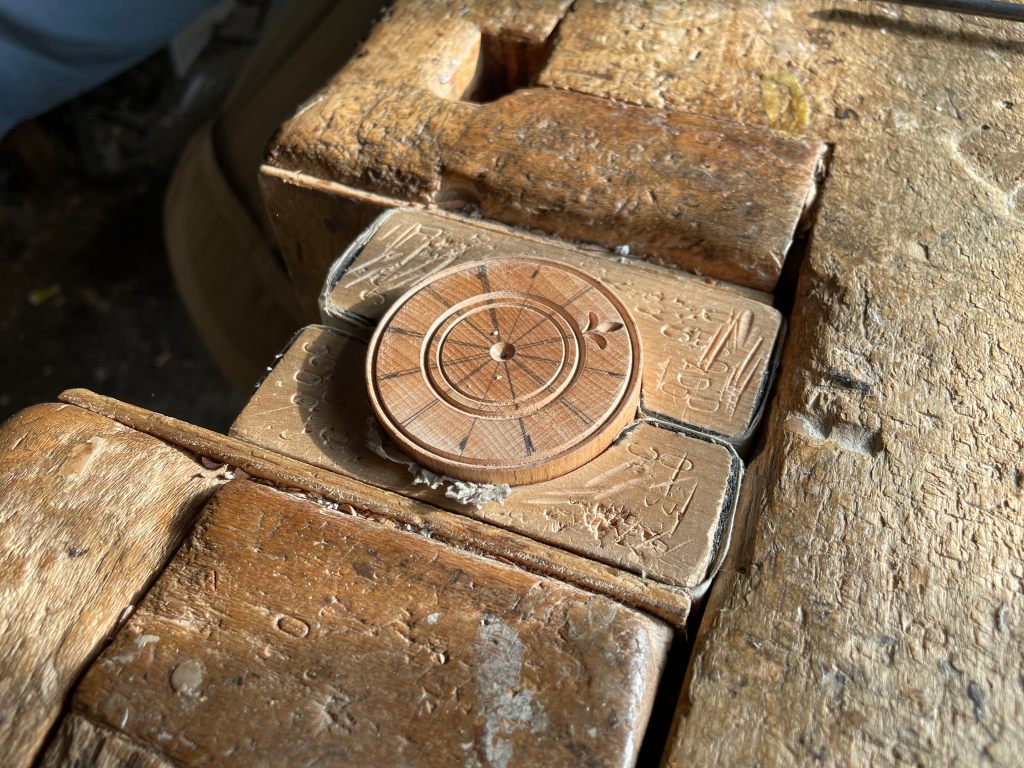
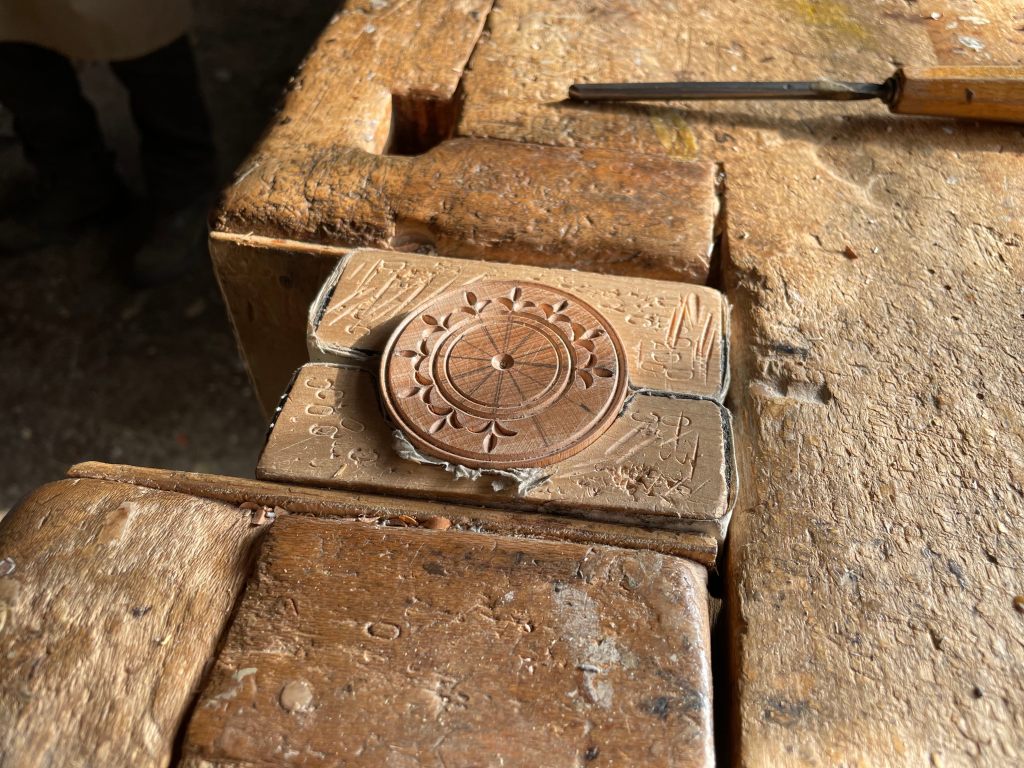
While Filippo and I are chatting about the past, present, and future of wood carving, he shows me his workshop and explains the various steps of making the pasta stamps. In advance, I had placed an order for a pasta stamp with the Florentine motif. Filippo waited with the final carving to give me a life demonstration of his work. The stamp is clamped into the carving table, and Filippo begins to carve the miniature lilies. He then proceeds to make the gauges in the centre of the stamp. Every little petal in the middle requires three precise gauges. It is fascinating to watch him work, as he cheerfully describes all the intricate details to pay attention to. Finally, he covers the stamp with a thin layer of non-allergenic mineral oil to protect it from humidity.

filippo romagnoli carving my corzetti pasta stamp
a final test with play-dough – the imprint is clear and beautiful
all wrapped up & ready to go

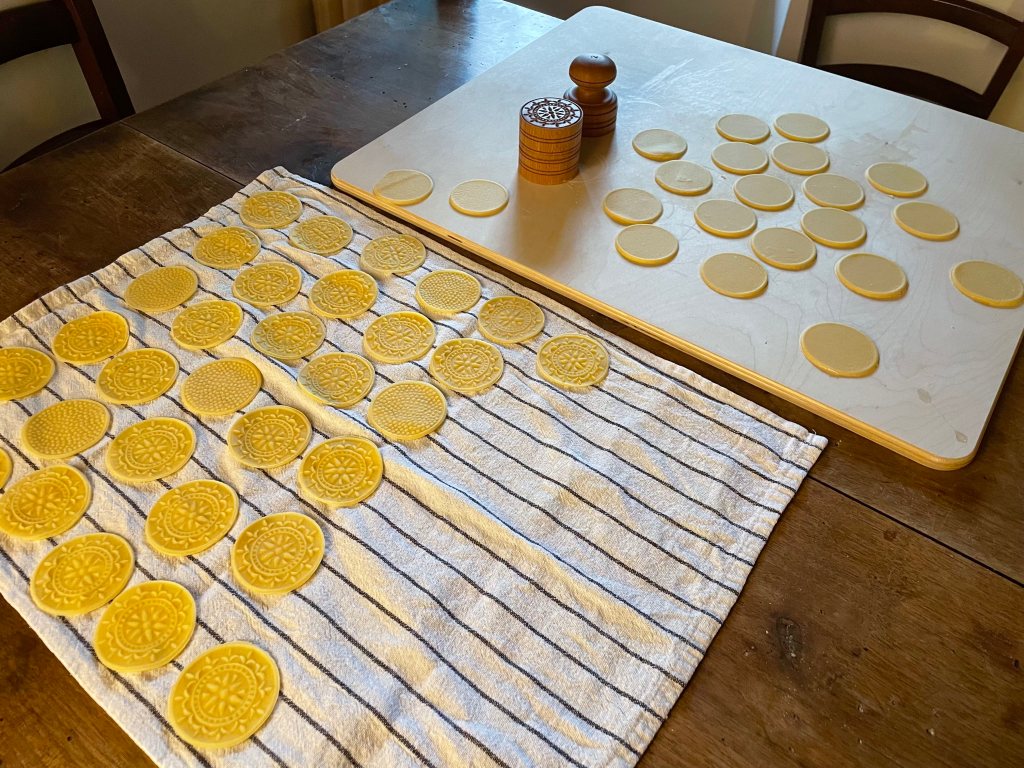
The pasta stamp in my bag, I drive back to Florence to make Corzetti at home. I use the pasta dough recipe from the Romagnoli website, which works perfectly. The dough is firm enough to retain the imprint and not stick to the stamp. It is a pleasure to see my kitchen towel slowly filling up with beautiful Corzetti coins. Having the pasta prepared, I braise turnip greens with garlic, chili, and anchovies in olive oil. Once the turnip greens become soft, I use a stand mixer to turn everything into a brightly green and creamy pasta sauce. Mixed with the cooked pasta and topped with toasted pine nuts, I look with excitement at my first ever Corzetti dish.

the final dish – home-made corzetti with cime di rapa and pine nuts

Thinking about all the different layers of work involved, I eat each coin with care and attention. I wonder, if the client from Genova wouldn’t have contacted Filippo’s grandfather 100 years ago to restore pasta stamps, what would have happened to Corzetti? If Filippo weren’t dedicated to maintaining his family’s craft, would I have ever learned about Corzetti?

What will happen to this pasta that is so tightly intertwined with the fate of the wood carving profession?

working at calino

a big piece of tuna belly & I

It’s December 2021, and together with a decidedly eclectic year, my culinary journey in Florence is slowly coming to an end. In the last four months, I took cooking classes at the Cordon Bleu school and completed an internship at the fish restaurant Calino. The internship forms part of the Cordon Bleu course, and the school helps the students find a suitable location to refine their culinary interests. New to the city, I was unsure which restaurants to consider. The typical Tuscan dishes were slightly too meat-heavy and rich for me. I looked for a lighter, fresher cuisine to learn from—one that also pays attention to a modern presentation and aesthetic of its food. Emilia, the coordinator of my cooking class, proposed Calino to me.

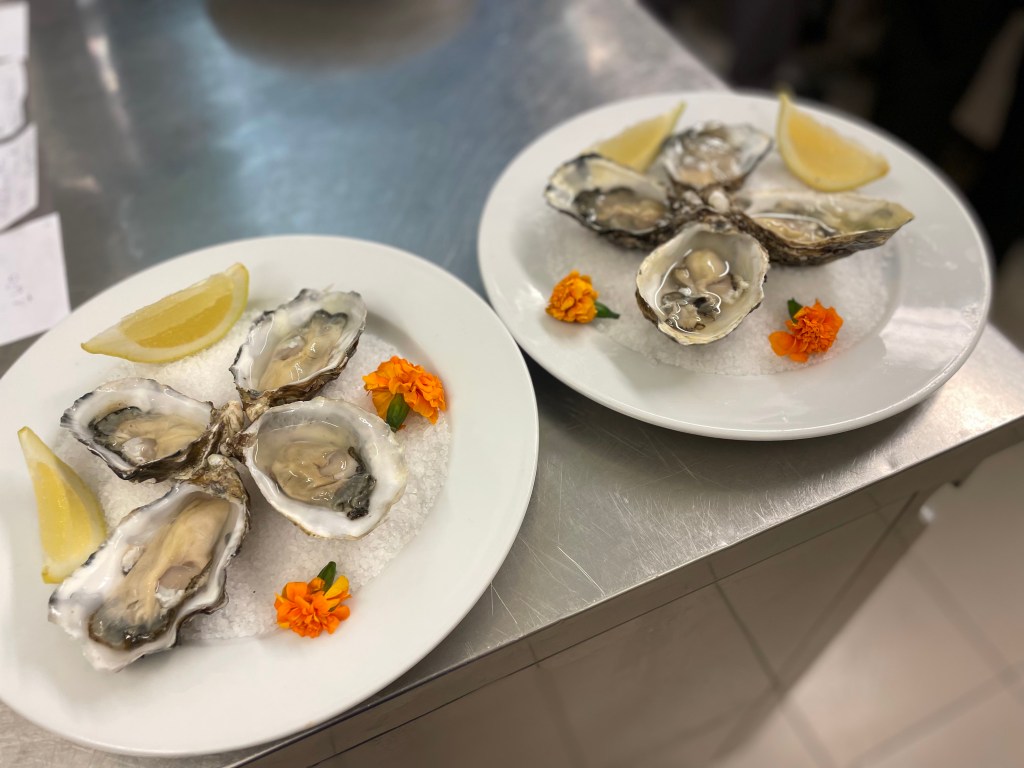
fresh oysters to start the meal
stuffed calamari with cauliflower, romanesco, broccoli and pumpkin
guance e lingue di baccalà su polentina – codfish on creamy polenta

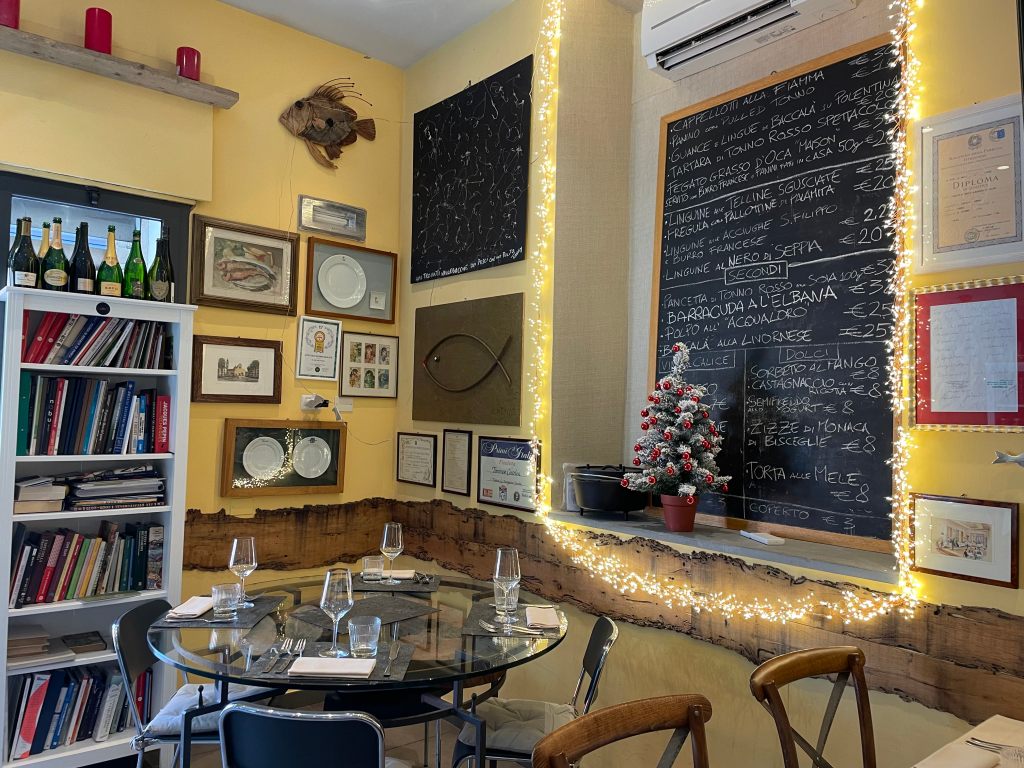
Calino is a fish restaurant located in the North of Florence at Piazza delle Cure. Its cuisine focuses on the quality and individuality of ingredients, their creative and liberal combination, freshness, acidity, and modern, minimal plating. When I looked up the restaurant online, I was certain it would be an excellent place to learn. Nevertheless, it was nerve-wrecking to walk there to sign the internship contract. My boyfriend dropped me off and tried to encourage me. I repeatedly checked my Italian vocabulary, tried to remember the words, and felt very uneasy about speaking. Back in my cooking class, the language barrier was challenging but I was part of a group. Now, I had to master the conversation all by myself.

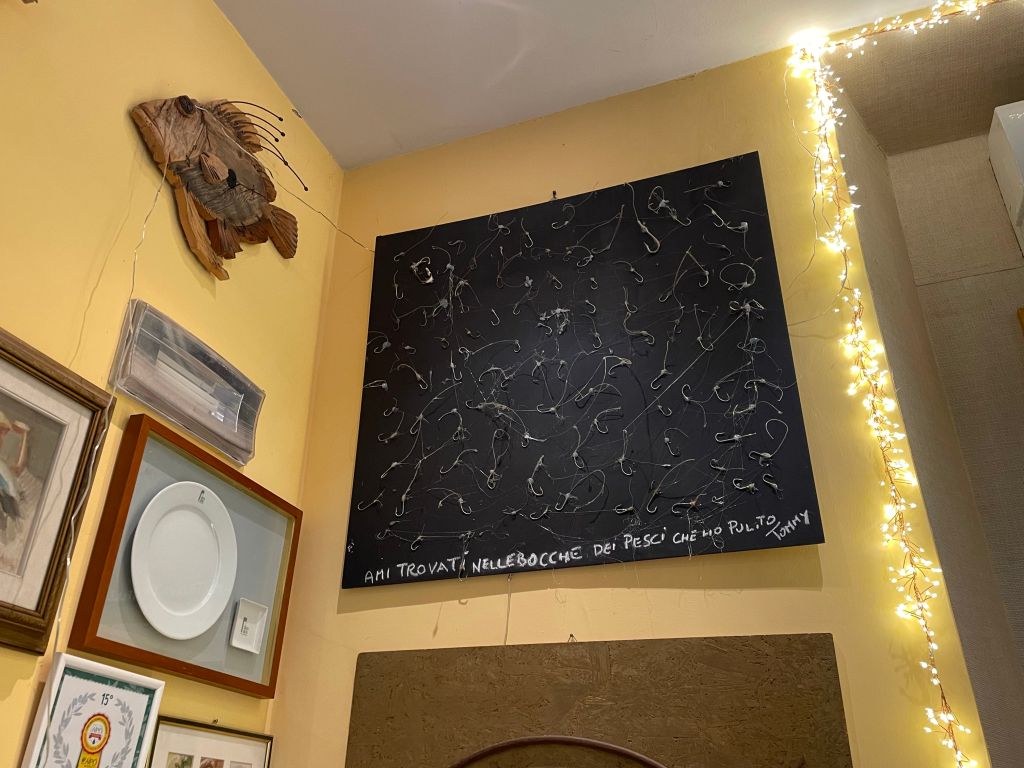
Ami trovati nelle bocche dei Pesci che ho pulito” – Friends I found in the mouths of fishes I cleaned
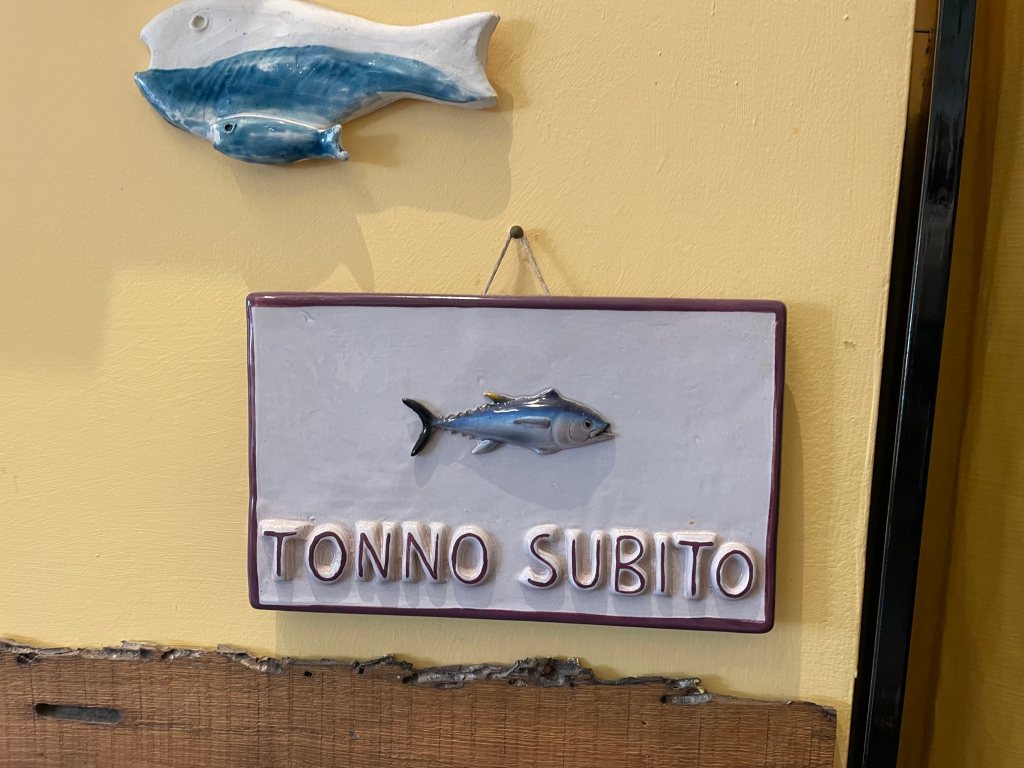
“tonno subito” – a pun on “torno subito” (back soon)

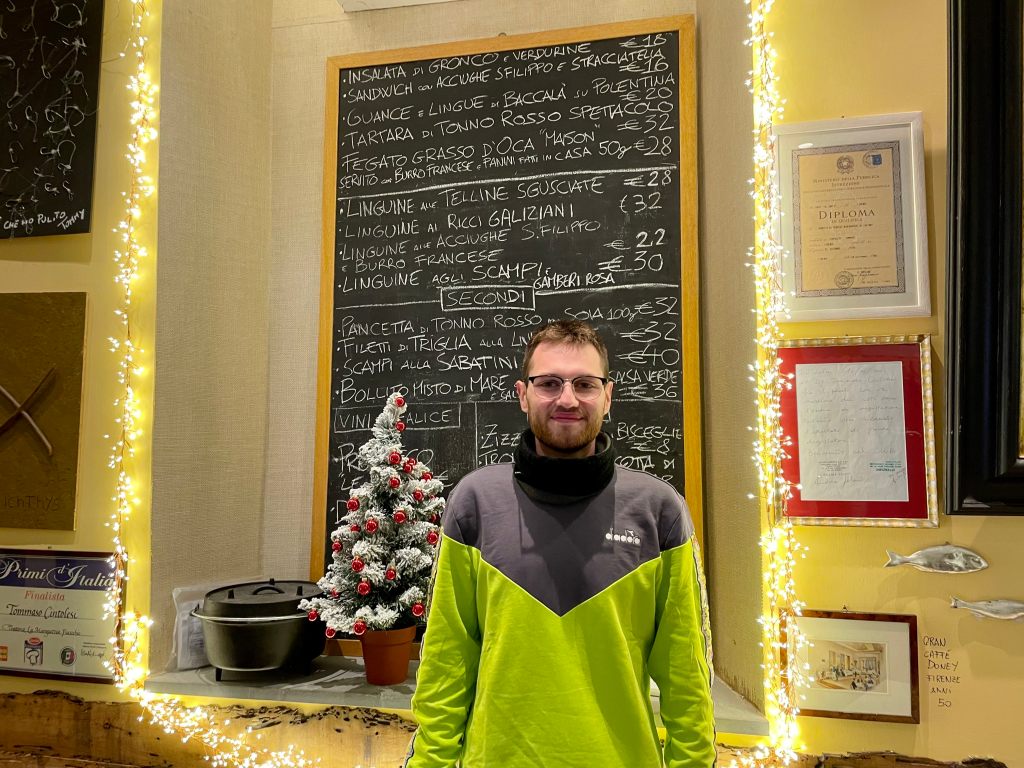
When I walked inside, my fears slowly disappeared. Looking at the restaurant’s interior, you instantly notice an overarching attention to detail and passion for the focal product: fish. On the wall, you can spot a canvas displaying a collection of hooks that the owner Tommaso has found inside various fishes. The description reads: “Ami trovati nelle bocche dei Pesci che ho pulito”. There is a little wall of employees, where each person’s photo hangs right next to a decorative fish. One of my favourite pieces is the “Tonno Subito” image, playing a pun on the expression “torno subito” (back soon). These little details hint at the love for food present in Calino’s kitchen and create an intimate and friendly atmosphere. Tommaso and I discussed my working hours, signed my contract, and my internship began a couple of days later.

tommaso
daniele
alessio
mamoutou
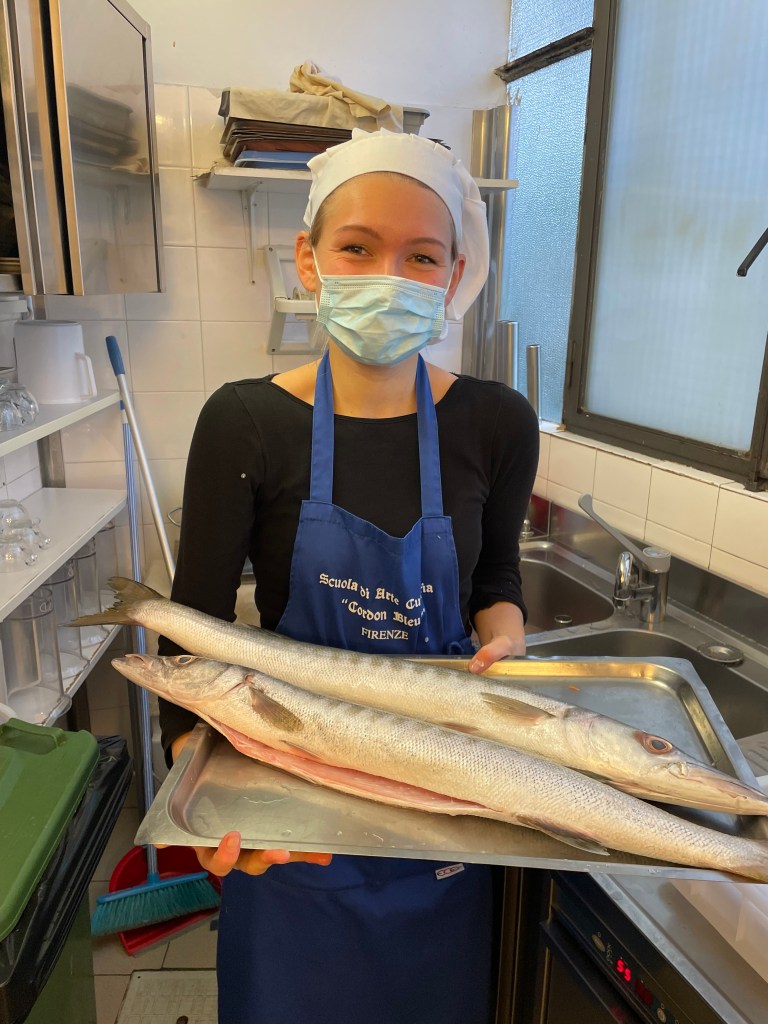
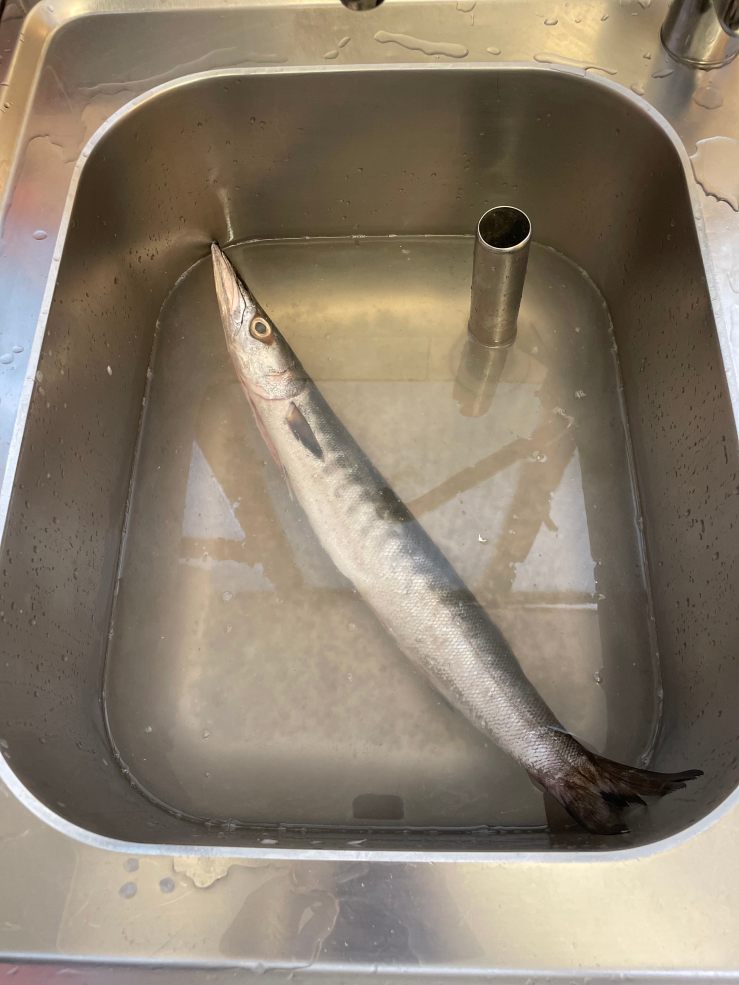
two barracudas & I!

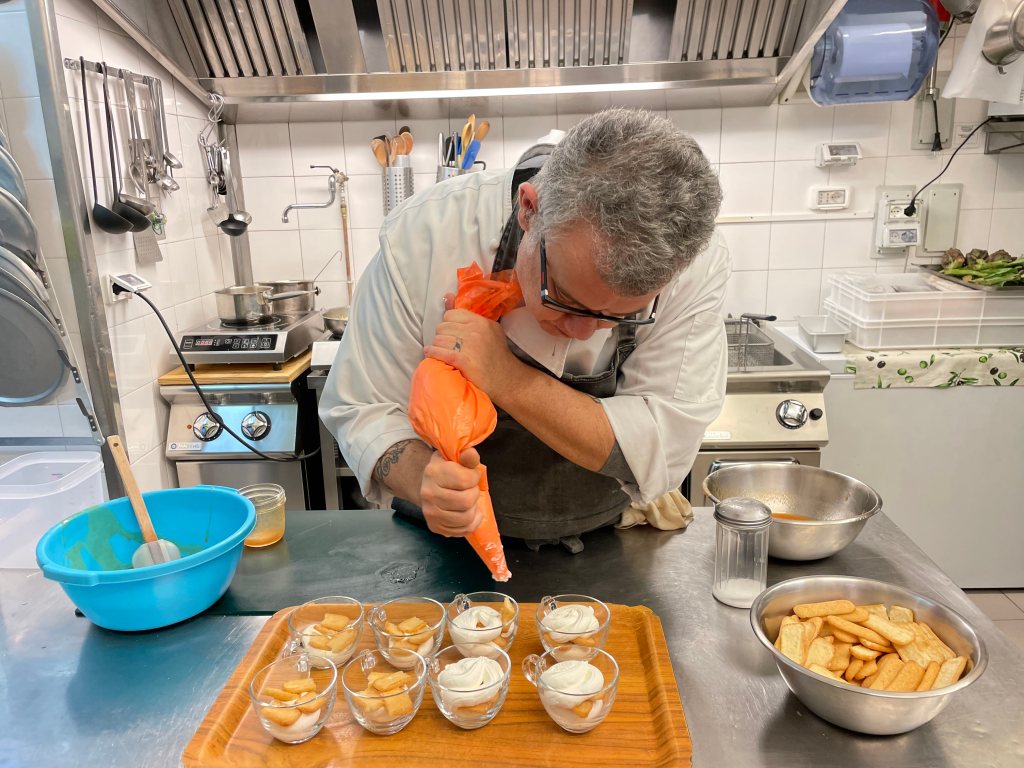
We are five people who work in the restaurant: Tommaso, who cooks in the morning and afternoons and does service when clients arrive; Daniele and Alessio, who both work full-time as cooks; Mamoutou, who cleans the restaurant and kitchen but also regularly offers a hand in preparing fish or plating dishes. And then, there is me, the intern.

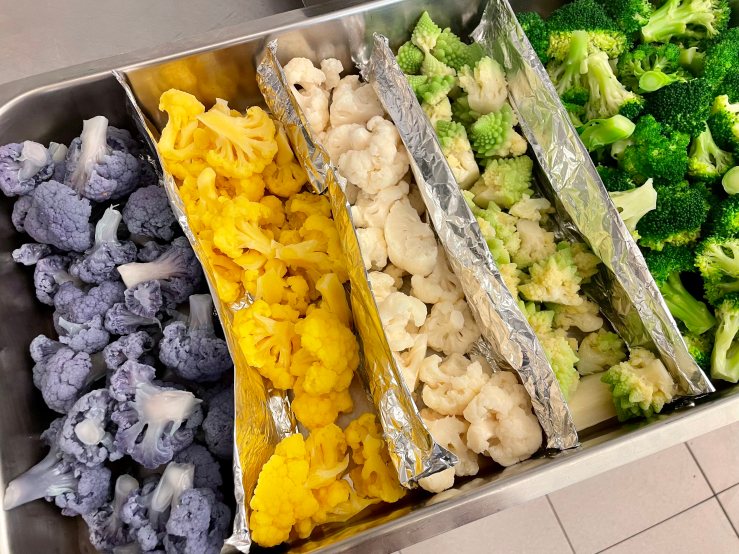
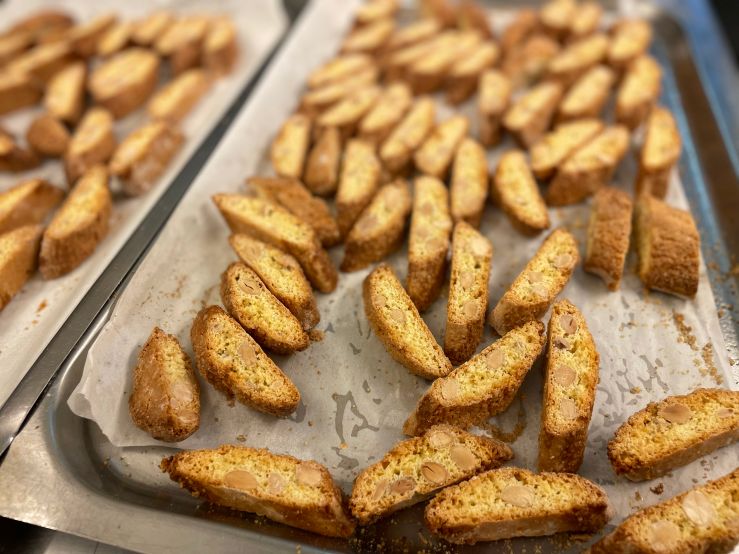
We usually start our days with a strong coffee, dividing the tasks written down on the little whiteboard next to the oven. These include preparing vegetables such as artichokes, cauliflowers, romanesco, and pumpkin, cleaning calamari and sea urchins, filleting sea bream, setting up a fish broth, and making Focaccia, Grissini, and Panini. While we pursue our different assignments, distributors enter from time to time to deliver new ingredients. I like listening to the friendly banter between the distributors and Calino’s team. While we work, I am encouraged to taste all the products and preparations to develop my palate and understand Calino’s culinary cosmos. Plates constantly change, depending on seasonality and the ideas of Tommaso.

Tommaso is a creative force, always trying out new ideas and speaking passionately about the food he cooks. He began working in the kitchen at the age of 14 at the Trattoria La Mangatoia in Florence, a typical location for family celebrations. In his early twenties, he moved to Paris to cook at the restaurant Casa Bini in the quartier Saint-Germain-des-Prés. The Italian restaurant was famous for its Carpaccio de Boeuf and Pasta al dente and was frequented by famous guests such as Claudia Cardinale. When he returned to Italy, Tommaso cooked for a well-off Russian family in Lucca. He forged contacts to Moscow’s gastronomy sector. After finishing this job as private chef he was asked to join the restaurant franchise CORREAS in Moscow. During the day, he conceptualised new dishes. In the evening, he visited the different CORREAS restaurants to taste their implementation. After one year, he moved to an Italian restaurant in Moscow, called Pepperoni. Weary of living abroad alone, Tommaso wished for his wife Anna and his daughter Anita to join him. However, the school fees were staggeringly high, and his superior was not conceding to raise his salary. And so, in 2009, Tommaso’s time in Russia came to an end, and he returned to Tuscany.

an old flyer from the first calino restaurant in scandicci, florence

In 2012, the chapter of Calino began. Tommaso founded the first Calino restaurant in Scandicci, in the South of Florence. The restaurant was located in a Boule House from which it derived its name. There is a move in the game Boule which is called Calino. In the beginning, the restaurant was a one-person enterprise. Tommaso was cooking, cleaning, and providing service all by himself. Slowly, more guests came, and he could develop his culinary profile. Finally, in May 2017, Tommaso moved Calino to the North of Florence, to its present location at the Piazza delle Cure.

I asked Tommaso why the restaurant’s focus is fish. As a response, he pointed to the versatility of preparation fish offers. Working with the whole body of an animal allows you to explore its many parts, use them for a range of different dishes, and even turn their carcasses into a flavourful broth. You can vary the types of fishes in a more dynamic way than meat. Unless you are a hunter, the meat available to prepare is somewhat restrained by veal, lamb, beef, pork, and chicken. There is a wider range of species and sizes to explore with fish and seafood.

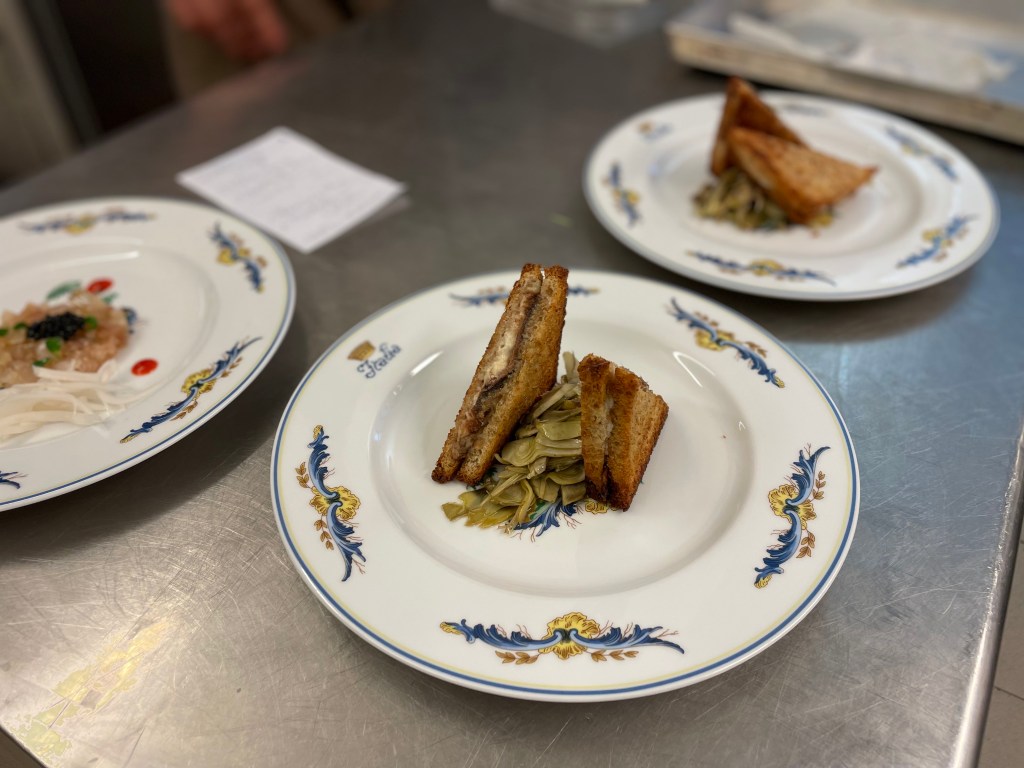
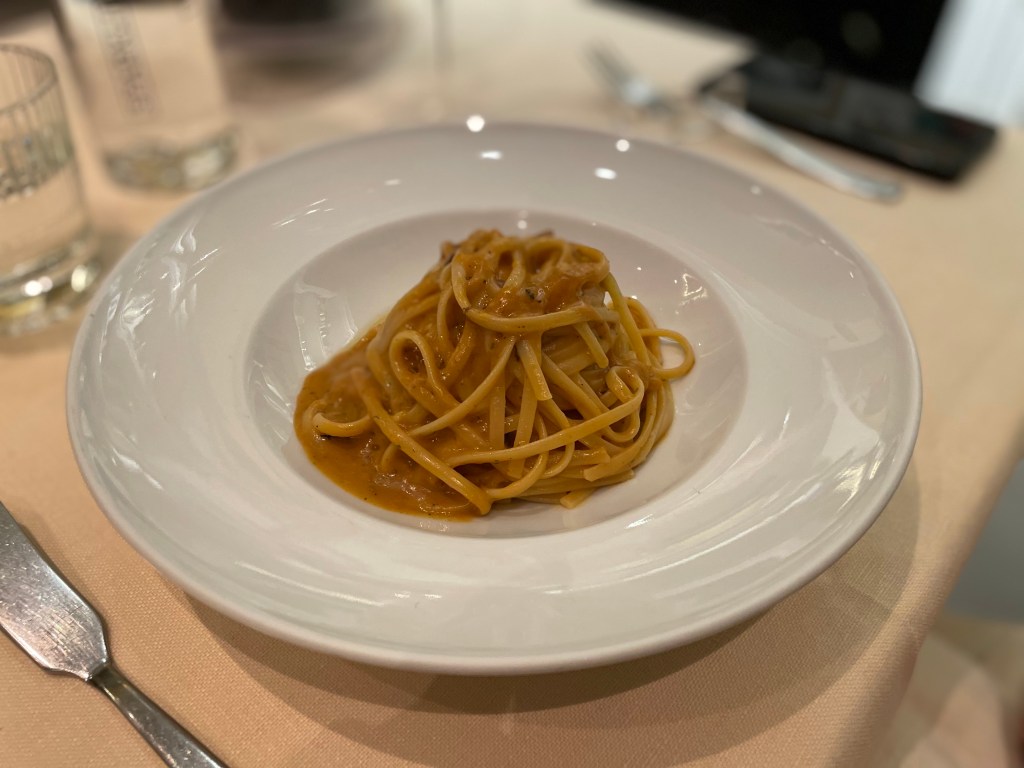
Tommaso constantly changes and adjusts the menu of Calino. He has a thick, red folder full of hand-written recipes that he has developed over the past years. I particularly love the Sandwich with San Filippo anchovies and Stracchino cheese, placed on fried artichokes. Another favourite of mine are the Linguine with Anchovies, which are wonderfully rich, creamy and salty. The pasta is cooked in brodo di pesce, and the sauce is slowly thickened in a Risottare technique, creating its smooth consistency. The quality of products—here the San Filippo anchovies—make these plates so special.

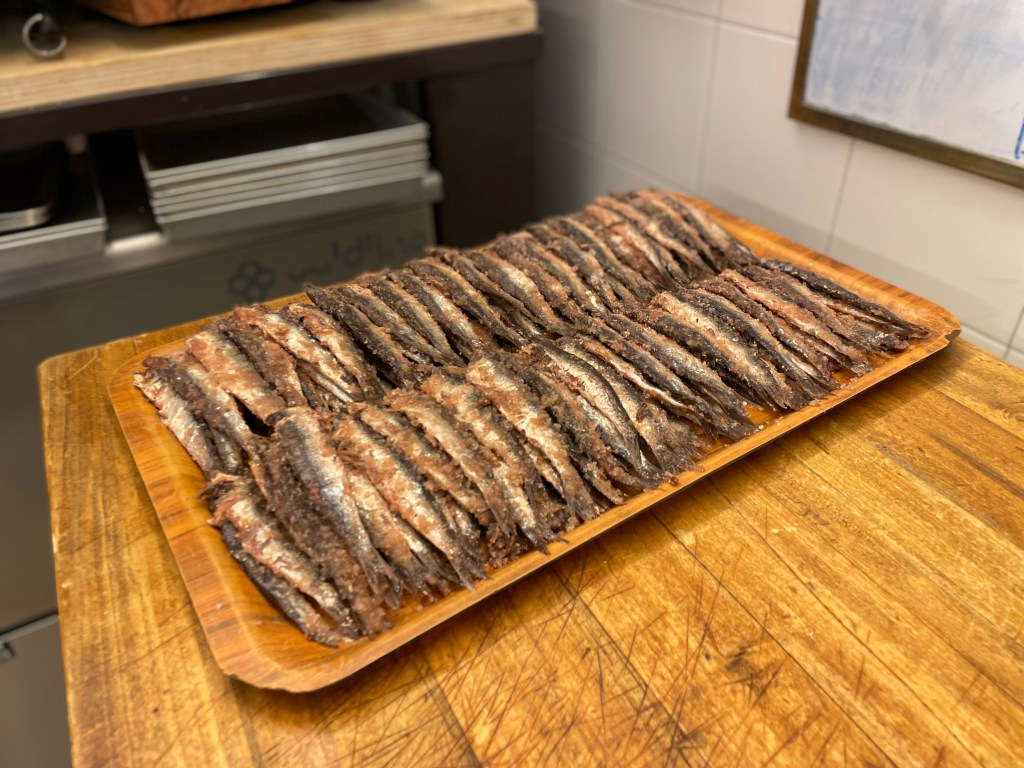
san filippo anchovies
sandwich with san filippo anchovies, stracchino cheese, and fried artichokes – delicious!
linguine alle acciughe san filippo – linguine with a creamy anchovy sauce

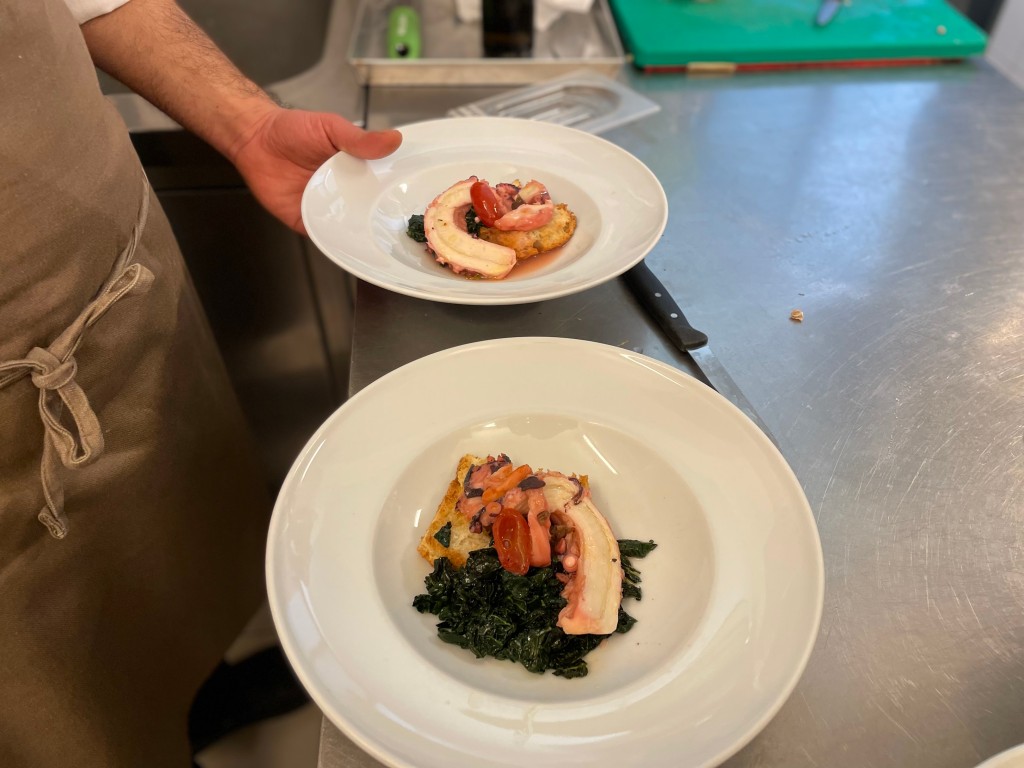
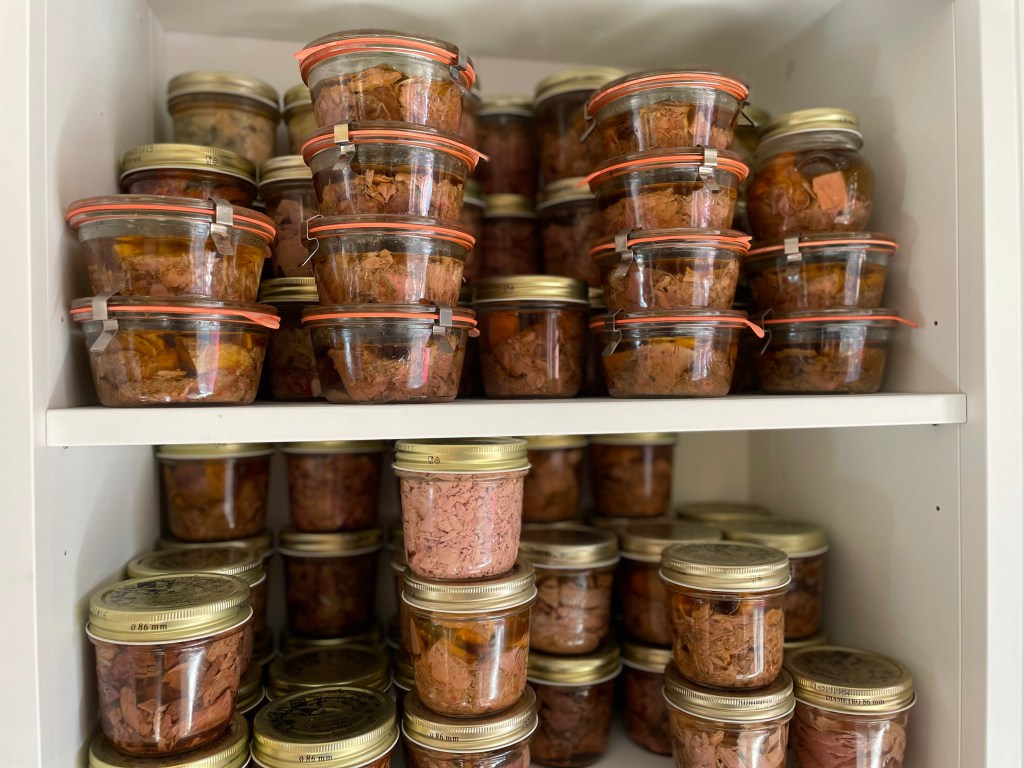
At Calino, I learned the importance of selecting high-quality products, paying careful attention to their proper preparation, and exploring new combinations with openness and curiosity. One project of creativity are the different kinds of mason jars that Tommaso, Alessandro, and Daniele began to prepare during the Covid lockdowns. The jars’ fillings vary from tuna in oil and octopus to tomato- and seafood-based sauces. While they can be purchased at Calino and heated up at home, they are also integrated into the main menu. Take a look at the beautiful octopus arm bedded on mangold and Focaccia!

octopus on mangold and focaccia
tonno sott’olio – tuna in oil (made at calino)

One afternoon, Gabriele Cini, a well-known Florentine pastry chef, came to explain to us recipes from his book “Pasticceria con Grani Antichi”. Cini also teaches at the Cordon Bleu School and is particularly knowledgeable about the use of ancient grains, as the title of his book suggests. I was impressed by the opportunity to receive further training at the restaurant. I was also surprised to learn that Grissini are not rolled into shape but pulled apart! In addition to our homemade Focaccia—a delicious and great exception to blunt Tuscan bred—we now also offer Panini and Grissini at Calino. For a while, we combined the Panini with a home-made spicy mayonnaise and Calino’s tonno sott’olio (tuna in oil)—an enticing combination. This proactive learning, practising, and combining of new preparations make Calino’s cuisine so special.

linguine agli scampi
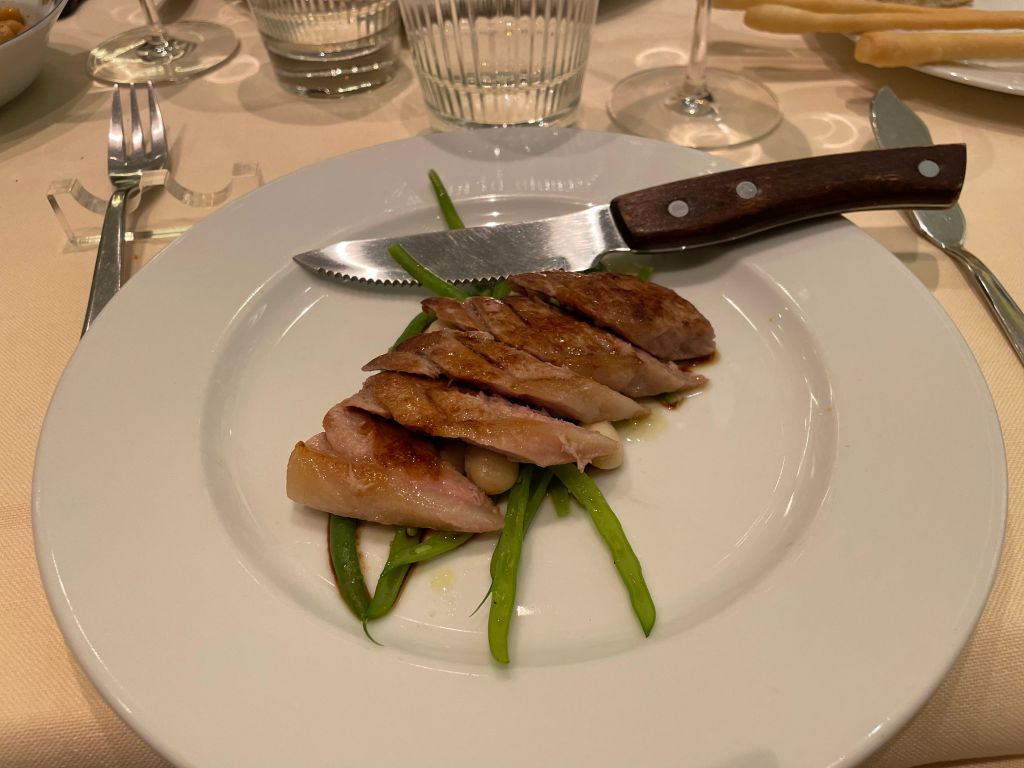
pancetta di tonno rosso – tuna belly on green beans with soya sauce

After nine weeks, my internship at Calino has come to an end. I learned how to clean different kinds of fish and seafood, how to prepare a wide range of vegetables, how to combine ingredients creatively, and how to plate the final dish with minimal and clean beauty.

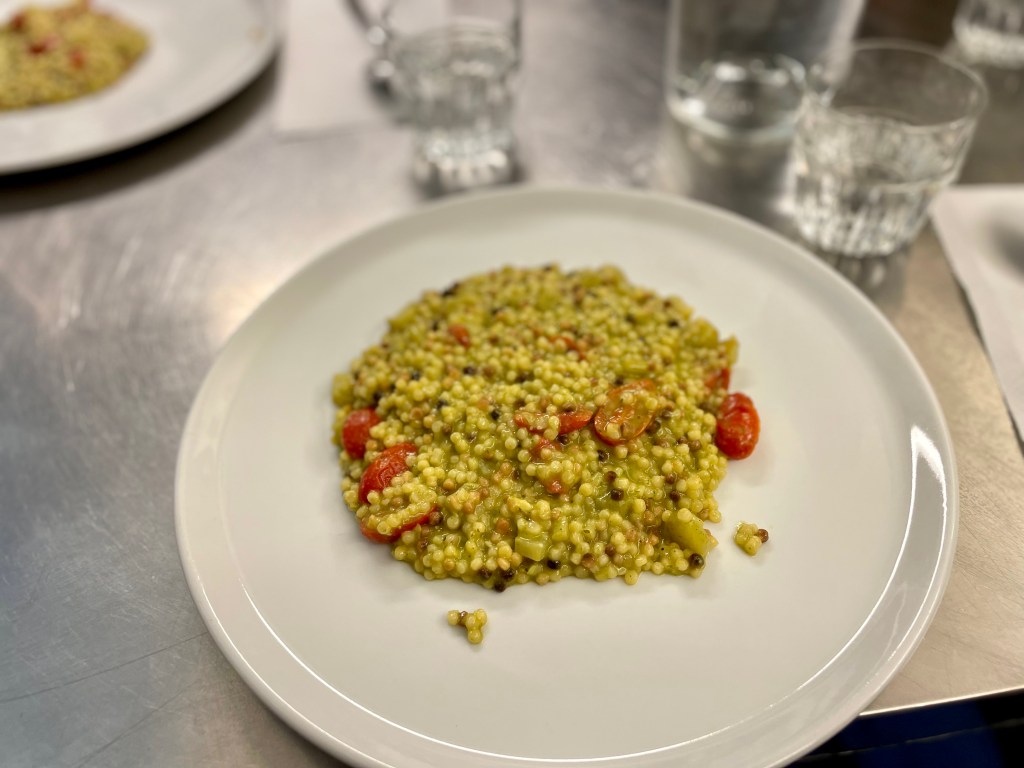
I am grateful for how patient and welcoming my colleagues were, despite my broken Italian and little knowledge of how to cook and work in a professional kitchen. I am lucky that Tommaso gave me the opportunity to learn at Calino and remain inspired by his infectious culinary enthusiasm and creativity. I will remember how Daniele paid close attention to giving me different tasks and teaching me new steps along the way. I will remember Alessio’s professionalism and introducing me to Fregola—a Sardinian pasta which he prepared with artichoke stems on one day. Delicious! I am grateful for Mamou’s motivation to communicate with me, and his caring attentiveness—preparing peach tea for all of us. The atmosphere between the team was friendly and empathetic. The tradition to sit down and eat lunch together made for many calm moments during the internship.

fregola – my new favourite pasta!

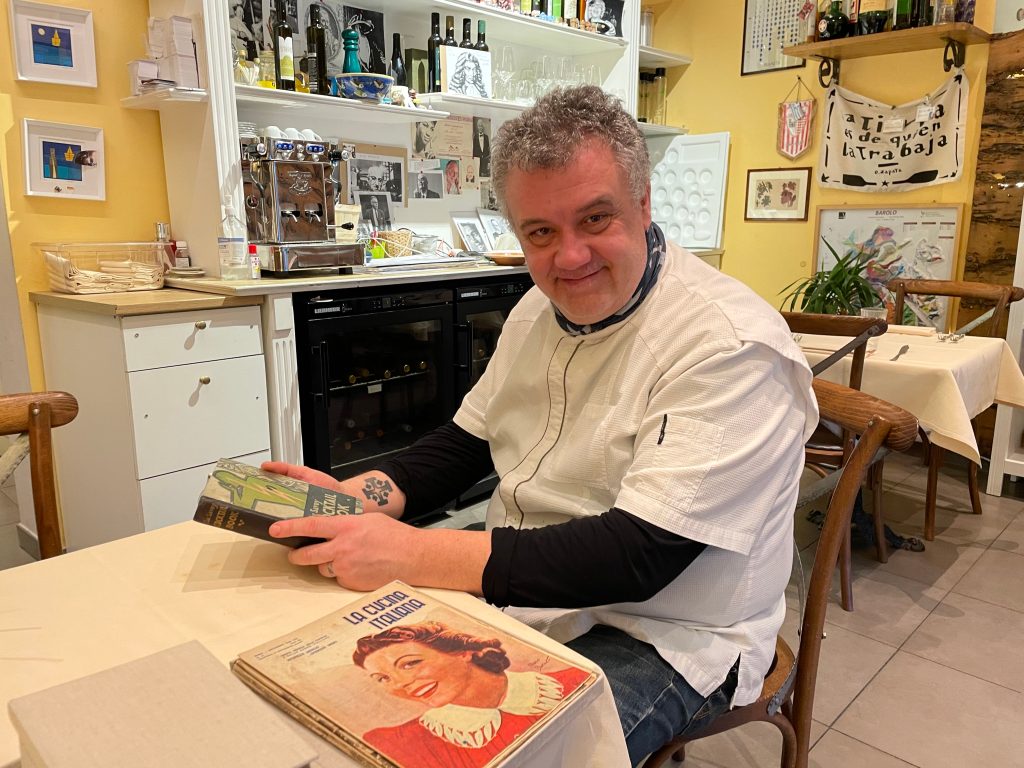
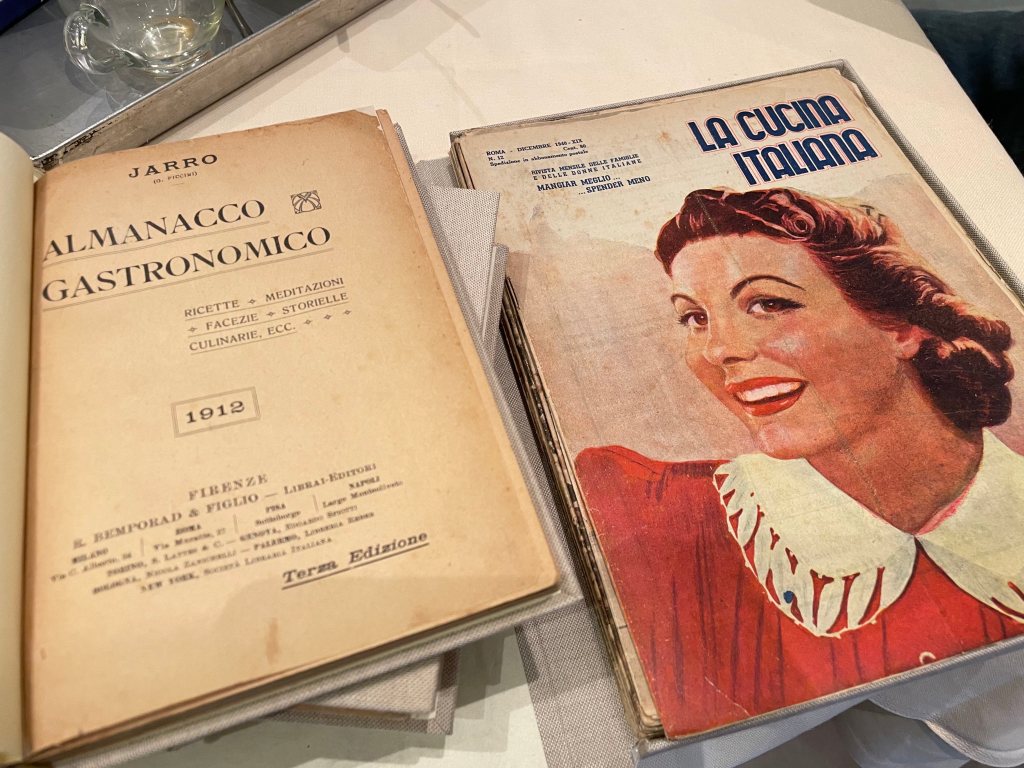
As a trained historian, used to calm libraries and year-long projects, I was often intimidated by the environment of a professional kitchen. Particularly the speed was so different compared to my work before. Sometimes you only have a few minutes or even seconds to prepare a dish. That is barely enough time to create one essay footnote. When you don’t always get a hundred percent of the Italian instruction, it can quickly feel overwhelming. Last week, however, Tommaso revealed his interest in historical cooking magazines and books. We sat down with a coffee, and he showed me publications from the 19th century and World War Two. For a precious and peaceful moment, it felt like the two parts of my year 2021 finally came together to make sense—studying history at Oxford and learning how to cook in Florence.

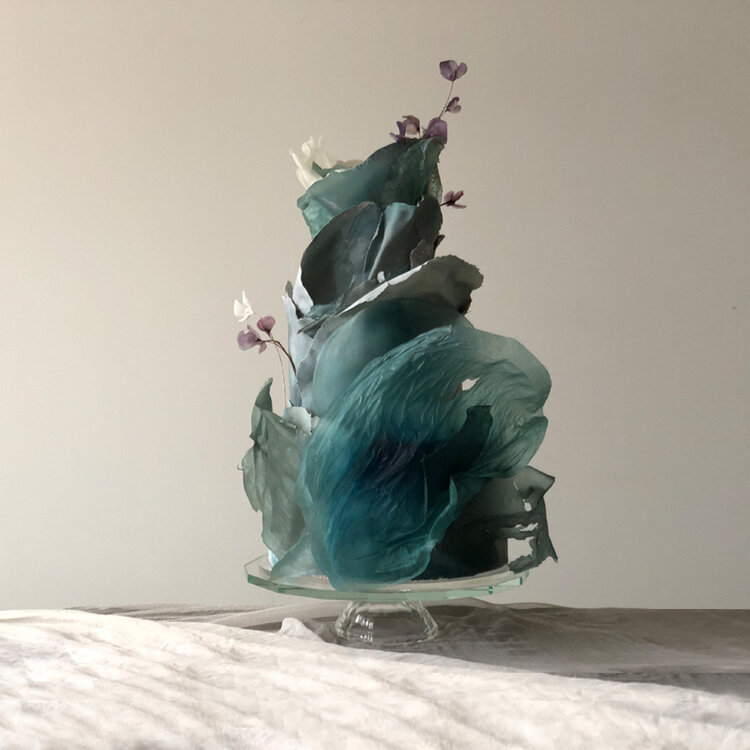
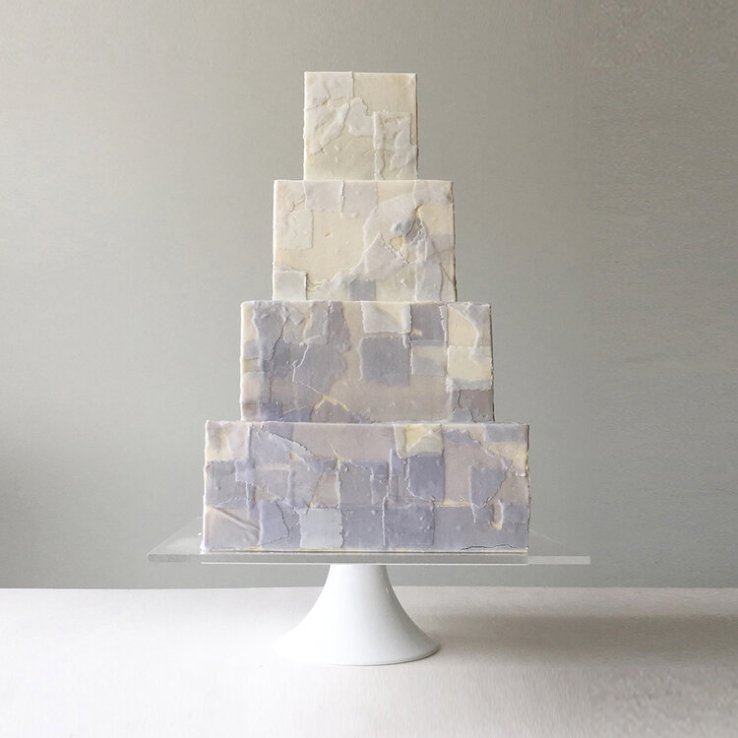
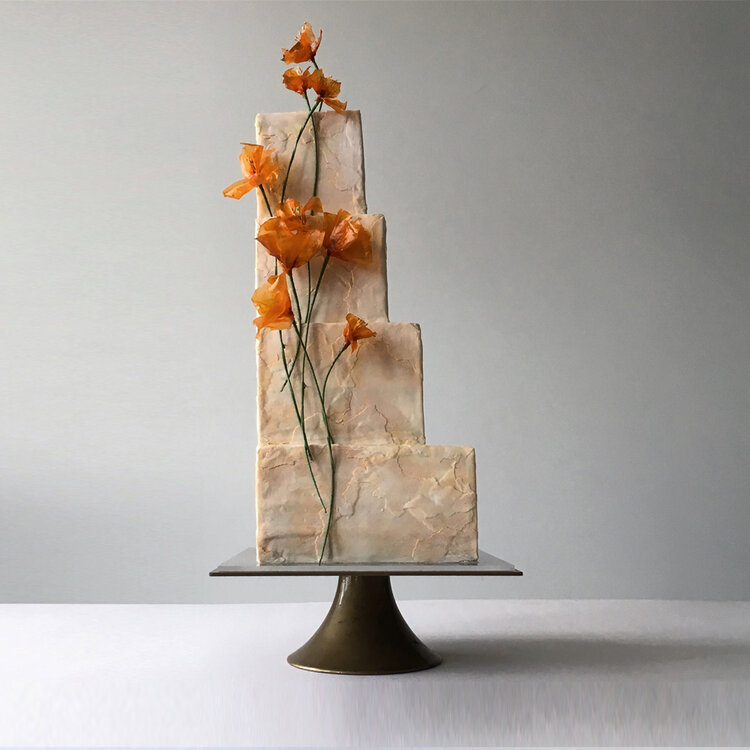
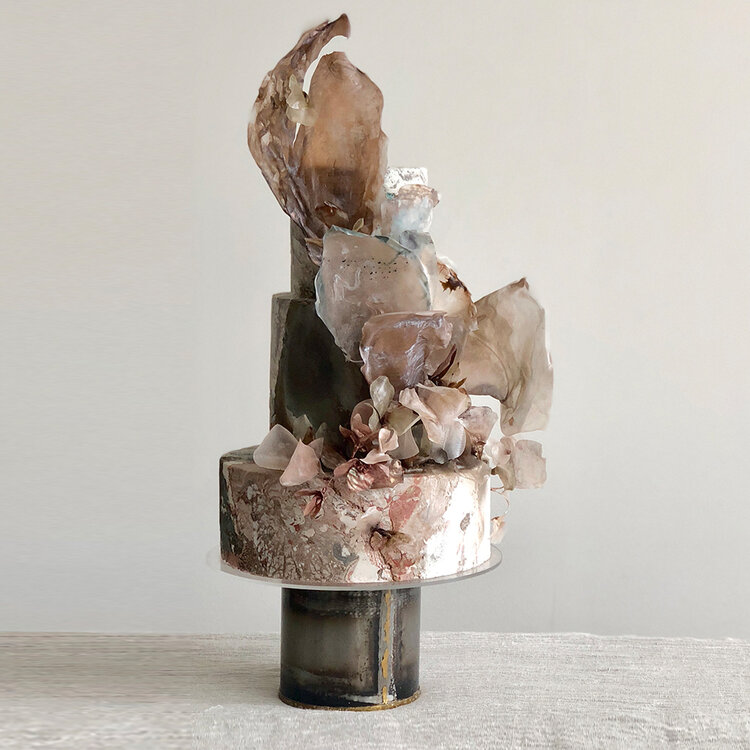
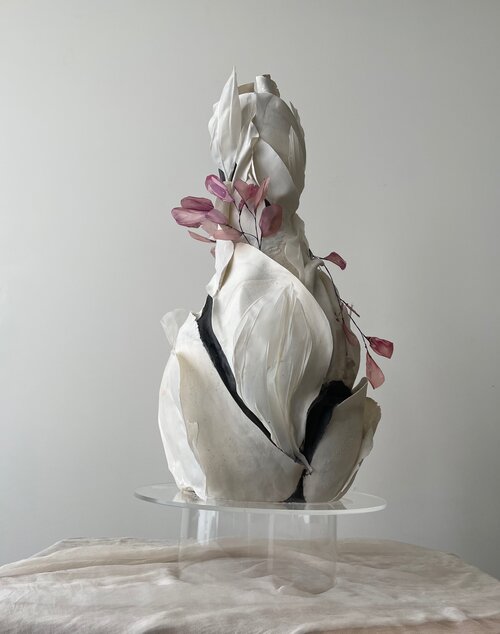
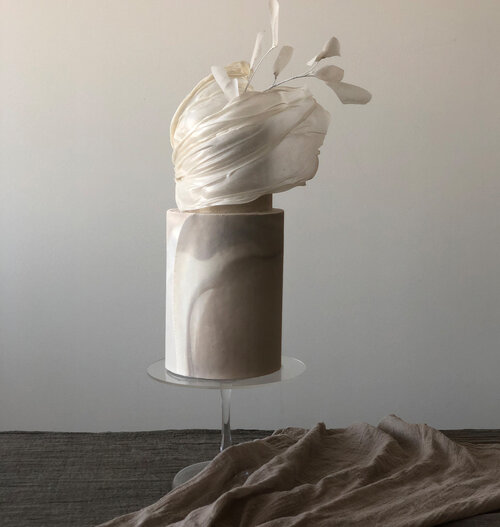
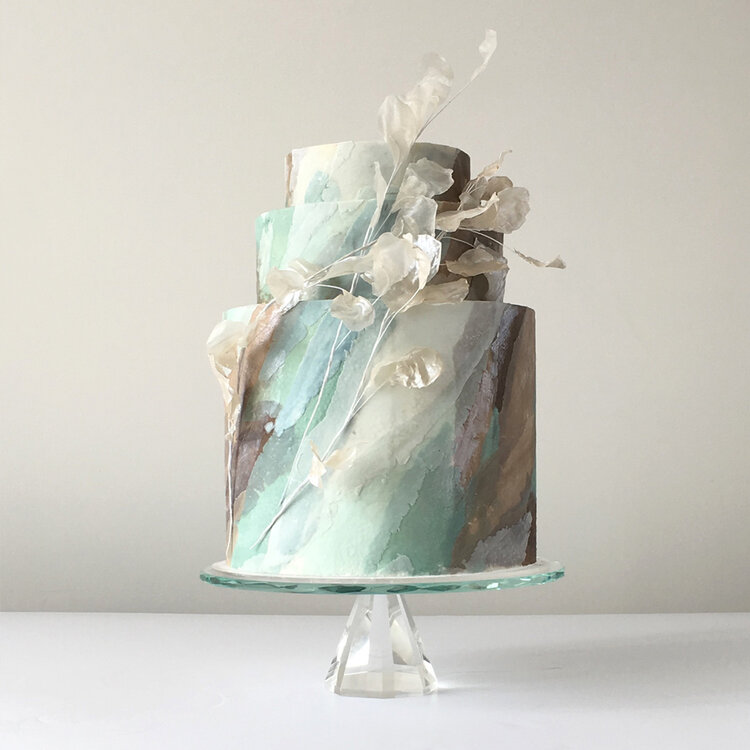
meet jasmine rae, fine art cake designer

credits: jasmine rae

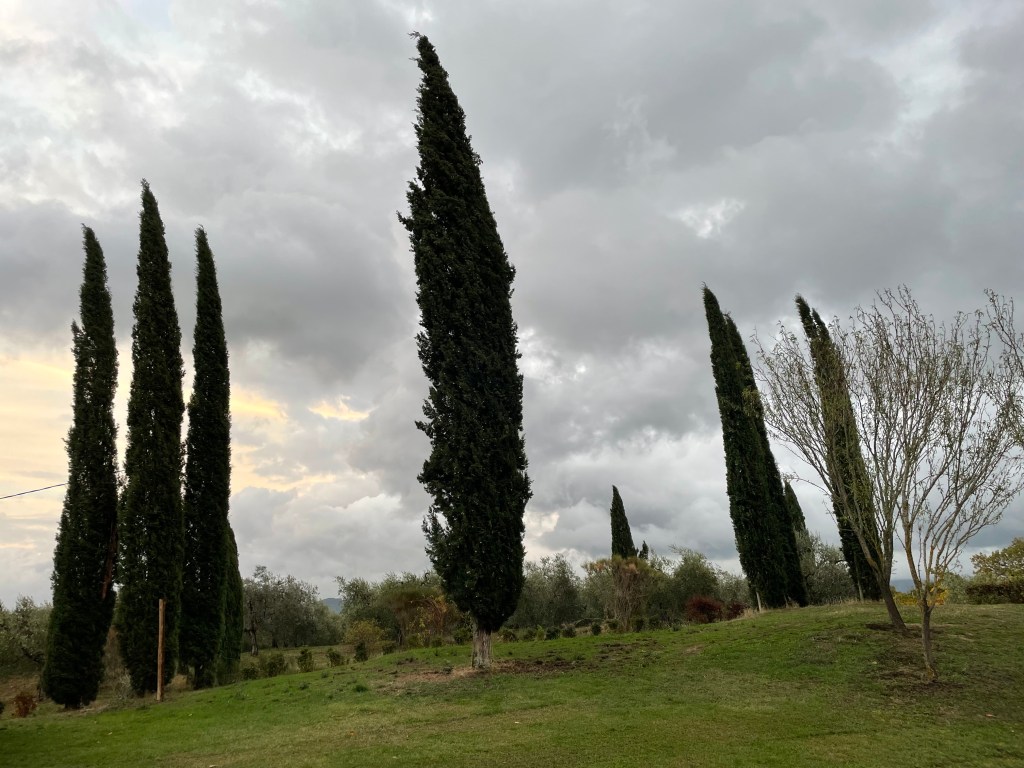
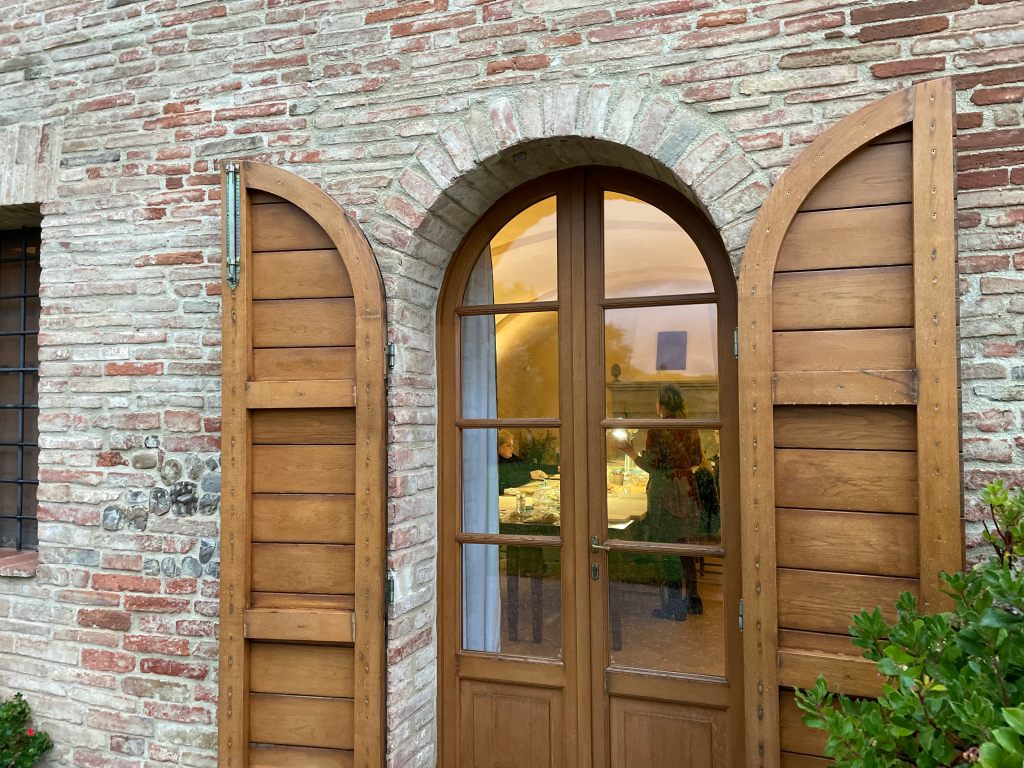
About two hours from Florence, I leave the highway to follow a rough, stony little path up the hill. I am close to the town of Chiusi, at the border of Tuscany and Umbria. Left and right to the road, fields stretch out widely. On top of the hill, I can already spot grand villas framed by cypress trees. It is a rainy and windy day, the landscape presents itself with beautiful sobriety.

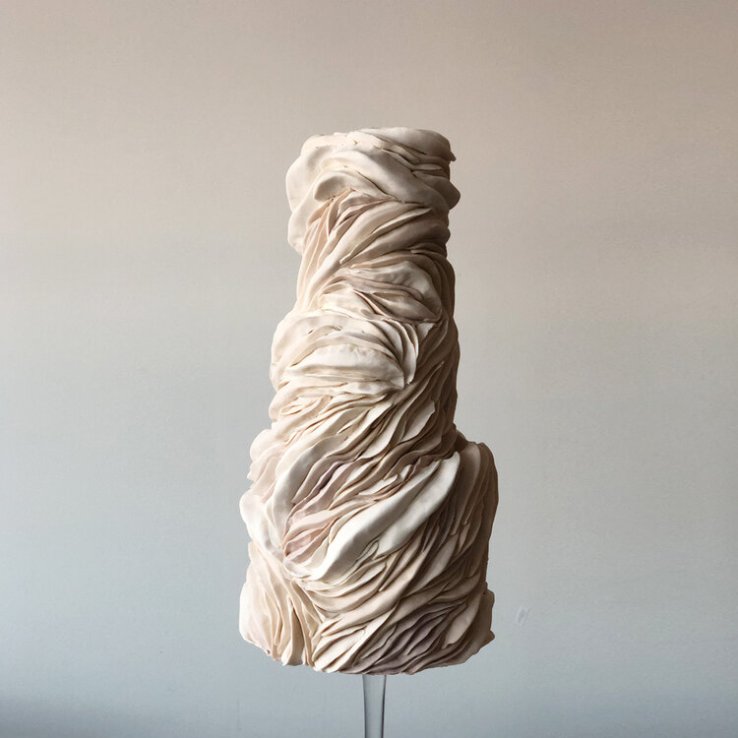
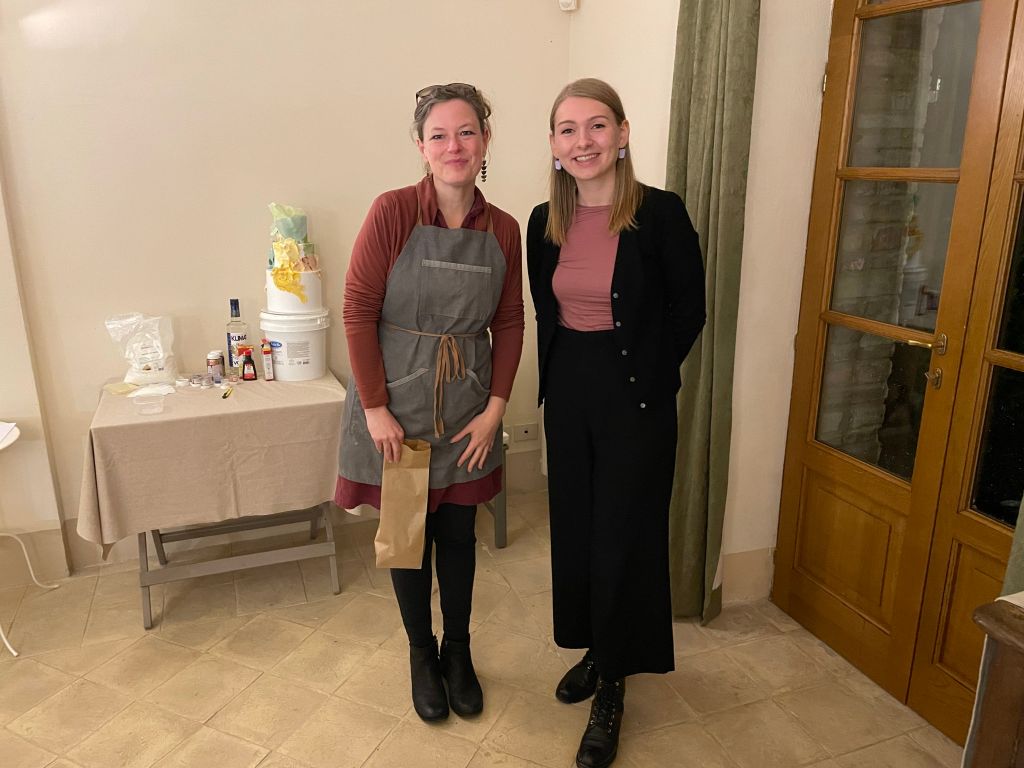
I’m on my way to interview Jasmine Rae, a well-known fine art cake designer from San Francisco. Jasmine is in Italy to host a one-week workshop organised with Strada Toscana. The small group tour company creates retreats, workshops, and tours in Tuscany and Umbria. I have been following Jasmine’s artistry for a long time, enamoured with the way she captures calmness, potent persistence, and dynamism in so many different shapes and tastes. Her treatment of materiality, texture, and surface moves me. When I finally arrive at the 17th century villa, the stormy weather ploughs boisterously through the grass and leaves. The wind creates shapes in nature resembling some of Jasmine’s most dynamic cakes.

Jasmine is a self-taught cake designer who redefined beauty standards in the wedding cake industry. Trained in a variety of arts, including murals and filmmaking, Jasmine always had artistic inclinations. However, dough, creams, and mousses were not her preferred media of expression: “It’s not that I chose cake.” In fact, Jasmine studied cognitive science (B.A., 2003) and psychology (M.A., 2013). In 2005, Jasmine’s boyfriend at the time was captured by the idea to set up a professional bakery. His entrepreneurial spirit was contagious and inspired Jasmine to start a wholesale bakery. They scrounged in the vaults of craigslist to find enough used equipment to build out a tiny commercial kitchen in the belly of an artists’ building. Opportunities of the business soon turned into cake making, and about four years in, she quit wholesale altogether to just focus on cakes. It was a risk, energised by enthusiasm and her self-proclaimed ignorance of what it takes to run a viable business. The artist community around her encouraged her to return to her creative roots as she experimented and learned on the job.

To pick up the craft and chemistry of cake baking, she took weekend classes for hobby bakers, but mostly practiced on the cheap with her clients while she was learning: “I made so many mistakes, it was kind of an uphill battle learning the science and the baking.” Whenever she felt exhausted, discouraged or empty, she was held to the job because of future obligations, “because of the way it works.” With bookings made many months ahead, it was impossible just to stop one day. Jasmine remembers how she was “forming [her] own boot camp”. The hurdles she had to overcome let her develop expertise and persistence. Right from the start, she liked to modify recipes and mess with conceptions of beauty. Her early cakes already showed a hint of her future styles: “my first cakes were unlike any cakes I had ever seen yet so poorly executed because I was completely unexperienced.” Jasmine had to build her technical foundations first to push forward her design vision.

After eight years, I reached this place where everything kind of coagulated for me, and I really found freedom in the work that I was doing.

While the art quickly made its way into her work again, it took several years before cake making and her artistic visions could combine fully. Mastering the techniques, styles, and business aspects required for her young bakery, Jasmine slowly began to enjoy the process: “I was in the practice of it, and then the desire started to build as the practice became more and more satisfying.” It was about eight years into the job when she recalls finding “a sense of self as an artist and a cake maker”. Working in a low-humidity environment in San Francisco, the fondant she worked with would dry up quickly. It was challenging to create the smooth, silky surface that was desired for wedding cakes at the time, and that was understood as particularly skilled: “the smoother, the better”. Her fondant, instead, would crack and crumble, “and it was called, with disdain, elephant skin. It was not appreciated, it was seen as a flaw in cakes.” However, “year eight was kind of the moment that I was like, you know, f* that, I love elephant skin.” Jasmine laughs. Not only did she dare to appreciate elephant skin as beautiful. She began to let her fondant crack purposefully. She told and taught the world about the beauty of cracked, uneven, dried up fondant: “And that was when I really found freedom.”

credits: jasmine rae

Jasmine’s design philosophy is based on what she calls the “natural process”. This process comes forward as she builds a relationship with her materials. She explores and facilitates the structures, textures, and surfaces that are inherent to a specific material and its exposure to different environments. Then, she allows the material’s characteristics to guide the final cake design: “all you can do is influence, but you can’t control the outcome of it, and so for me, that’s the natural process.” When she creates cake decorations with rice paper or uses the technique of fondant marbling, she bows down to the curves and folds that are forming. She then explores their potential to create movement or stillness for the overall composition. It is an approach based on acceptance and asking: “What did form? And saying, that’s really beautiful. I love this part right here that’s doing this. I’m going to pick this up and put that on a cake and if it starts to fall or melt in certain ways, how can I appreciate that and enjoy it or continue it? What lines did it form such that now I can start to bring the action in this direction and guide the eye around the cake in that way?” In this manner, Jasmine builds a “relationship with what is happening”.

Asked if she sometimes sees a texture in nature that she would like to emulate, Jasmine nods. However, instead of merely copying visual characteristics, she inquires into the process that creates a specific surface or object. To form a bark-like texture for a cake, Jasmine would refrain from using a mold. She asks: “How did the tree develop that? Is there some way I can almost recreate that process in order to get the look of it versus recreate a look by just duplicating it?” She believes people are sensitive to mere copying and spot the artificiality created by repeatedly using a mold. The natural process is much more pleasing to the eye, as humans are created similarly. Jasmine wants us viewers to see and feel the natural process in her cakes as the natural selves we all are.

I am really very interested in making the relationship to my material which I think is the definition of a natural process. An unnatural process would be to design every single detail and say it’s this many flowers and this is symmetrical with that […] I’m not interested in that, that feels deadening inside.

How does Jasmine explain her approach to cake design to clients? How does she communicate the liberty she takes in interpreting their wishes? When customers come to Jasmine with a particular cake inspiration, she lets them know that the final cake may not look at all the way they imagine it: “I don’t commit to my clients that something is going to look a particular way.” How does she combine her artistic inclination with serving her clients’ wishes? Jasmine responds: “The work that I do with clients is less about telling them who I am and how I work and more about asking them to describe to me how they feel. That’s where the psychology part really aids me in my work because what they are responding to when they look at this cake, that’s inspiring them […] what they are responding to is really the way that they make themselves feel when they look at it. So, if I can get them to share a little bit about that feeling, that’s the pathway […] I can design from their feelings.” Jasmine sketches 90% of her designs on the spot while her clients taste the different cake combinations. When it comes to cake flavours, Jasmine does not have a set selection: “It’s part of how I keep it feeling alive. It’s important for me not to have a menu.” Jasmine herself loves citrus flavours, other acids, dark caramel, in contrast with herbs, flowers, creamy textures, and dark chocolate. She takes pleasure in bringing unexpected tastes to her customers: “I love seeing clients surprise themselves […] they pick the things that they think they will like the most. And they don’t even know what they don’t know.” Jasmine’s clients usually enjoy the creative energy she radiates and entrust her with a lot of creative freedom.

In addition to her custom cake designs, Jasmine teaches workshops all over the world. She has been giving courses in New Zealand, Malaysia, the United Kingdom, Canada, a range of places in the United States, and now Tuscany. It is the first workshop she has organised together with Strada Toscana. The company reached out to her in 2019: “for me, it was really exciting. I’ve never heard of a cake maker having a retreat workshop. So, there was a lot of possibility.” The workshop consists of instruction lessons and cultural experiences, including trips to the cities of Pienza, Città della Pieve and Chiusi and a visit of Mulino Val d’Orcia Spedaletto, a family-run organic flour mill. Participants also tap into local culinary traditions with chef Lorenza Fontebasso teaching the group about Italian herbs.

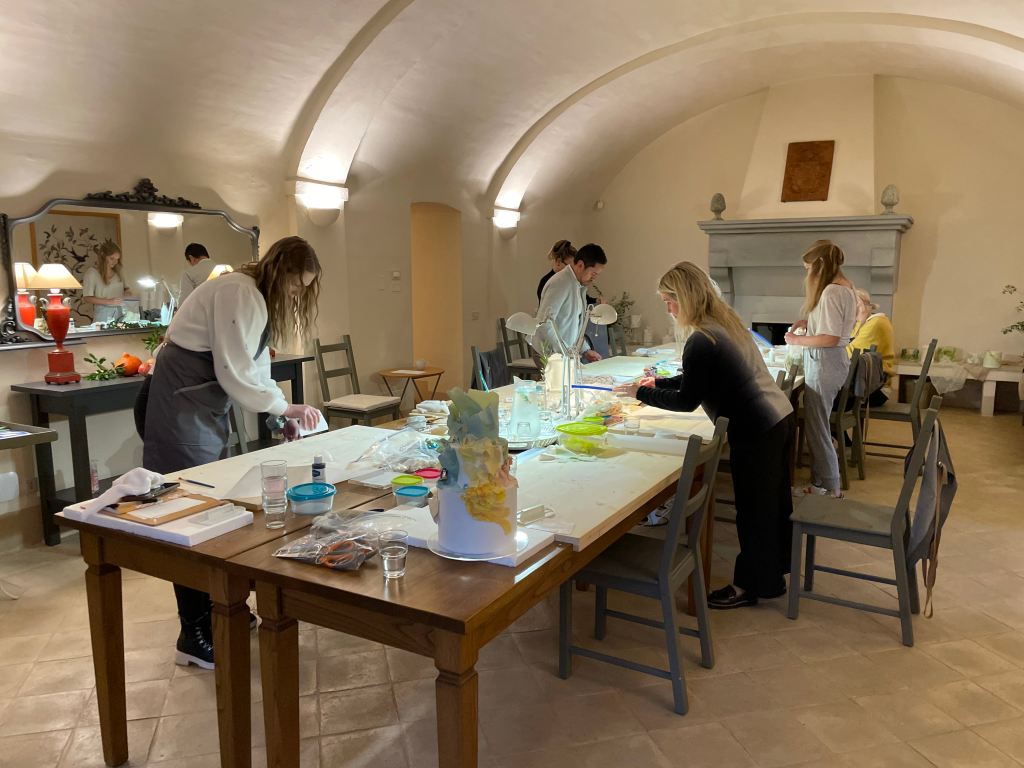
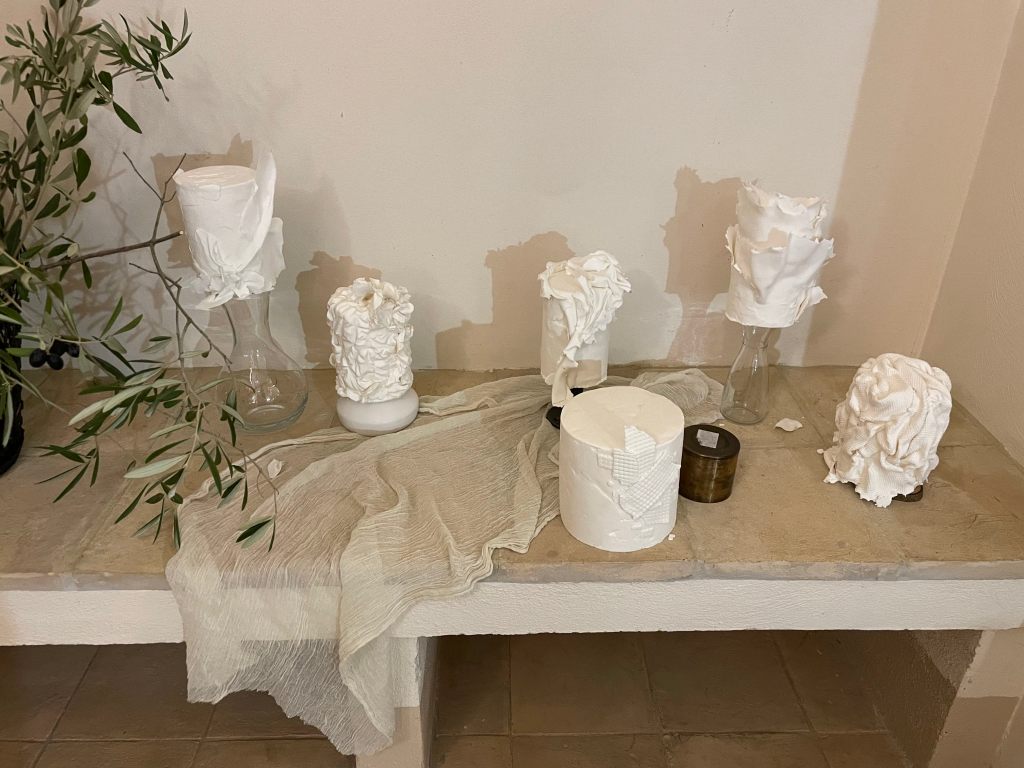
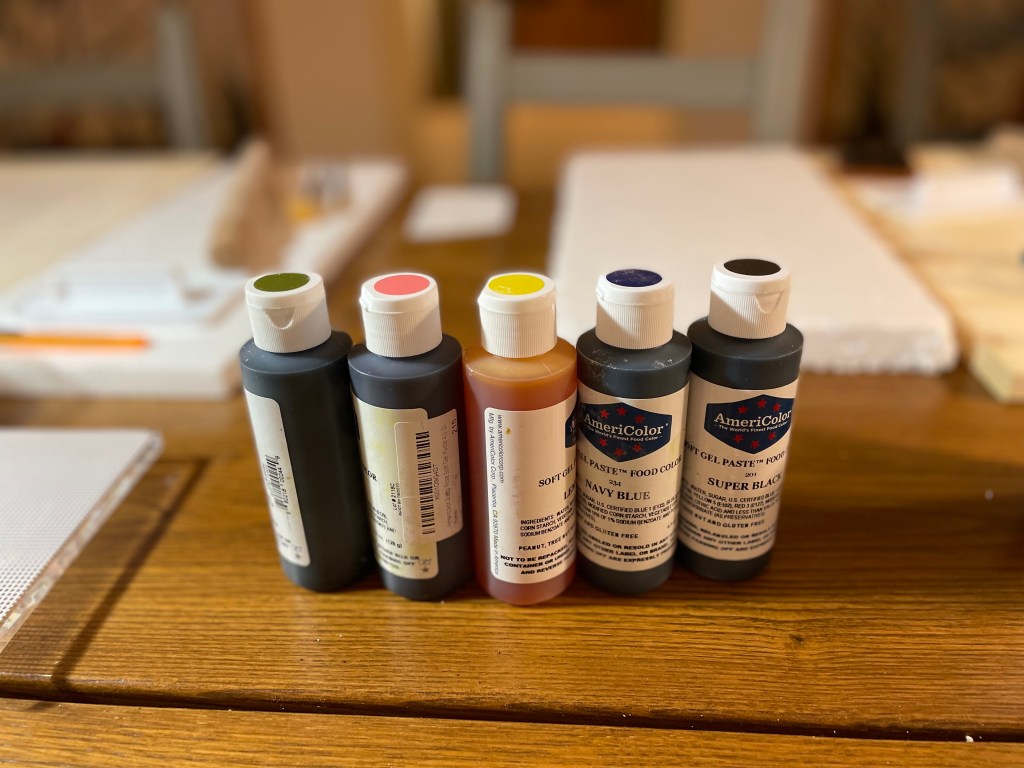
The retreat is based in a beautiful 400-year-old villa with a spacious garden. The rich landscape is used for outdoor sketching. One large room is dedicated to Jasmine’s instructions, and I am lucky to witness a workshop on wiring rice paper. On a long, wooden table I can spot edible colours, fondant, and a range of cake making tools. In the back of the room, the results of previous instruction lessons show the impressive creative energy of the group. The participants exchange their experiences with rice paper and begin exploring the material. Jasmine walks around and inquires into their decision-making. She tries to hone in on what part is interesting them most and help them recognise how their perspective is unique. The atmosphere of the room is cosy and intimate as the daylight is slowly giving way to the darkness outside.

I try to give very little instruction because I don’t want to emphasise that there is a right way to do anything. I try to give them just enough instruction so that they are not terrified to start but not so much that they feel like ‘I have to do it this way.’

With the workshop, Jasmine aims to aid her students in developing their artistic voices. Her participants are all well-experienced cake makers, and Jasmine does not teach specific skill sets. Instead, she uses different techniques to access the quest for self-expression. She leads the lessons with very little instruction and tries to leverage what her participants already know, “such that they can see who they are as an artist, do more with it and feel aliveness and start little tendrils of possibilities with the skills that they already have.” One exercise focused on using just one single tool to create the whole decoration of a white fondant cake: “when you constrain that much, you define the play area, and then people really go crazy.” Her students had to push their creative boundaries, asking themselves, “What can it do? Could I use the handle?” Jasmine reflects with excitement and contentment: “They were surprising themselves constantly.”

It helps us know ourselves better when we see other people making different choices.

One pathway to find your voice as an artist is communal reflection. Jasmine tells me about another workshop session, where every participant had to shape and add a piece of fondant to one shared cake: “we would all be watching and observing, like, how are you doing this? If I see you putting this piece on right here, how does that feel inside of me, is that the same choice I would make?” Jasmine points out: “It helps us know ourselves better when we see other people making different choices.” During this session, one participant handled the fondant so much that it began to dry out. Jasmine refrained from over-instructing and allowed for the natural process to appear. She did not warn her student that the fondant would soon start to crack. And so, it happened. Once the participant tried to apply her fondant piece to the cake, it broke into pieces. Jasmine recalls the experience with joy: “It’s such a great moment when that happens because then she’s having to solve it. […] She ends up composing a whole new shape […] that was not her original design.” Jasmine pushes her students to give space for the natural process and to honour its path and effects: “we talk about, can you accept that? Can you stand for the beauty of what you’ve just created? Can you still say, I love this, it’s beautiful, and I’m going to show you, too, that it’s beautiful?”

I love doing workshops because I get the mirror and the reflection and the reminders in the students and where they are in their journeys about what it is continuing to take to develop.

Driving back home to Florence, I feel a profound sense of sincerity. Jasmine’s courage to try out different techniques and textures for her cakes and loudly declare the beauty of cracked fondant is energising. I ask myself, could I disrupt the status-quo by exploring a new way of seeing? And could I then speak up for the beauty of the eclecticism, the wildness, and calmness that emerges once you unleash your emotions onto your environment? Could I bow down, give space, and admire what happens when I, sincerely, just let it happen?

regionalism, nationalism, europeanism

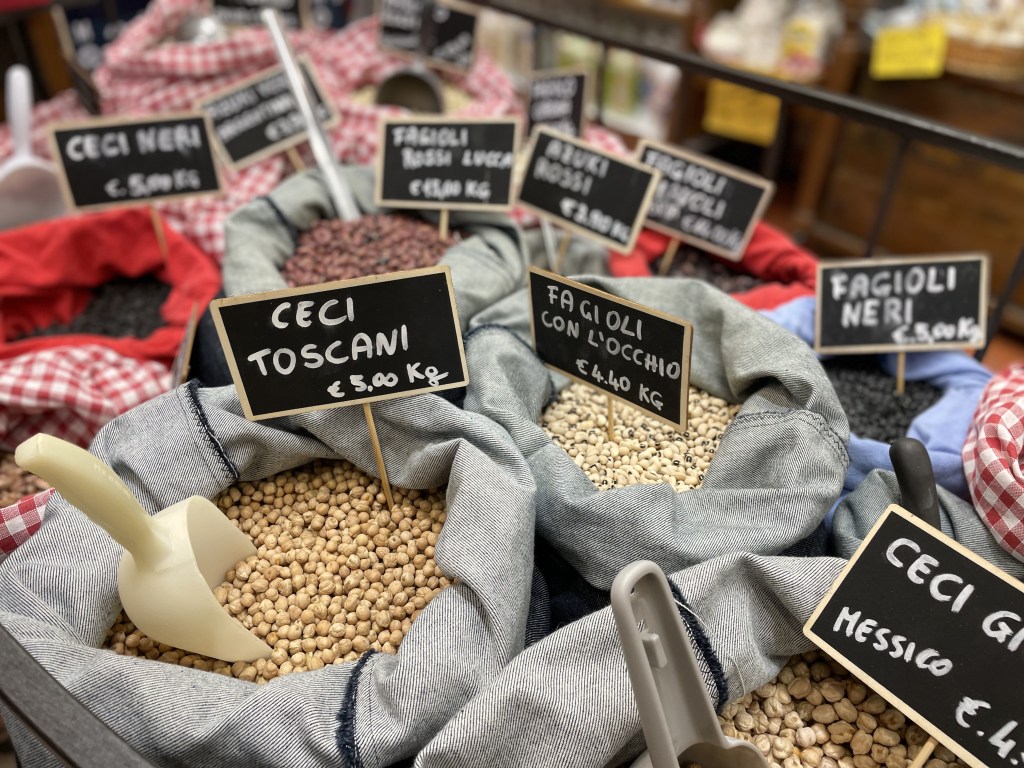
ceci – chickpeas are a staple ingredient in the tuscan cuisine

One observation I have made since living in Florence are the pronounced regional attachments and differentiations that seem to undergird Italians’ culinary identities. This complex regionalism is informed by geography but also a set of cultural markers. Tuscan cuisine, as you would expect, is very different to the cuisines in Sardegna, Apulia, and Sicily. But even with cities and areas nearby, locals make quite strong distinctions. Bologna is only 40 minutes from Florence by train, yet, it seems to be a completely different culinary world. In Bologna, Tortellini float peacefully through creamy sauces or swim in clear, flavourful broths. In Florence, in contrast, you have to dig through the rich and dense vegetable soup with bread called Ribollita. Why are these culinary regionalisms so pronounced? Why do they seem so important to many Italian people? I am motivated to explore the complex kaleidoscope of Italian cuisines further. I am also committed to challenging perceived ‘national cuisines’ by employing a transnational perspective.

National narratives still inform a large part of culinary public knowledge. Frequently, I encounter cooking books on, e.g., Italian cooking, Japanese cooking, or French cooking. Other cooking book concepts may zoom into a particular area or focus on specific techniques, products, or lifestyle choices. As a historian, I am drawn to transnational approaches that challenge the presumption of cultural curtailing by borders. In the last thirty years, we have seen historiographical movements that focus on non-state interaction and exchange between actors, organisations, or companies across borders. Professor Jan Rüger, for instance, wrote an insightful article in 2004 on transnational approaches for modern European history. It is called “OXO: Or, the Challenges of Transnational History” and focuses on the meat essence OXO and its history of Anglo-German entanglement. Trade of produce is a key topic in transnational economic history. I believe a transnational exploration of recipes and food preparation could also be fruitfully integrated into cooking books and culinary journalism.

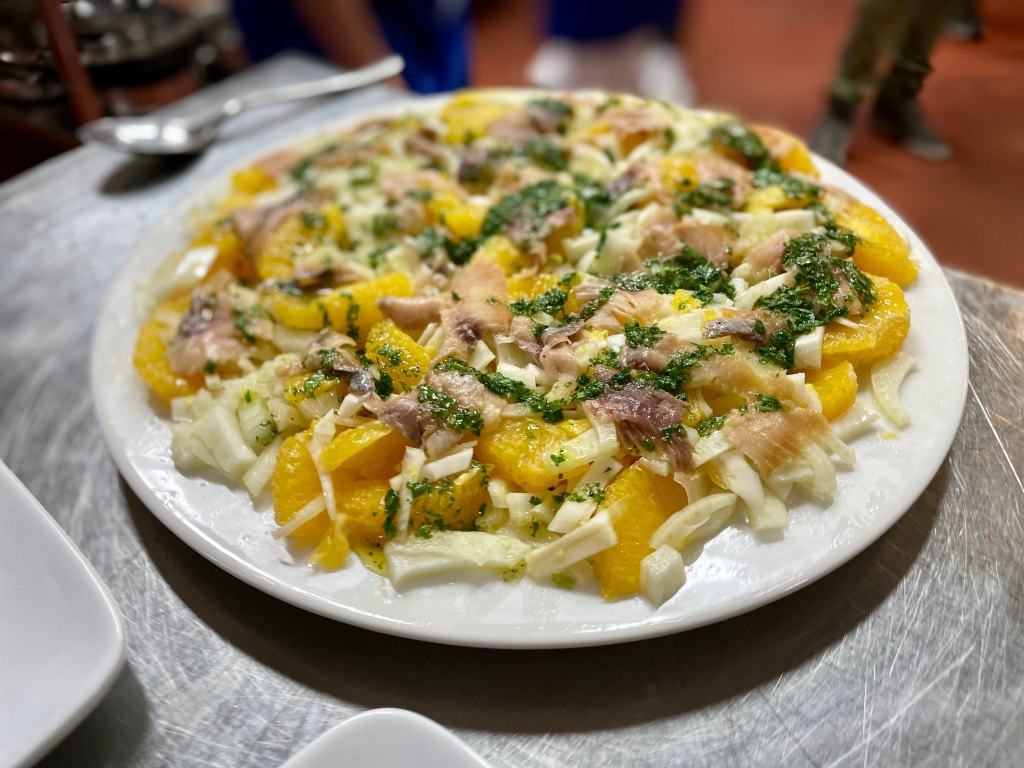
a sicilian orange & fennel salad, here with added hering

In addition to transnational history, the history of internationalism has grown steadily as an academic field. International historians usually inquire into nation states’ relation to the emergence of international organisations in the 19th and 20th centuries. Think of the League of Nations, the United Nations, and the World Food Programme. Researchers frequently focus on the workings of these international organisations, their internal hierarchies and power plays, and their reception by citizens at home. My former supervisor, Professor Patricia Clavin, is a leading international historian. She has produced pioneering work on the League of Nations and is currently working on the history of food systems. To think of these broader historiographical questions and apply their premises and goals to the world of cooking is promising. What scales and perspectives do we choose to frame people’s habits of preparation and consumption? What categorisations, hierarchies, and interpretations do we impose on culinary patterns?

cacio & pepe – a typically roman pasta sauce made with cheese and pepper

Trained in modern European history, I am particularly fascinated by the question; what is European cuisine? Does such a thing even exist? At a first glance, it seems presumptuous to work with an exclusively European category. I have just laid out my observation of the many cuisines present even within one nation state and the many transnational aspects that inform so-perceived ‘national’ cooking styles. However, I look particularly to the European Union when I ask this question. A union of 27 geographically, economically, and culturally diverse nation-states, and many more equally diverse regions, the EU’s culinary entanglements are more pronounced than you might imagine. The EU’s member-states are bound by many international compromises and transnational connections, including legislation on food quality and hygiene standards.

EU legislation to preserve food standards covers parameters of production, processing, and distribution. At the School of Culinary Arts “Cordon Bleu”, I first learned about the EU framework that guides the preparation and selling of food by “food business operators”. One of the legislations adopted in 2004 is The Hazard Analysis and Critical Control Points principles (HACCP), originally developed in the United States in the 1960s. HACCP guides food business operators, for instance, restaurant owners, to secure safety along the food production chain. It lays out a framework to anticipate all possible dangers to food hygiene and pro-actively resolve and monitor these identified risks. In 2002, the European Food Safety Authority (EFSA) was founded to produce scientific advice on food-related risks to producers and consumers. I find it fascinating to think that the EU somehow connects all people working for the food sector and that all restaurants in the EU (ideally) are guided by a European spirit of high food quality.

schiacciata – a typically tuscan sweet & bitter cake eaten around september & october

Indeed, you can argue that focusing on food standards legislation is a very peculiar approach to make a case for a European cuisine. I am a fervent supporter of the European Union, in awe of its achievements, and committed to resolving its many failures. Therefore, I find it comforting (or at least entertaining) to think that whenever I eat, I have the EU ‘on my plate’. In any case, I believe that synthetic, interdisciplinary thinking can fuel a more conscious and creative engagement with the narratives we choose to formulate on the topic of food. Regionalism, nationalism, Europeanism, and globalism (think of global food chains)—all these perspectives are insightful lenses to shed light on the diverse range of culinary (dis-)connections.

fregola (my new favourite discovery!) – a tiny type of pasta from sardinia

Let’s focus once again on the interplay of Italian cuisine and culinary regionalisms. What do these concepts tell us about cultural habitus? And what even is a cuisine? While it seems like a concept easily comprehensible, it is indeed quite tricky to define its key markers. Does a specific cuisine rely on certain ingredients? Is it inherently enshrined with recipes and preparation ideas? Or is it a set of ideas? I made the case for a European (EU) cuisine based on legislative ideas. While it might seem unintuitive, this approach is certainly more realistic than identifying a shared set of recipes or ingredients. In regard to Italian cuisine, however, I remain puzzled.

This article cannot fully answer all the questions it brought up. I believe this is a longer quest that demands carefully analysed case studies and broad reading. Hopefully, you will join me on this culinary-historical voyage and look forward to reading future reflections on the topic. What do you think makes a regional, national, or european cuisine? Let me know in the comments!

Thank you for reading! Alla prossima! 🙂

meet matilde pettini from “dalla lola”

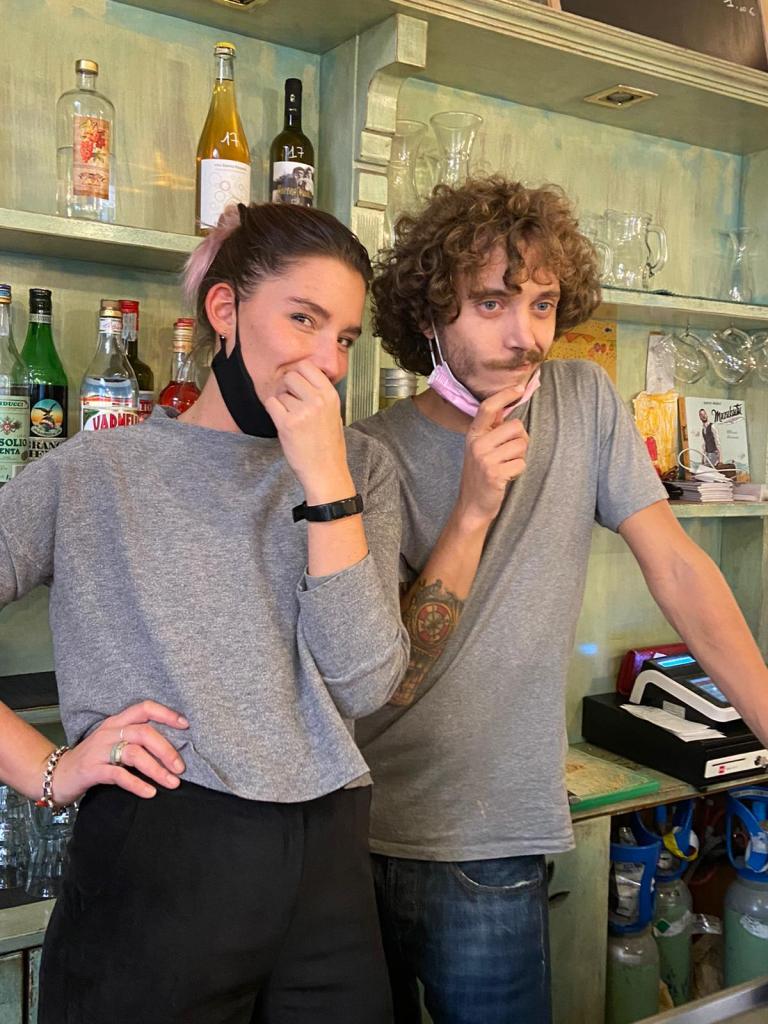
matilde and her right hand, paolo

“What does food mean to you?” – “It’s just everything for me.”

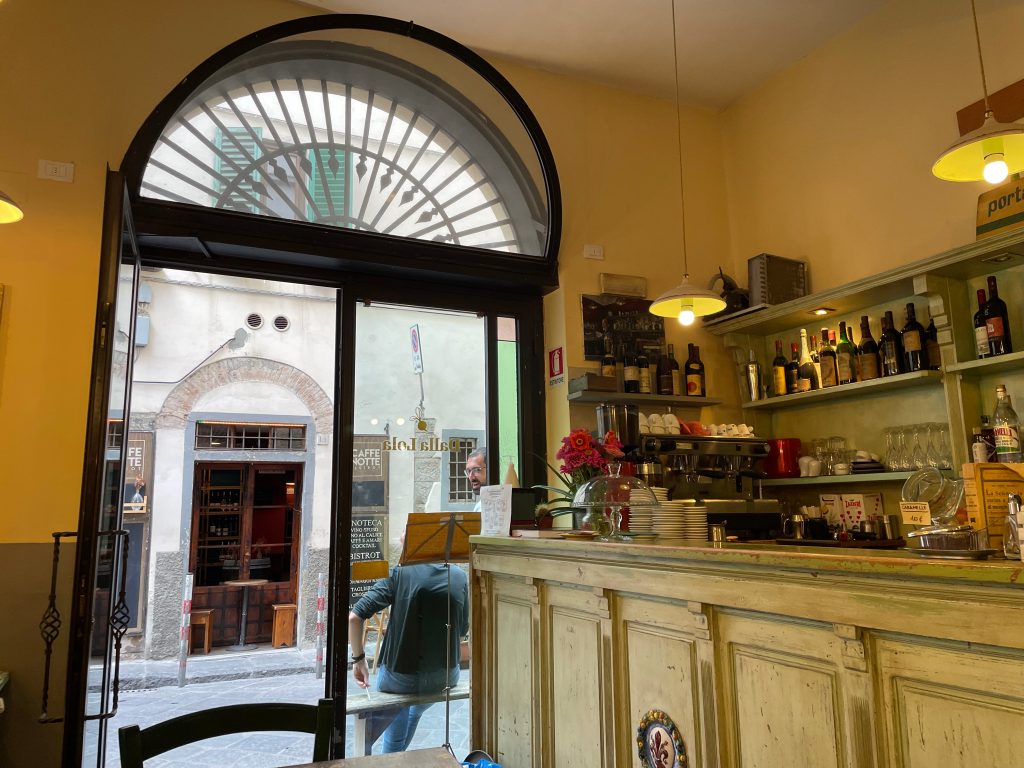
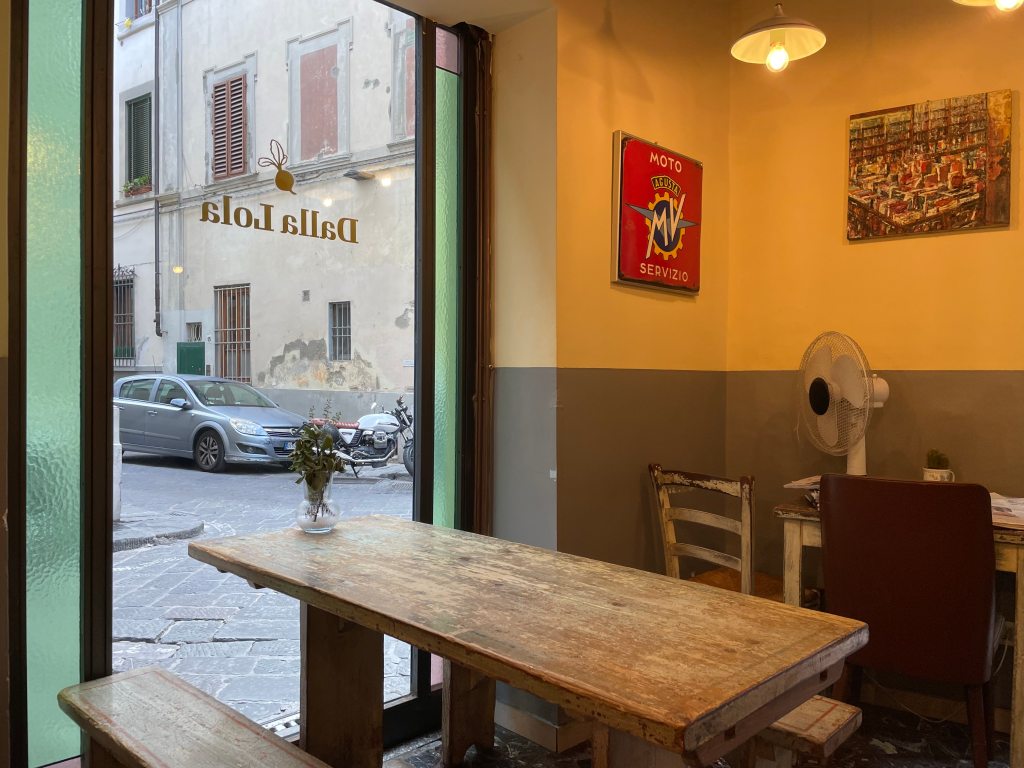
It’s a sunny and mild Wednesday morning. I am sitting with Matilde Pettini inside her restaurant Dalla Lola, near the Piazza Santo Spirito. The space is cosy. Mint and warm cream colours and large wooden tables set the scene for a friendly and communicative atmosphere. The first guests are arriving to slowly start their day with coffee and home-baked sweets.

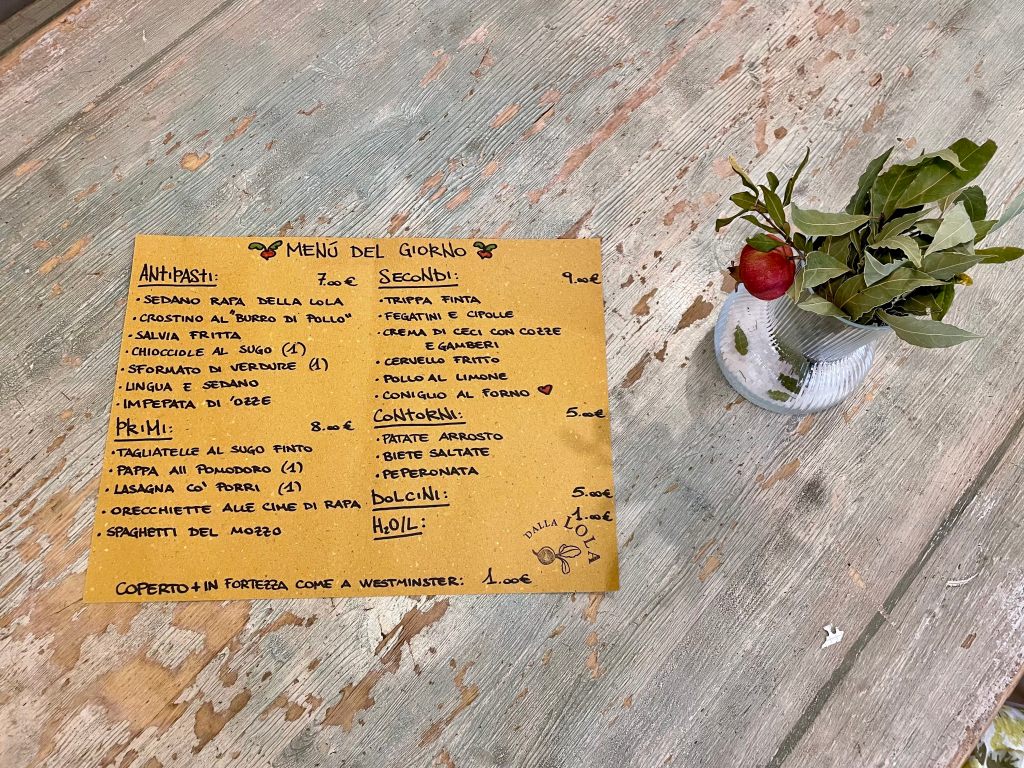
Sipping a Cappuccino, I observe how Paolo, Matilde’s right hand, writes the menu of the day; Salvia fritta (fried sage leaves), Sformato di verdure (vegetable flan), Orecchiette alle cime di rapa (Orecchiette with turnip greens), Cervello fritto (fried brain), Coniglio al forno (rabbit from the oven), Trippa finta (fake tripe – made with eggs, parmesan cheese, and breadcrumbs), and more. Every day, at least two dishes are replaced. Change is essential, Matilde remarks, to find your identity as a restaurant.

crema di ceci con cozze e gamberi – chickpea creme with mussels and shrimps (highly recommend!)

Matilde bought the restaurant in 2019. Having grown up in the neighbourhood, she had known the place for years. The first owner of the restaurant was named Lola. Lola opened a milk bar in the 1970s called Chicco di caffè (coffee grain), and her son eventually began to offer fast lunches to clients. After Lola and her son, another owner arrived who renamed the restaurant Dalla Lola. When Matilde bought the place from him, she kept the name to honour its first owner. The beginnings of the restaurant were challenging and marked by financial and staff problems. Especially when Covid-19 hit, it became difficult. Matilde had to close the restaurant. Fortunately, she could reopen Dalla Lola in June 2021. Now the clouds have cleared, and she delights in seeing her vision coming to fruition: “Everything goes well. I’m so happy.”

Dalla Lola is a place where everyone talks at eye level. Matilde explains: “you give something to a friend and have the chance to teach them about food”. The prices are low. Antipasti cost seven euros, Primi eight euros, and Secondi nine euros. Matilde wants everyone to be able to afford her food, to make Dalla Lola the social and intimate place that it is.

dalla lola
large social tables allow guests to mingle and chat easily
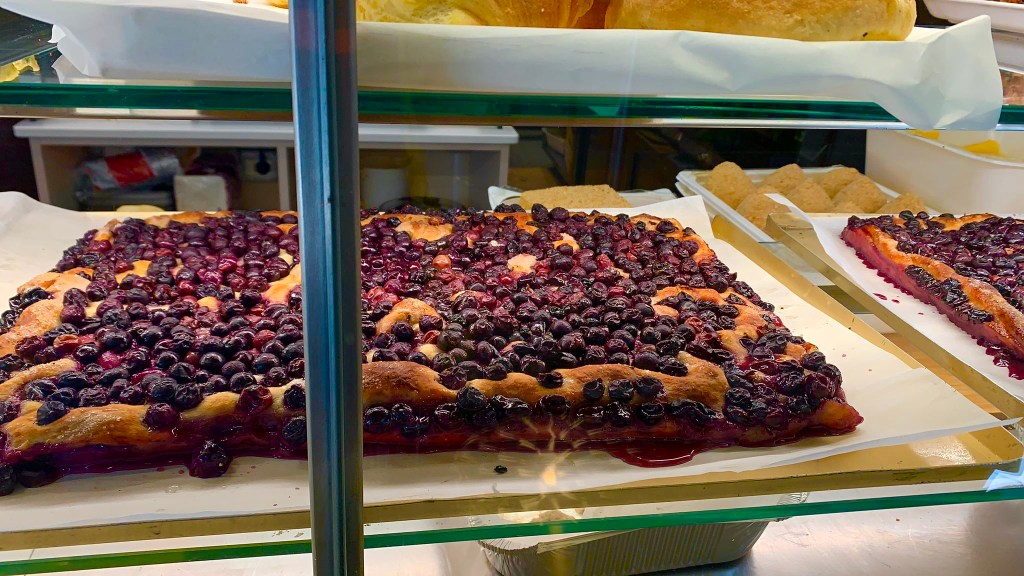
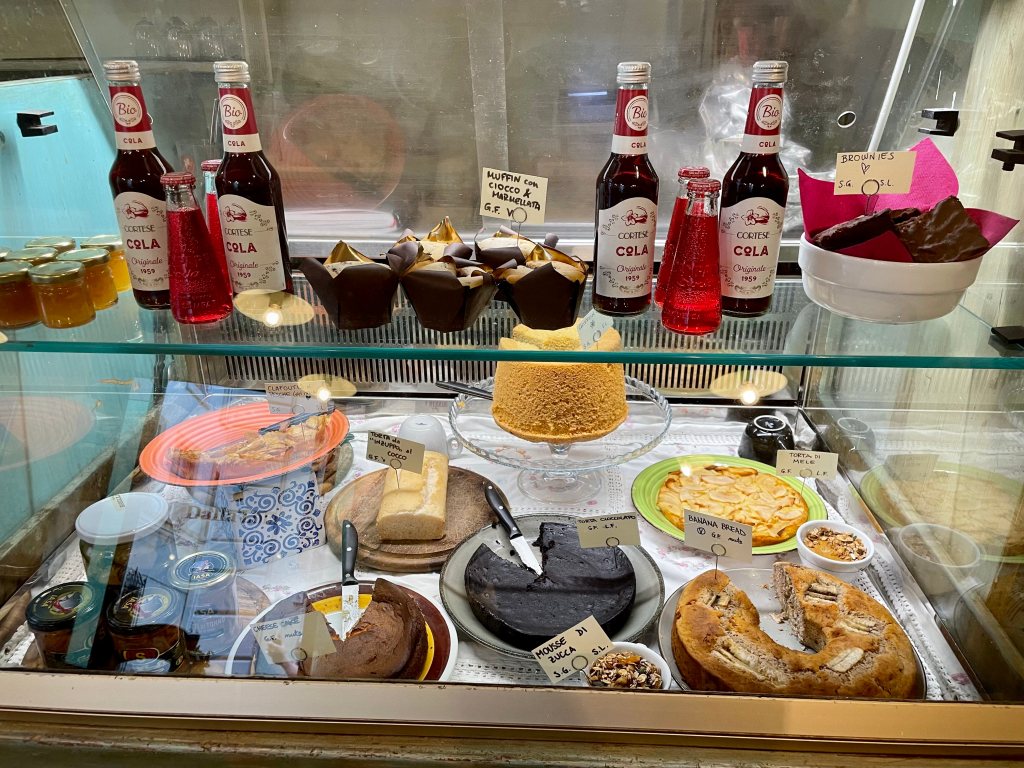
delicious home-baked sweets at dalla lolla

“I grew up with all these flavours & in the kitchen.”

Matilde has life-long experience in gastronomy and the workings of a professional kitchen. Together with her sister, she is the fourth generation of the family-run restaurant Trattoria Cammillo. The restaurant is a Florentine institution. Her great-grandfather Cammillo founded it in 1925. You’ll find many typical Tuscan dishes on the restaurant’s menu, including Trippa di Fiorentina (tripe Florentine style), Crostini di Toscana (slices of bred with chicken liver pâté) and fagioli (white beans). One recipe curiously stands out; a chicken curry. The recipe dates back to Matilde’s grandfather Bruno. British soldiers were stationed around Florence in the 1950s and asked him to cook them a curry. Bruno would buy mango chutney to accompany the curry. Eventually, the chutney producer turned bankrupt. Matilde’s mother, who, according to Matilde, “is one of the best cooks I’ve ever met in my life”, recreated the chutney recipe from memory.

trattoria cammillo

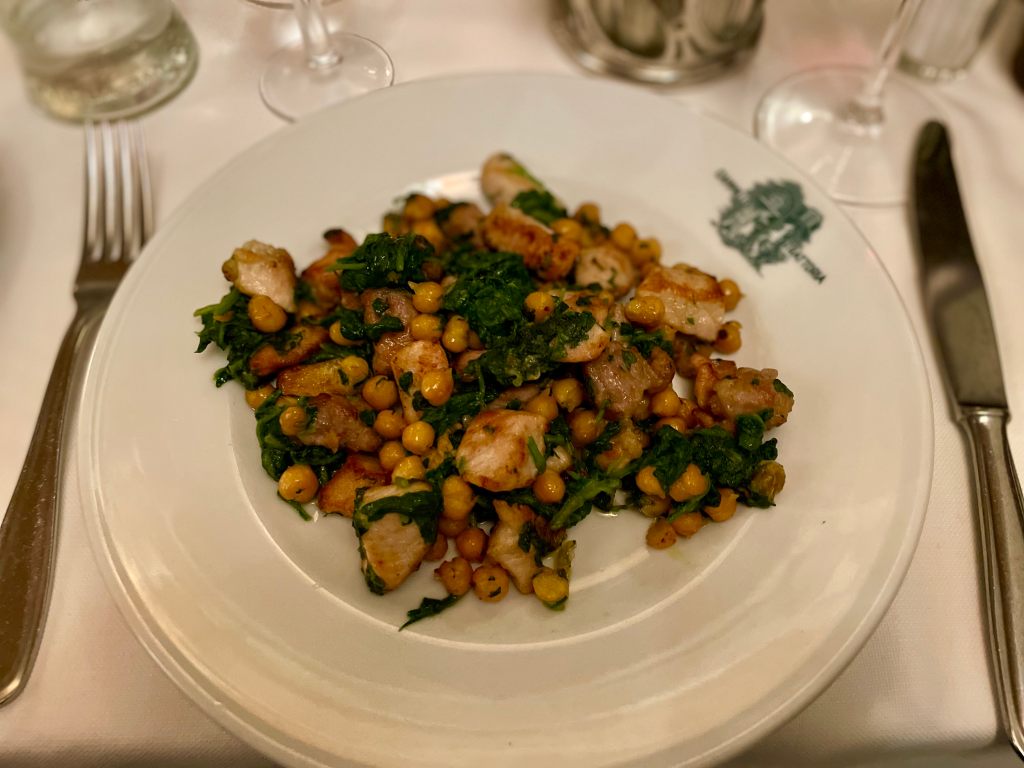
As a child, Matilde liked to eat Tortellini in a creamy sauce with curry powder. Now, Matilde’s favourite dishes at Trattoria Cammillo are Ceciata, a main course made of spinach, chickpeas, and small pieces of pork, and (still) the hand-made Tortellini. The pasta recipe goes back to her grandfather Bruno who brought it from Bologna. Growing up surrounded by food and flavours, Matilde decided early on that she would also follow the culinary footsteps of her family.

ceciata – a mix of spinach, chickpeas, and small pieces of pork (delicious!)

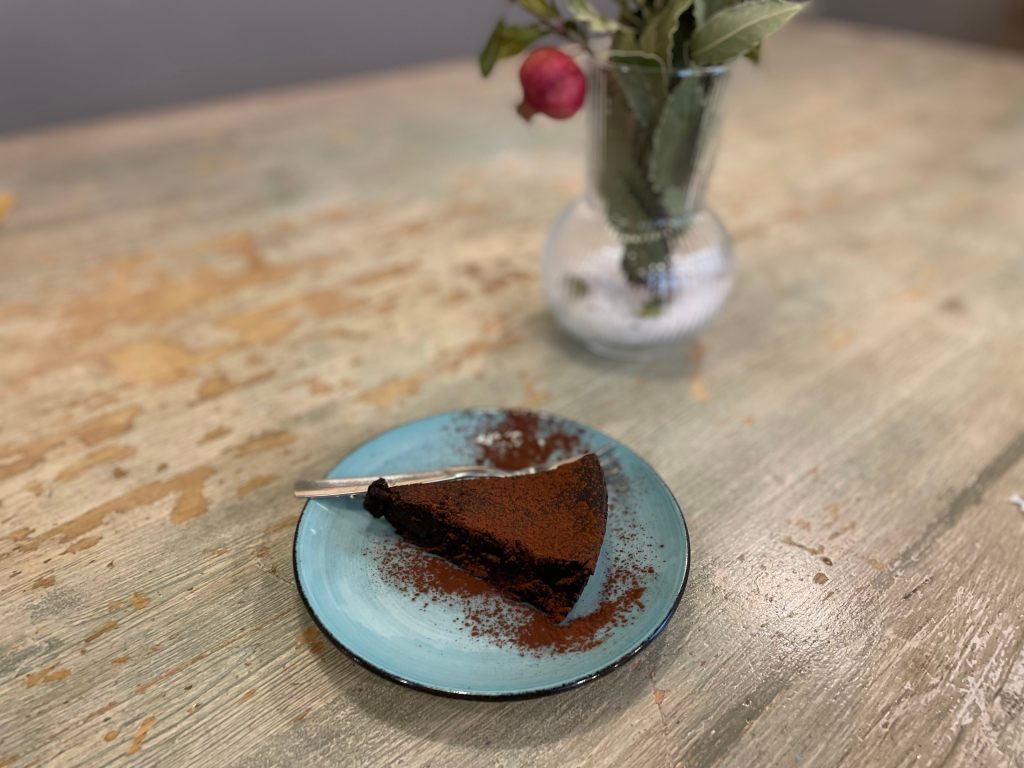
Matilde was six years old when she began to cook. She remembers making the “worst plum cake of the world”, as she refused to follow a recipe. Free-spirited, she wanted to create a recipe herself. At the age of eight, Matilde developed the creamy chocolate cake that she still serves today at Dalla Lola. It has a heavenly texture and tastes like a comforting hug. As a teenager, she wondered how to imagine her future: “The only right answer was cooking.” After finishing high school, her best friend Marta found out about the School of Culinary Arts Cordon Bleu in Florence. Matilde and Marta went to the open day and fell in love with the school: “It was like my Hogwarts.”

matilde’s heavenly chocolate cake

Matilde signed up for a bachelor’s degree in Business and Management. She loved learning about the theory and chemistry of cooking and ingredients. “For five hours, we just talked about eggs”, she recalls enthusiastically. After successfully completing the degree, Matilde worked at different places as a cook and personal chef, and also consulted restaurants. Three years ago, around the same time she opened Dalla Lola, Matilde began teaching at the Cordon Bleu school. It was a very stressful time: “I lost 10 kilograms.” But Matilde genuinely enjoys teaching. It helps her explain better her menu to clients. It’s a cooking lesson for her students and a communication lesson for herself. That is also how we met. Matilde was my teacher—an excellent and patient teacher—when I completed five weeks of cooking lessons at the Cordon Bleu School. Up until today, Matilde has explored many different positions in the culinary sector. She’s been a cook, teacher, consultant, and restaurant manager.

Cooking provides “a very big world” to Matilde. There are always new ingredients, combinations, and techniques to explore. You never stop learning. Matilde’s mother taught her the importance to taste everything and everywhere. It is essential to broaden and develop your palate as a cook: “to eat is an investment”. Matilde thus travelled to various countries, including India, Indonesia, and Thailand, always looking for new flavours. In Thailand, she indulged in street food and found a recipe for her restaurant: fried frogs with fried garlic & Sriracha sauce. Matilde particularly loves intestines, whether it’s tripe, sweetbread, brain or tongue. You’ll find all these dishes and more at her lovely and lively restaurant Dalla Lola. It is open for breakfast and lunch, Monday to Saturday. Go, go, go! Buon appetito!


where to go in florence? matilde’s recommendations:

Restaurants:

  • Aurelio for a Crostone Imperiale Soppressata (slice of toasted bread with Soppressata (a sausage made of all the left-overs of the pig), mayonnaise and Tabasco)
  • Hostaria da Fulvio for mussels
  • Circolo Ricreativo Culturale Pozzolatico (cultural centre) for spaghetti with burrata, lots of garlic, and fresh tomatoes

Food shops:


I hope you enjoyed this article on Matilde! 🙂

See you next week! Alla prossima!
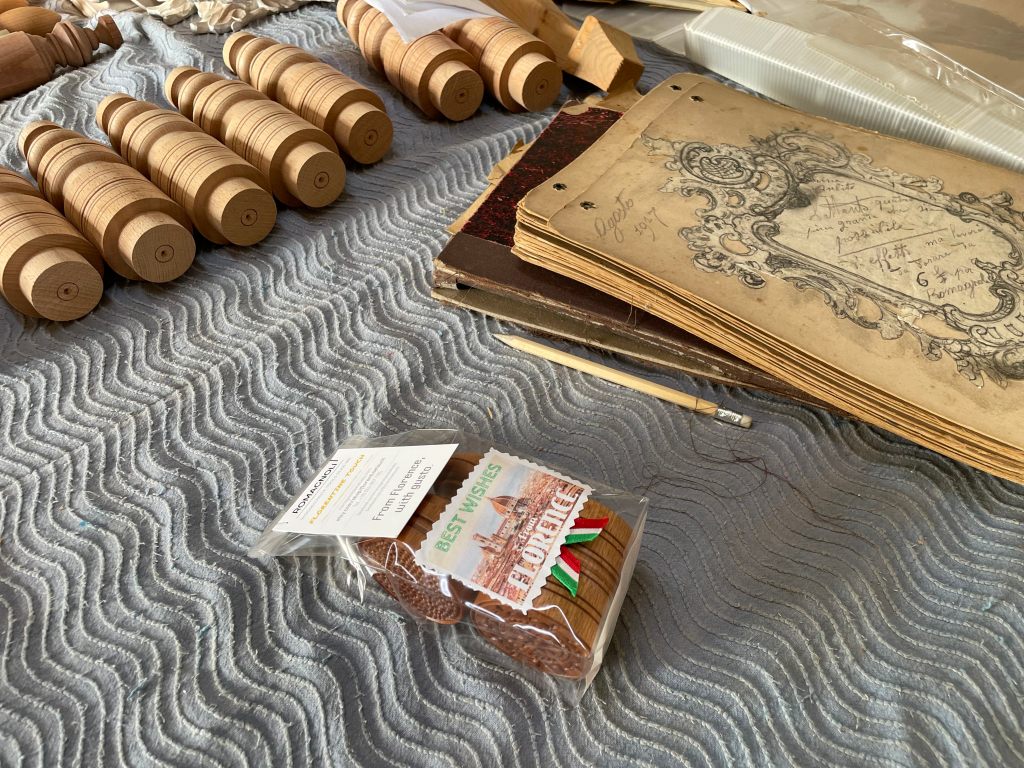
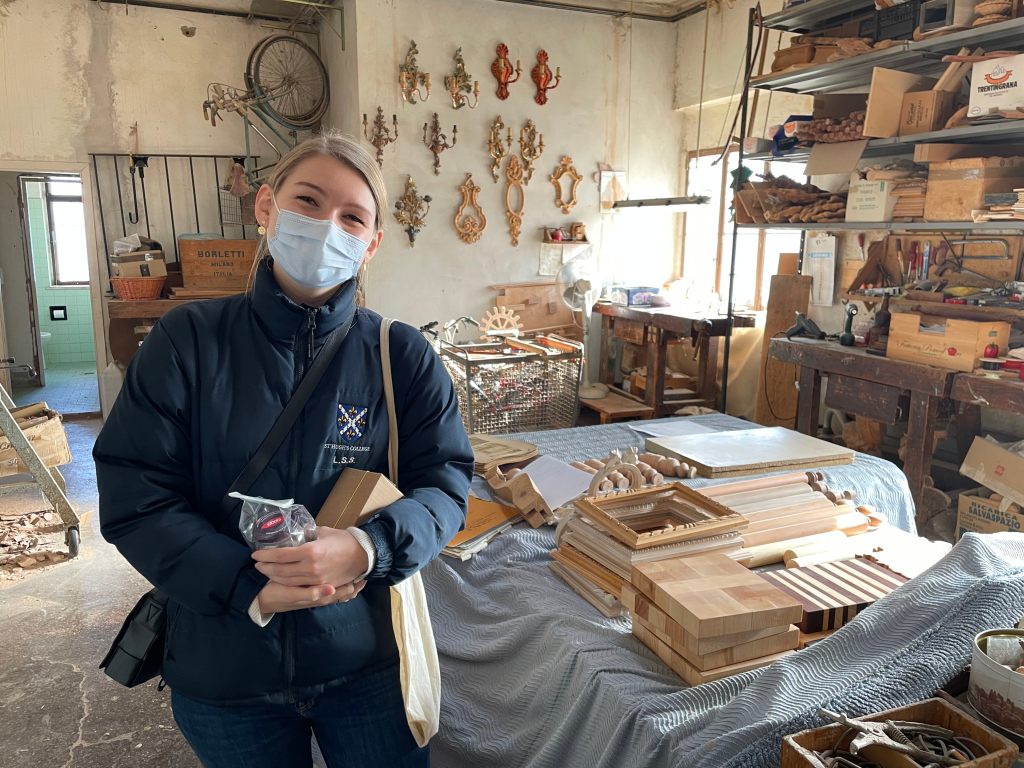
Lilly

meet paola muñoz from “all’opera”

part one

Throwback to a sunny Monday morning in Florence back in July. My boyfriend and I are on our way to Paola Muñoz, a professional chef and cooking teacher, for a three-hour pasta and Tiramisù class. On holidays and ready to explore the city, we found her class via Airbnb experiences. We were delighted by the idea to spend the beginning of the week in such a lavish, delicious, and fun way to learn about Italian cuisine. The class takes place at Paola’s apartment, a beautiful, light and lofty space. When we enter, the wooden table is already prepared. I can spot eggs, mascarpone, sugar, flour, Datterini tomatoes, and a pasta machine. A Basil plant with large, full leaves in the back looks promising. Paola welcomes us to her home and explains the menu of the day: Cappelletti with a spinach and ricotta filling in a tomato sauce, hand-made tagliatelle with pesto Genovese, and finally a Tiramisù for dessert. A straightforward menu, and yet there is lots to do. We put on our aprons and roll up our sleeves. Showtime! While we prepare the Tiramisù and the pasta dough, we learn about Paola’s background, career, and how she came to teach.
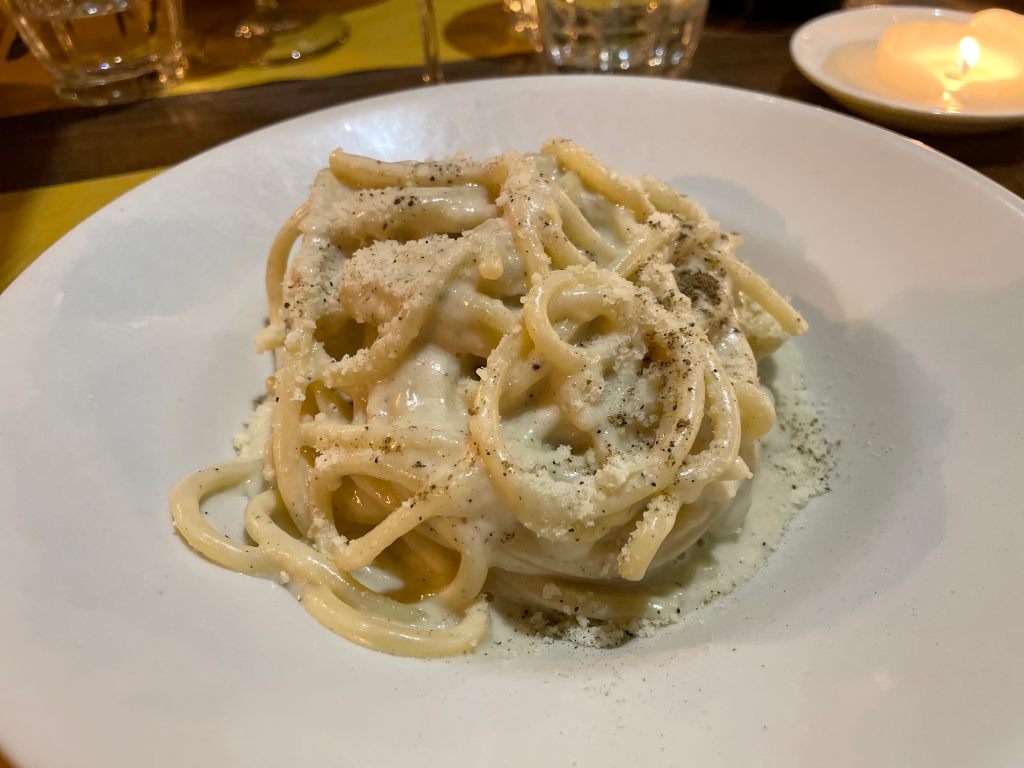
Paola is originally from Medellin in Colombia. In her early twenties, she worked in marketing but found her profession unfulfilling: “I didn’t feel that my job was beautiful.” When her sister told her that she would relocate to Florence to study fashion design, Paola decided to join. She knew a little bit of Italian and was interested in Italian art and culture. An avid home-cook, she signed up for a one-month cooking class in Florence. Food had always played a crucial role in her life. When Paola was younger, her father enjoyed taking her to markets and bought her cooking books to cultivate her culinary curiosity. After having arrived in Florence, a friend invited her to the restaurant Ganzo. The restaurant is run by culinary arts students of the Apicius International School of Hospitality. The practical teaching style and the international atmosphere of the school inspired Paola. She decided to sign up for additional cooking classes. And so, what had been planned to be only a month-long cooking programme would eventually turn into a three-year education in culinary arts and a professional career in cooking.

Cooking professionally is demanding. Hours are long, and kitchens often understaffed. After she finished her degree at Apicius, Paola went on to experience the daily realities of working in gastronomy. First, she learned how to perfect her time management. In her first job at Cucina 16, Paola worked all by herself in the kitchen. The lunch menu was expected to change every day, and dinner was ordered à la carte. She also had to wash all kitchen appliances while cooking, as a cleaner came only after 2 pm. In her following job, at the now-closed restaurant Rivalta, she was disappointed by the omnipresent lack of attention to quality. She realised the importance of working with high-quality ingredients and paying attention to their seasonality. Paola aimed for a refined cooking style and secured a position at a Michelin Star restaurant. There, she understood the complex planning, hard work, and many hours that go into cooking on such a high level. The organisation in the kitchen was “like military”. She also faced gendered hierarchies and found the environment to be particularly tough for women. Finally, Paola became head chef of Floret, a vegetable-focused restaurant where she learned how to manage staff, conceptualised menus, and took on responsibility for the whole kitchen. The restaurant was open for lunch and aperitivo, allowing her to have her evenings free. After all her different professional experiences, usually intense, sometimes unpaid, always challenging, she remembers that “At that moment I just wanted to have a balance”.

Paola’s strategy for balance is now one of diversification. Currently, she works for the Four Seasons Hotel as a freelancer, offers private cooking experiences, and teaches physical and online classes. The motivation to teach came to her in a curious way. One day, a friend called her and told her that a journalist from Amsterdam wanted to learn how to cook and wished for Paola to design and teach the course programme. For two months, Paola and the Dutch journalist met three times a week for six hours. They would cook three dishes per day; antipasti, primo, and secondo. The experience showed her the rewarding aspects of teaching, and she was determined to explore this path further. Together with her ex-boyfriend Benedetto, she founded the company all’opera in 2019. The company serves as an umbrella for her cooking courses and the private chef service she offers. All’opera’s physical classes, offered through Airbnb, were initially based on the idea of “Dinner in a Chef’s House.”

Since my boyfriend and I booked a morning class, we’re not staying for dinner. We’re having lunch at Paola’s place and are feeling fantastic. The white wine, a Falanghina, is crisp and very cold. It fits perfectly with the two pasta dishes we get to enjoy. We are surprised how sweet and flavourful the tomato sauce is and very proud of our hand-made tagliatelle. The Tiramisù is a wonderful finale to our cooking morning. Both a tiny bit tipsy, we agree that there is absolutely no better way to spend a (usually dull) Monday morning than to cook and eat with Paola.

part two

The pasta and Tiramisù class with Paola pushed me to consider the option of cooking for myself. I was impressed by her entrepreneurial spirit and her skilful combination of different work modes; creating, teaching, and communicating at the same time. Her internationality felt familiar and rendered the idea to move to Italy with ridiculously broken Italian less absurd. When I arrived in Florence I thus contacted Paola again to catch up and learn more about her work.

It’s October 21st. We meet close to Mercato di Sant’Ambrogio and sit down at ditta Artigianale, an unusually “hip” café for Florence. We both order Chai Latte, and Paola is eying a Red Velvet Cake. Maybe it’s the modern atmosphere of the place that makes us reflect upon the digital opportunities for chefs and the online classes she had taught over the last months. Like so many online and e-learning projects, she explored the idea during the Covid-pandemic. Lockdowns and travel restrictions prohibited working in restaurants and hosting physical cooking experiences. Paola started her online classes via a WhatsApp group of Colombian friends that grew into a cooking-avid community of around 170 people. Eventually, people from the group would cook with her every weekend. The minimum size for a class was nine people, the maximum amount twenty. Slowly, she professionalised her online courses. She invested in technical equipment, such as lights and a microphone. She got a professional zoom account and began to upload her video classes. Teaching digitally allowed her to explore a completely different mode of communication.

Providing online classes harbours lots of challenges, Paola shares. You have to be very precise, descriptive, and slow in your descriptions. There are lots of parameters out of your control. First, you have to address the differences in kitchen appliances. The oven of your student might be weaker or stronger, smaller or larger, affecting the time your meal has to cook inside. The same goes for other machines, like the stove. Another challenge is that you don’t know the quality of ingredients students buy. Paola records a massive Tiramisù fail. In one live class, her students’ mascarpone mysteriously separated and turned into a watery, unpleasant texture. Mascarpone cheese is expensive in Colombia, and the available product’s water percentage was too high. Paola recalls how nerve-wracking it was to sit far away in front of your camera, witnessing the drama unfolding, unable to resolve the situation. Another aspect to keep in mind when teaching online globally concerns the different seasonalities of products. Conceptualising and executing online classes broadened Paola’s knowledge of teaching in ways completely different from her in-person workshops.

Online classes allow Paola to reconnect with her Colombian community, but she is in Florence to stay. For the future, she dreams of creating an open space for private dinners and classes, where she seeks to explore her other big interest; art. She wants to combine culinary events with art exhibitions, allowing people to mingle, eat, and communicate. Until then, you can explore the restaurants and food shops Paola has recommended for us or take a look at her website for any classes and cooking services she offers!


where to go in florence? paola’s recommendations:

Restaurants:

Food & Wine Shops:

  • Mercato di Sant’Ambrogio
  • Enoteca Alessi
  • Pegna (for premium products, like Bottarga)

I hope you enjoyed this article on Paola! 🙂

Alla prossima!

Lilly

mise en place in a tiny kitchen

our stove – the Bialetti Moka gives away the small size of the stove plates
our tiny kitchen

It’s been only a few weeks living in our new Florentine apartment and the kitchen situation looks rather poor. I knocked my head numerous times at our low hanging range hood. Electricity switched off around 6-7 times as I keep forgetting that you can only use one electronic machine at a time (it’s an old house). I broke our only salat bowl when it fell out of our tiny stuffed shelve, and I gave up using our countertop oven (an initial symbol of hope) when it took one hour rather than 25 minutes to cook zucchini. In addition, we only have two stove plates, relatively small and very close to each other. That means I cannot place our one mid-sized pot next to our one (small!) pan to cook simultaneously. If I want to boil pasta and prepare a sauce at the same time, I already have a problem.

To complicate things even more, I cannot prepare a dish or an ingredient in advance and quickly warm it up when needed. Recently, I was cooking a crema di ceci, a chickpea cream, for dinner. The chickpeas were cheerfully boiling in a small pot, the vegetables—mangold, zucchini, tomatoes—were calmly simmering in the big pot. The chickpeas were almost done and ready to be mixed when I realised I had forgotten to prepare a broth. I needed the broth to smoothen the texture of the crema and to deepen its taste. Unfortunately, there was no space to heat water to dissolve a broth cube, or unfreeze the self-made broth that was happily chilling in my freezer. It felt like one of these final text questions at a high school maths exam: “You have to cross the river with one boat with only two seats, and X can’t sit next to Y who can’t be left alone with Z…” I could not solve the riddle. That night, the crema di ceci just had to be eaten without broth. A tiny kitchen certainly is puzzling.

Cooking in a professional kitchen, however, I learned about a helpful concept I now apply to my private kitchen: mise en place. The French term roughly translates to “put in place” and describes an approach to cooking in which you consider all the steps to be taken in advance. This allows you to prepare and store your ingredients in a way that maximises and facilitates your cooking efficiency. It further helps you organise your kitchen space so that your tools are accessible and ready to support your cooking adventure. Before you start working with heat and thus accelerate the speed of cooking, pause and think of what you can prepare. What vegetables can you clean and chop in advance? What other components can be made beforehand to prevent having to do too much simultaneously later? For example, while you don’t want to wash salad leaves too early, why not already mix a vinaigrette and have it ready for use? Mise en place is all about thinking ahead to take off some steam once it gets busy.

Mise en place motivates me to realistically assess what I can cook in my tiny kitchen and what I can’t. No, I cannot use the oven to make Tuscan roast pork, a fish in salt crust or bake any of the delightful Italian pasticceria. Impossible. I also cannot rely on the stove to prepare all components of a dish such as a fish fillet with creamy potato puree and braised spinach on the side. However, what I can do is to relocate most of my cooking from the stove to the dining table. The table is big enough to easily prepare pasta of all kinds of shapes. I also have sufficient space to chop and create varieties of salads and raw dishes. What also helps is to cook ahead by preparing a hearty ragù on one day, and then use the next day to make fresh pasta.

our beloved table – this is where I prepare most of the ingredients and also place my pasta board

If I want to cook something more complex, it is also doable. I need to go through the dish’s different components and preparation steps attentively and make sure I create a timeline that fits my kitchen while never compromising on taste. If I plan accordingly, I can make gnudi con ricotta e spinaci with porcini mushrooms in sage butter, or ravioli filled with egg yolk, in a pumpkin gorgonzola sauce with toasted almonds.

ravioli filled with egg yolk in a pumpkin-gorgonzola sauce with toasted almonds and parsley on top

If you have a small or large kitchen, live in a cramped student dorm or a spacious house, mise en place is a useful concept to explore. In my tiny, half-dysfunctional kitchen, it helps me improve what I can do, be realistic of what I can’t, and pushes me to think of cooking techniques and ingredient combinations previously untried.


mise en place do’s:

  • organise your kitchen in a way that minimises your steps to be fast and efficient
  • know your kitchen organisation – have a set place for every tool and ingredient
  • make sure you maintain your kitchen organisation
  • invest in lots of different-sized bowls and containers to store your prepared ingredients and prevent any ingredients to fall on the floor (oranges, lemons, apples, etc.)
  • keep you fridge organised and know your ingredients’ expiration dates
  • know the date you opened a jar or product container – use a marker to write down the date on the container
  • understand your recipe and the order of all cooking steps before you start (you might need to adjust the order of preparation depending on your kitchen)
  • think ahead – what can be prepared in advance? What needs to be prepared in advance because later on you won’t have sufficient space on your stove anymore?
  • clean while you cook – especially in a tiny kitchen it’s essential not to waste any space with pilled up dirty dishes

Now go ahead, Dear Reader, prep and organise!

Alla prossima!

Lilly