
It’s December 2021, and together with a decidedly eclectic year, my culinary journey in Florence is slowly coming to an end. In the last four months, I took cooking classes at the Cordon Bleu school and completed an internship at the fish restaurant Calino. The internship forms part of the Cordon Bleu course, and the school helps the students find a suitable location to refine their culinary interests. New to the city, I was unsure which restaurants to consider. The typical Tuscan dishes were slightly too meat-heavy and rich for me. I looked for a lighter, fresher cuisine to learn from—one that also pays attention to a modern presentation and aesthetic of its food. Emilia, the coordinator of my cooking class, proposed Calino to me.
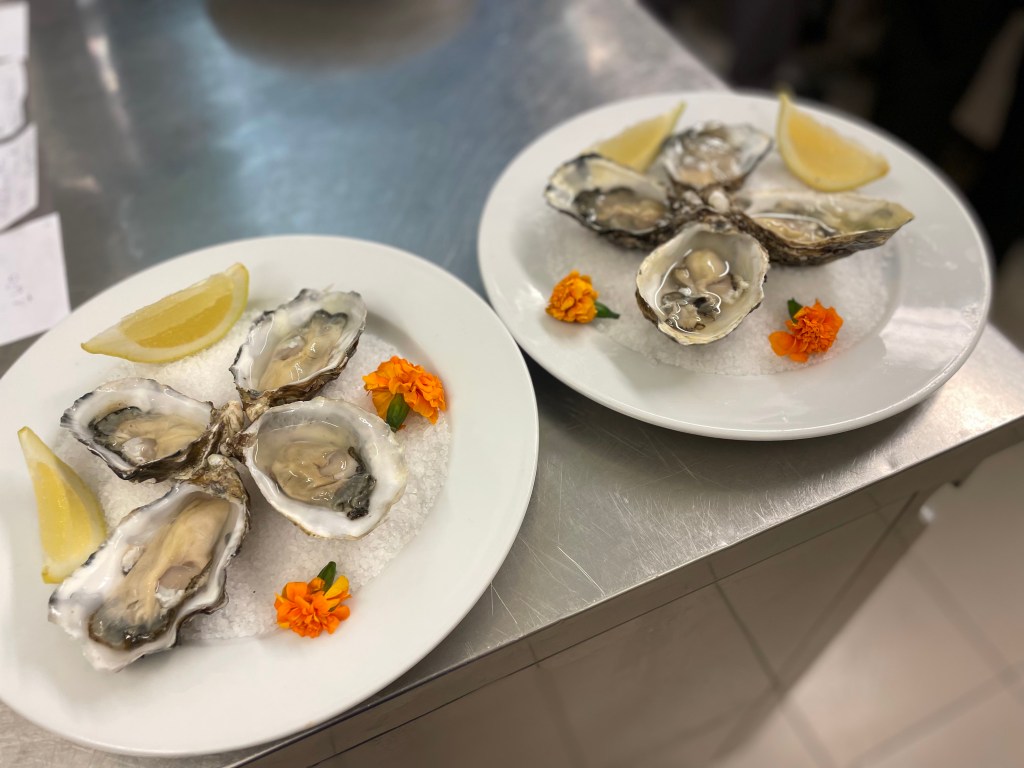


Calino is a fish restaurant located in the North of Florence at Piazza delle Cure. Its cuisine focuses on the quality and individuality of ingredients, their creative and liberal combination, freshness, acidity, and modern, minimal plating. When I looked up the restaurant online, I was certain it would be an excellent place to learn. Nevertheless, it was nerve-wrecking to walk there to sign the internship contract. My boyfriend dropped me off and tried to encourage me. I repeatedly checked my Italian vocabulary, tried to remember the words, and felt very uneasy about speaking. Back in my cooking class, the language barrier was challenging but I was part of a group. Now, I had to master the conversation all by myself.
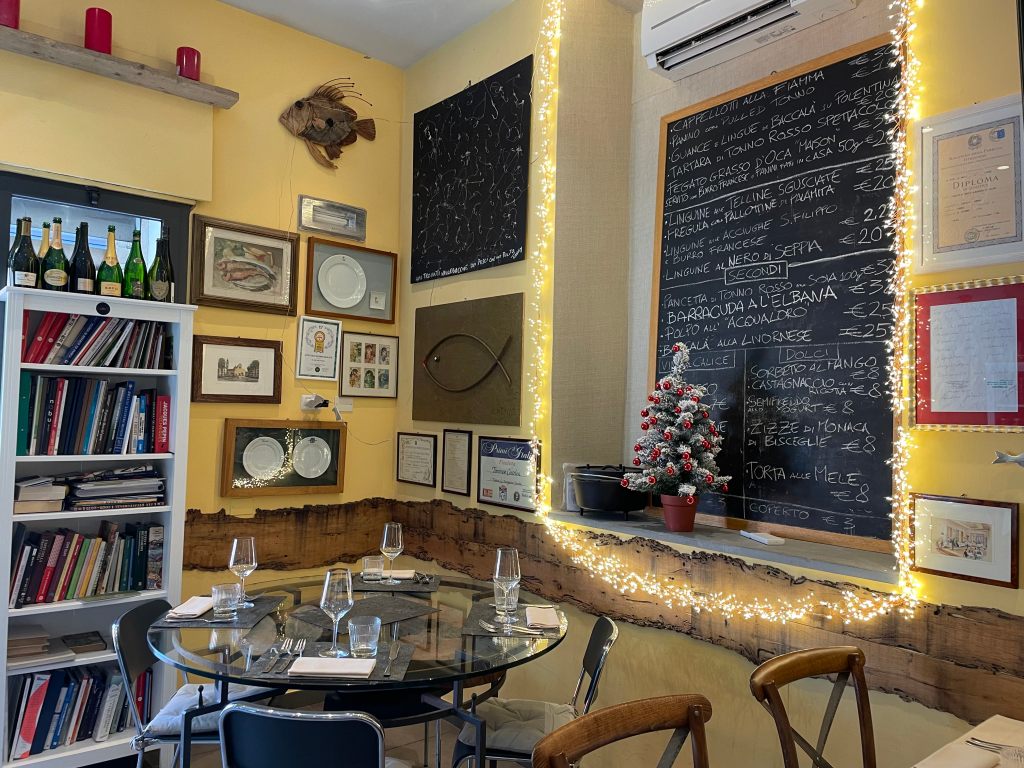
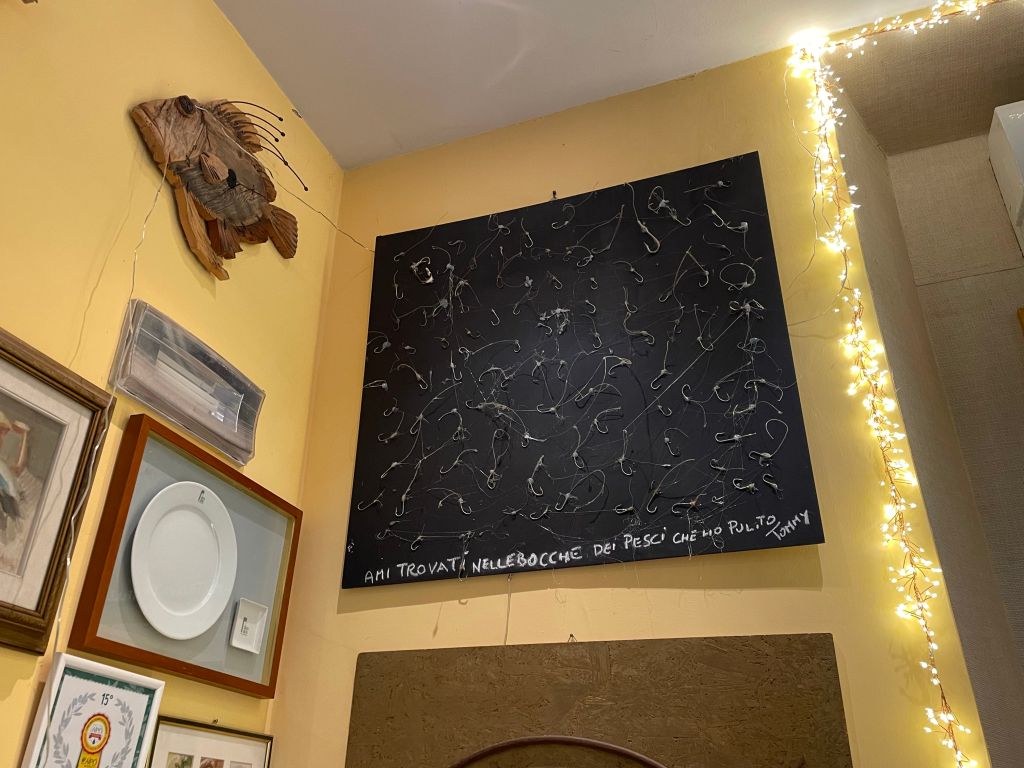
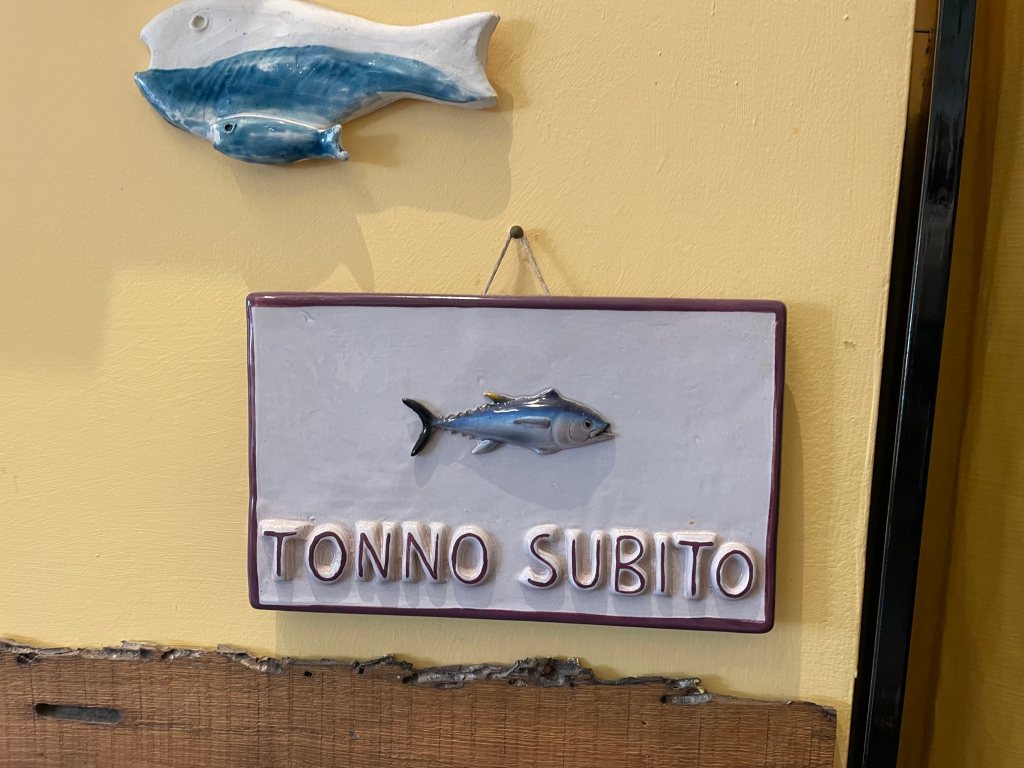
When I walked inside, my fears slowly disappeared. Looking at the restaurant’s interior, you instantly notice an overarching attention to detail and passion for the focal product: fish. On the wall, you can spot a canvas displaying a collection of hooks that the owner Tommaso has found inside various fishes. The description reads: “Ami trovati nelle bocche dei Pesci che ho pulito”. There is a little wall of employees, where each person’s photo hangs right next to a decorative fish. One of my favourite pieces is the “Tonno Subito” image, playing a pun on the expression “torno subito” (back soon). These little details hint at the love for food present in Calino’s kitchen and create an intimate and friendly atmosphere. Tommaso and I discussed my working hours, signed my contract, and my internship began a couple of days later.
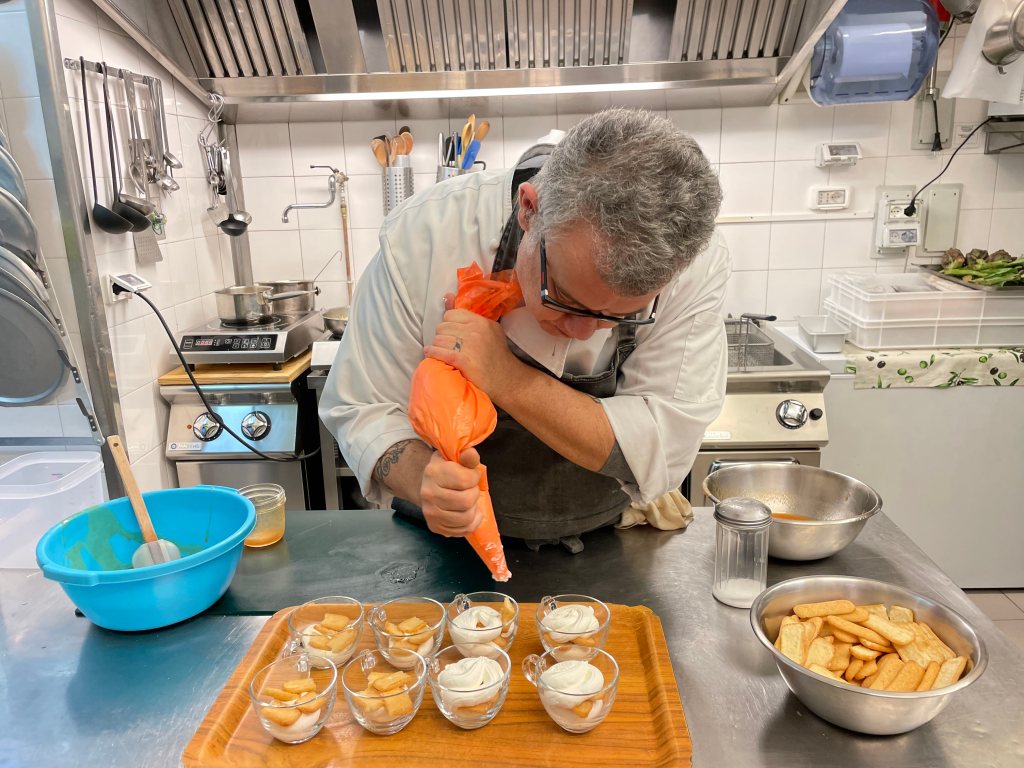

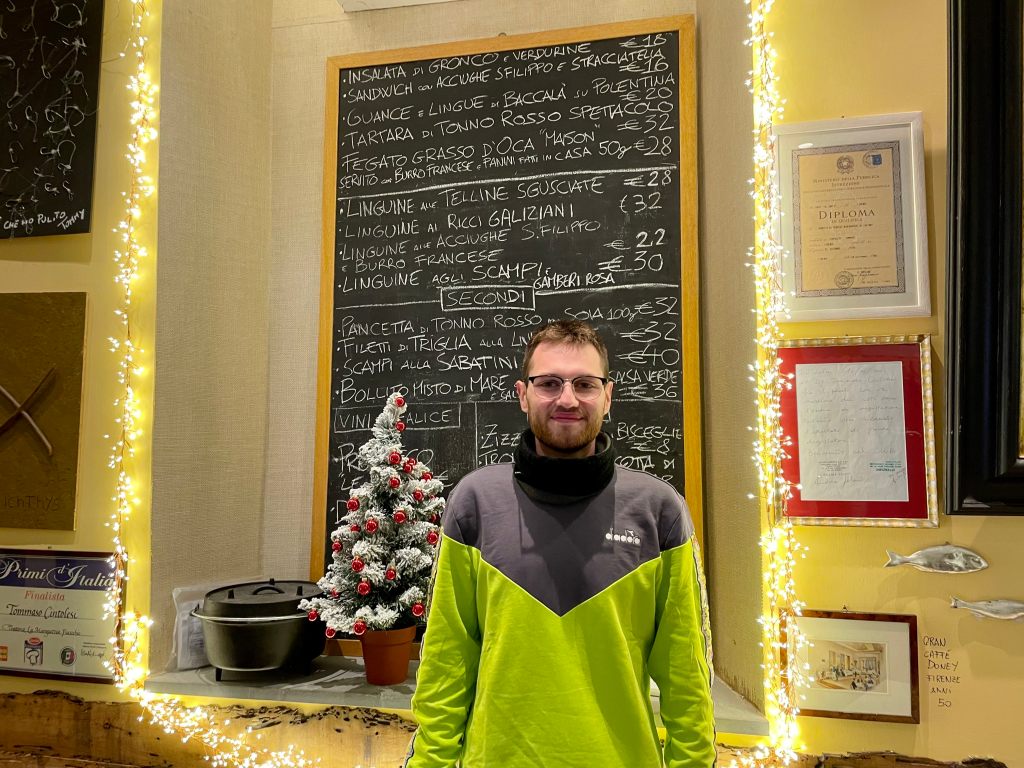

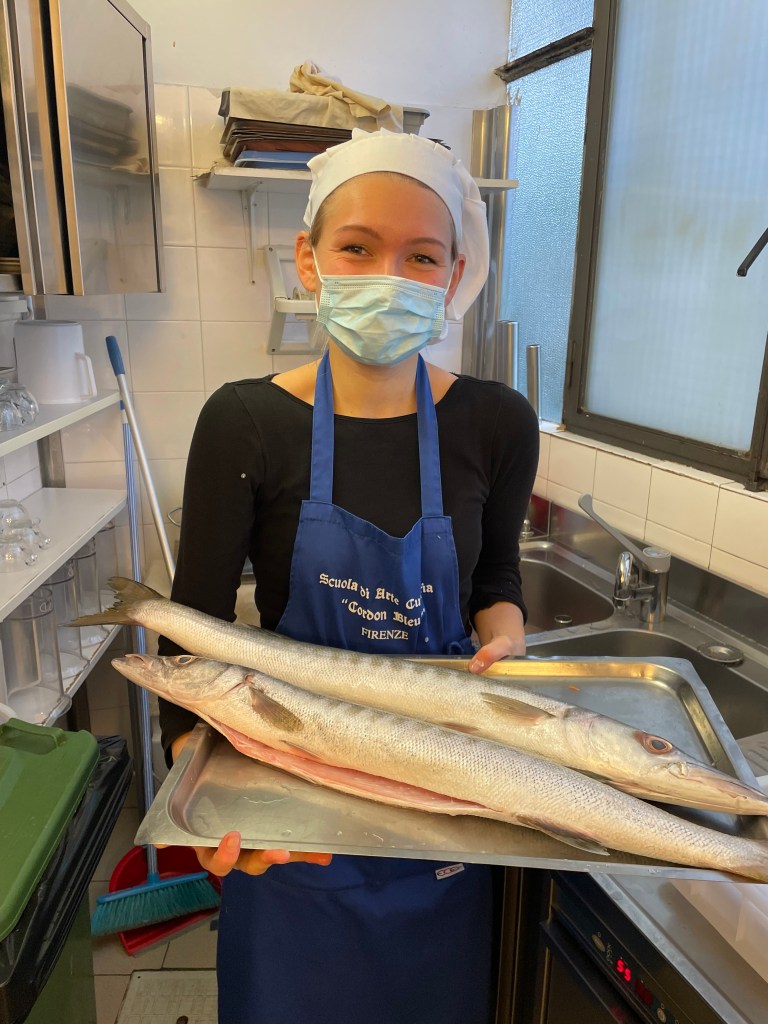
We are five people who work in the restaurant: Tommaso, who cooks in the morning and afternoons and does service when clients arrive; Daniele and Alessio, who both work full-time as cooks; Mamoutou, who cleans the restaurant and kitchen but also regularly offers a hand in preparing fish or plating dishes. And then, there is me, the intern.
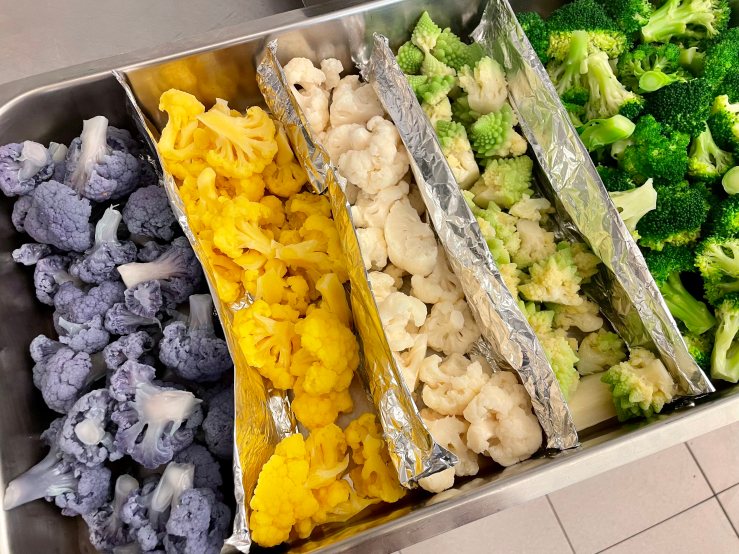
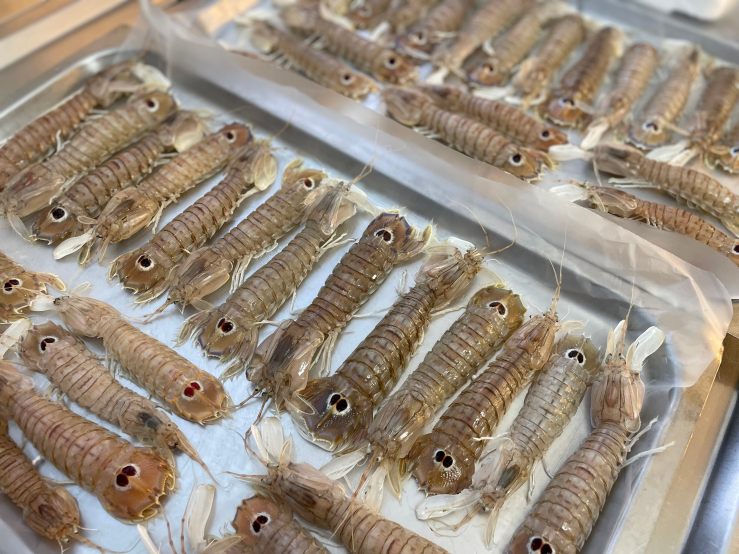
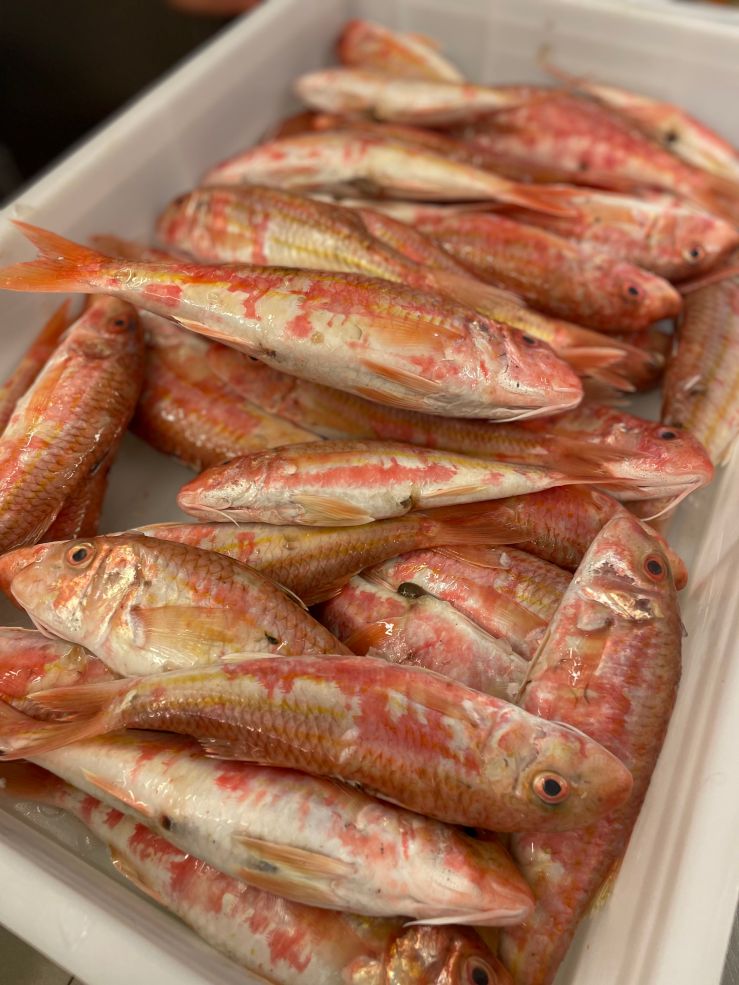
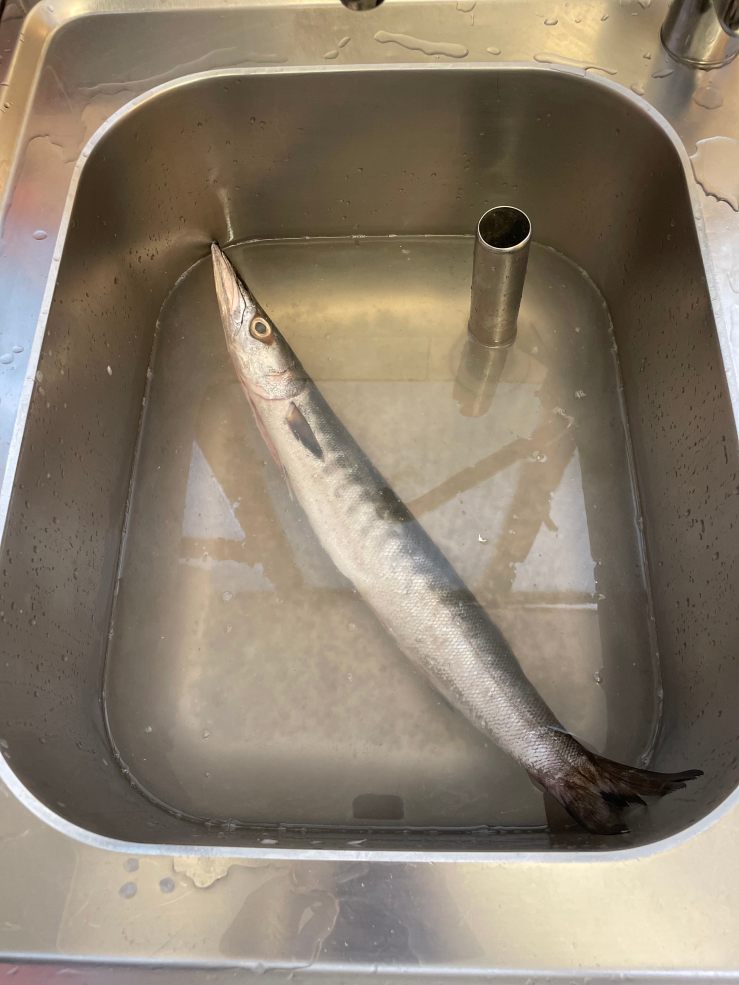
We usually start our days with a strong coffee, dividing the tasks written down on the little whiteboard next to the oven. These include preparing vegetables such as artichokes, cauliflowers, romanesco, and pumpkin, cleaning calamari and sea urchins, filleting sea bream, setting up a fish broth, and making Focaccia, Grissini, and Panini. While we pursue our different assignments, distributors enter from time to time to deliver new ingredients. I like listening to the friendly banter between the distributors and Calino’s team. While we work, I am encouraged to taste all the products and preparations to develop my palate and understand Calino’s culinary cosmos. Plates constantly change, depending on seasonality and the ideas of Tommaso.
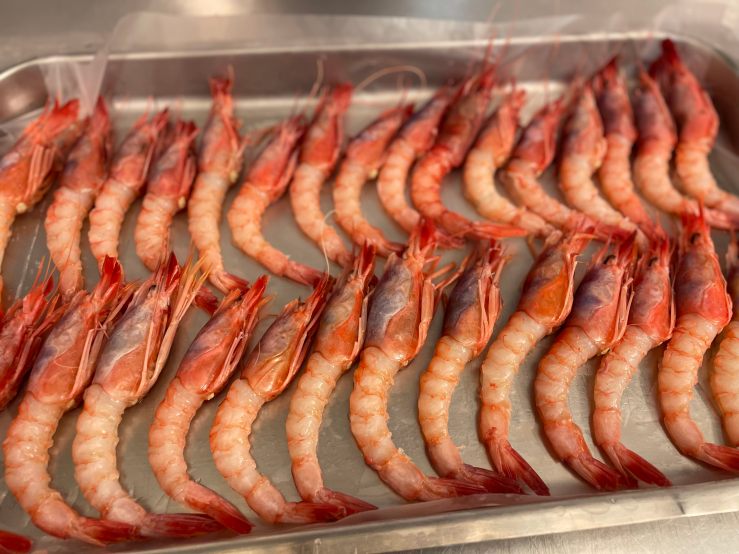


Tommaso is a creative force, always trying out new ideas and speaking passionately about the food he cooks. He began working in the kitchen at the age of 14 at the Trattoria La Mangatoia in Florence, a typical location for family celebrations. In his early twenties, he moved to Paris to cook at the restaurant Casa Bini in the quartier Saint-Germain-des-Prés. The Italian restaurant was famous for its Carpaccio de Boeuf and Pasta al dente and was frequented by famous guests such as Claudia Cardinale. When he returned to Italy, Tommaso cooked for a well-off Russian family in Lucca. He forged contacts to Moscow’s gastronomy sector. After finishing this job as private chef he was asked to join the restaurant franchise CORREAS in Moscow. During the day, he conceptualised new dishes. In the evening, he visited the different CORREAS restaurants to taste their implementation. After one year, he moved to an Italian restaurant in Moscow, called Pepperoni. Weary of living abroad alone, Tommaso wished for his wife Anna and his daughter Anita to join him. However, the school fees were staggeringly high, and his superior was not conceding to raise his salary. And so, in 2009, Tommaso’s time in Russia came to an end, and he returned to Tuscany.

In 2012, the chapter of Calino began. Tommaso founded the first Calino restaurant in Scandicci, in the South of Florence. The restaurant was located in a Boule House from which it derived its name. There is a move in the game Boule which is called Calino. In the beginning, the restaurant was a one-person enterprise. Tommaso was cooking, cleaning, and providing service all by himself. Slowly, more guests came, and he could develop his culinary profile. Finally, in May 2017, Tommaso moved Calino to the North of Florence, to its present location at the Piazza delle Cure.
I asked Tommaso why the restaurant’s focus is fish. As a response, he pointed to the versatility of preparation fish offers. Working with the whole body of an animal allows you to explore its many parts, use them for a range of different dishes, and even turn their carcasses into a flavourful broth. You can vary the types of fishes in a more dynamic way than meat. Unless you are a hunter, the meat available to prepare is somewhat restrained by veal, lamb, beef, pork, and chicken. There is a wider range of species and sizes to explore with fish and seafood.
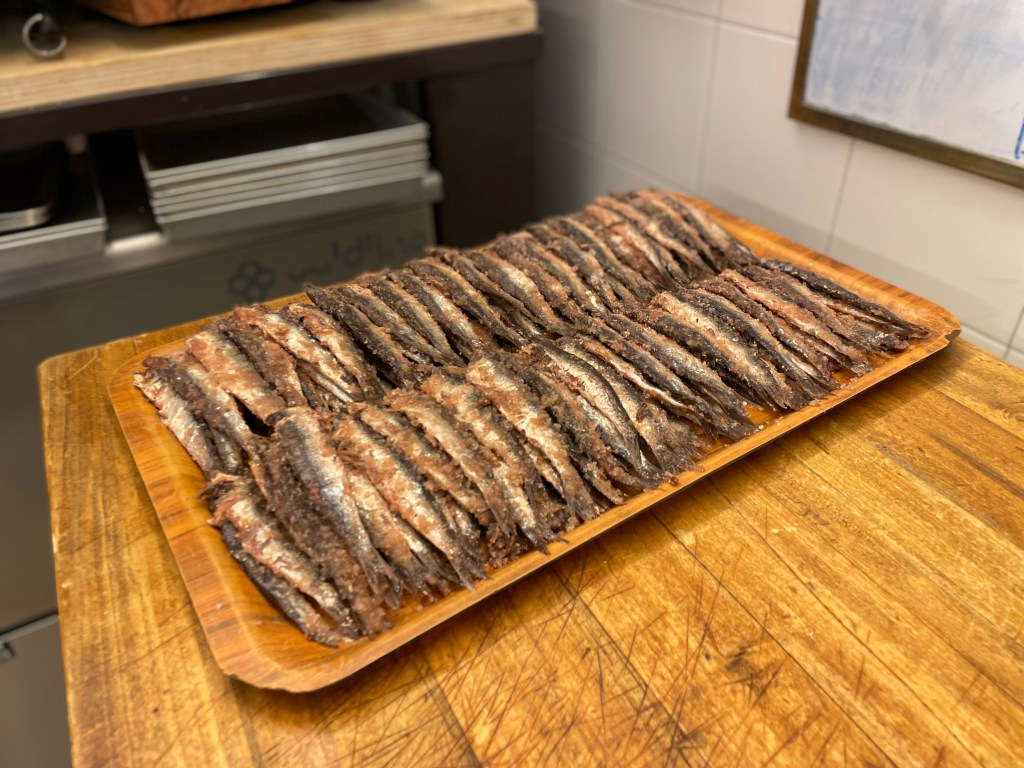
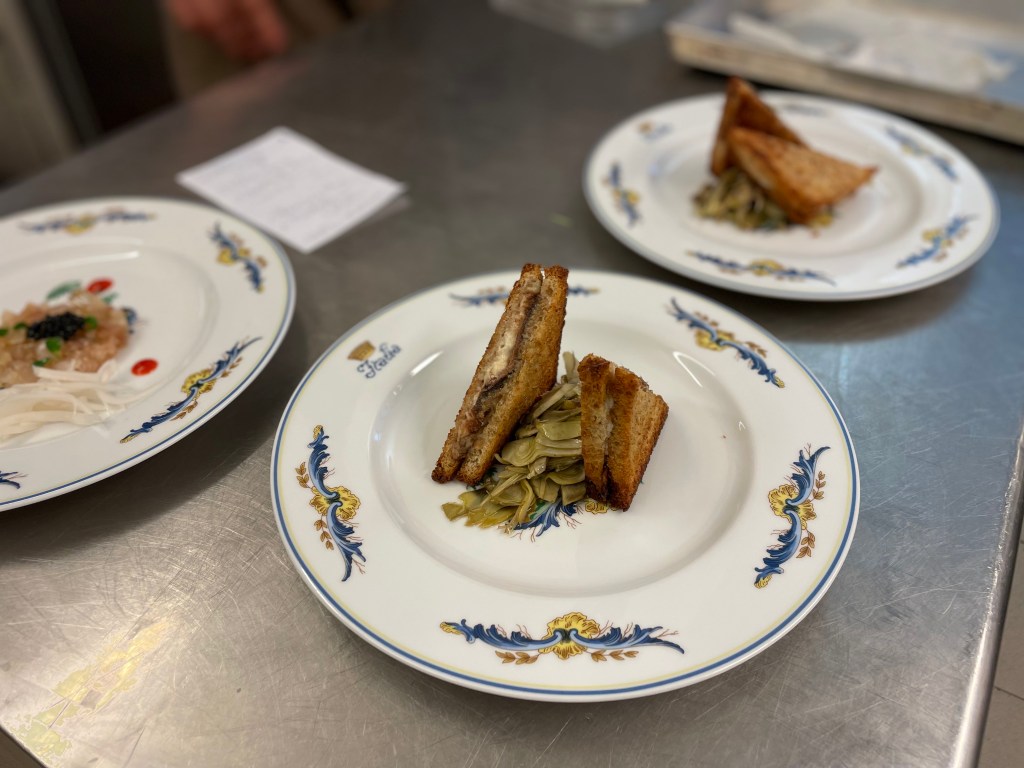
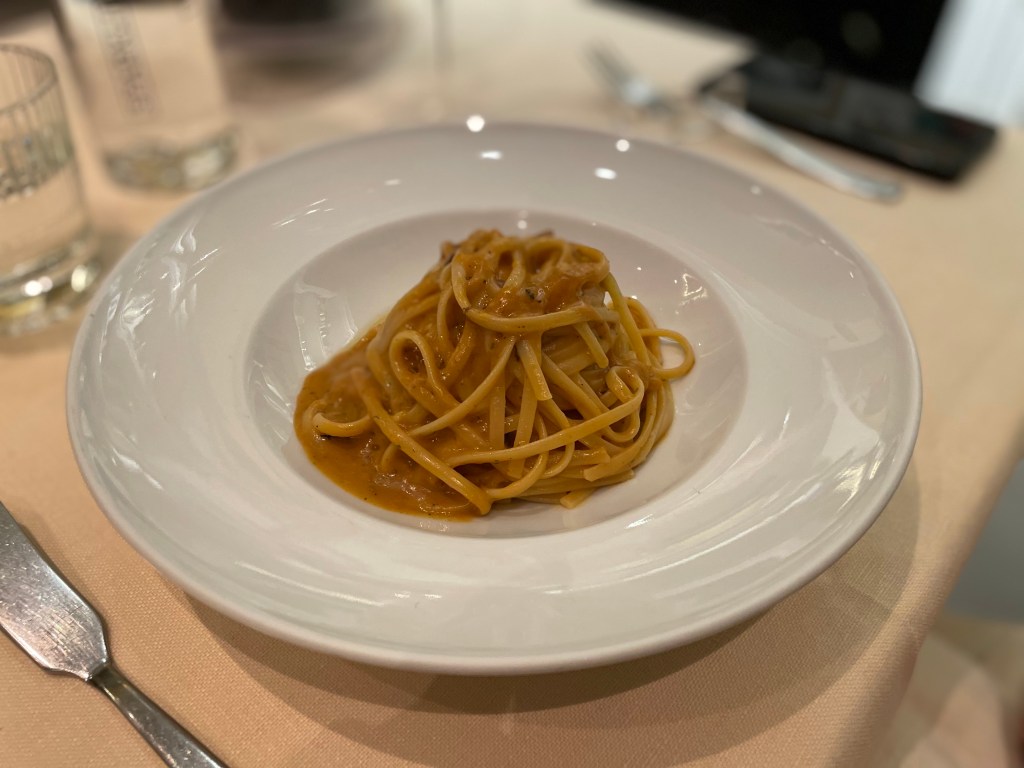
Tommaso constantly changes and adjusts the menu of Calino. He has a thick, red folder full of hand-written recipes that he has developed over the past years. I particularly love the Sandwich with San Filippo anchovies and Stracchino cheese, placed on fried artichokes. Another favourite of mine are the Linguine with Anchovies, which are wonderfully rich, creamy and salty. The pasta is cooked in brodo di pesce, and the sauce is slowly thickened in a Risottare technique, creating its smooth consistency. The quality of products—here the San Filippo anchovies—make these plates so special.
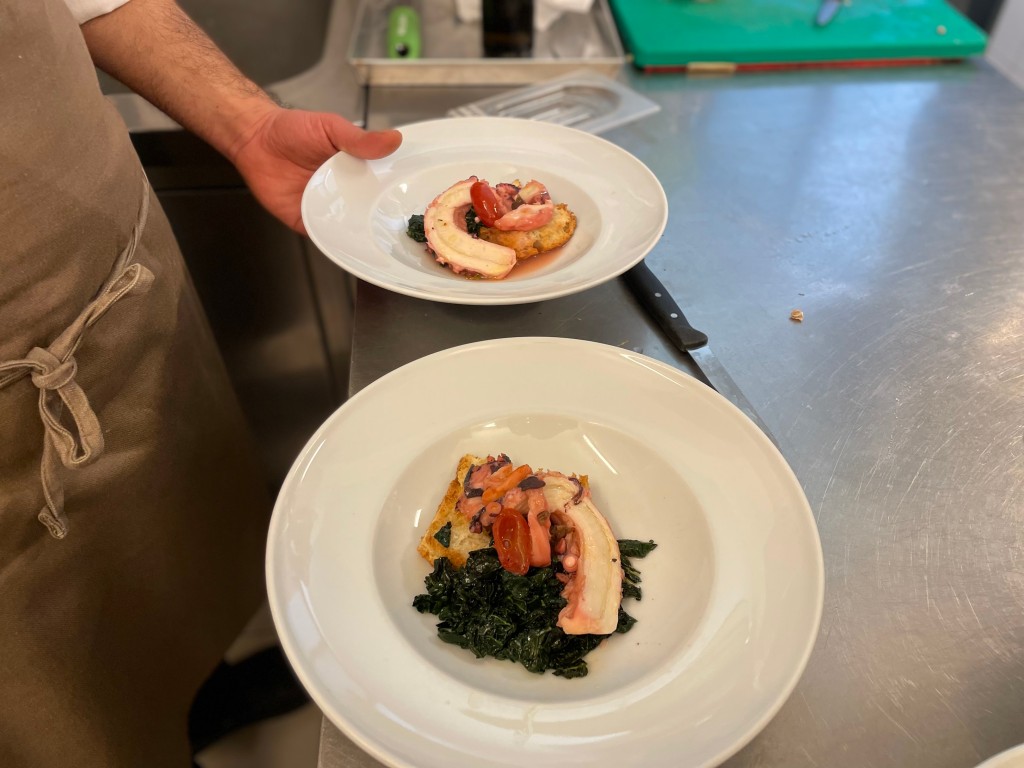
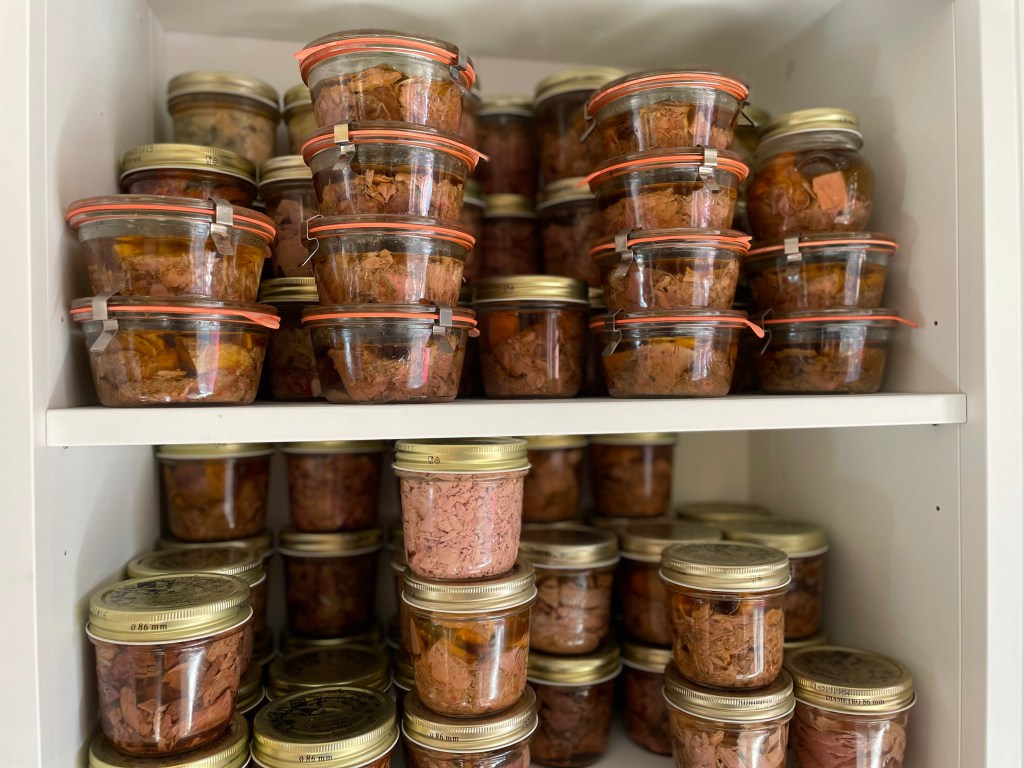
At Calino, I learned the importance of selecting high-quality products, paying careful attention to their proper preparation, and exploring new combinations with openness and curiosity. One project of creativity are the different kinds of mason jars that Tommaso, Alessandro, and Daniele began to prepare during the Covid lockdowns. The jars’ fillings vary from tuna in oil and octopus to tomato- and seafood-based sauces. While they can be purchased at Calino and heated up at home, they are also integrated into the main menu. Take a look at the beautiful octopus arm bedded on mangold and Focaccia!
One afternoon, Gabriele Cini, a well-known Florentine pastry chef, came to explain to us recipes from his book “Pasticceria con Grani Antichi”. Cini also teaches at the Cordon Bleu School and is particularly knowledgeable about the use of ancient grains, as the title of his book suggests. I was impressed by the opportunity to receive further training at the restaurant. I was also surprised to learn that Grissini are not rolled into shape but pulled apart! In addition to our homemade Focaccia—a delicious and great exception to blunt Tuscan bred—we now also offer Panini and Grissini at Calino. For a while, we combined the Panini with a home-made spicy mayonnaise and Calino’s tonno sott’olio (tuna in oil)—an enticing combination. This proactive learning, practising, and combining of new preparations make Calino’s cuisine so special.

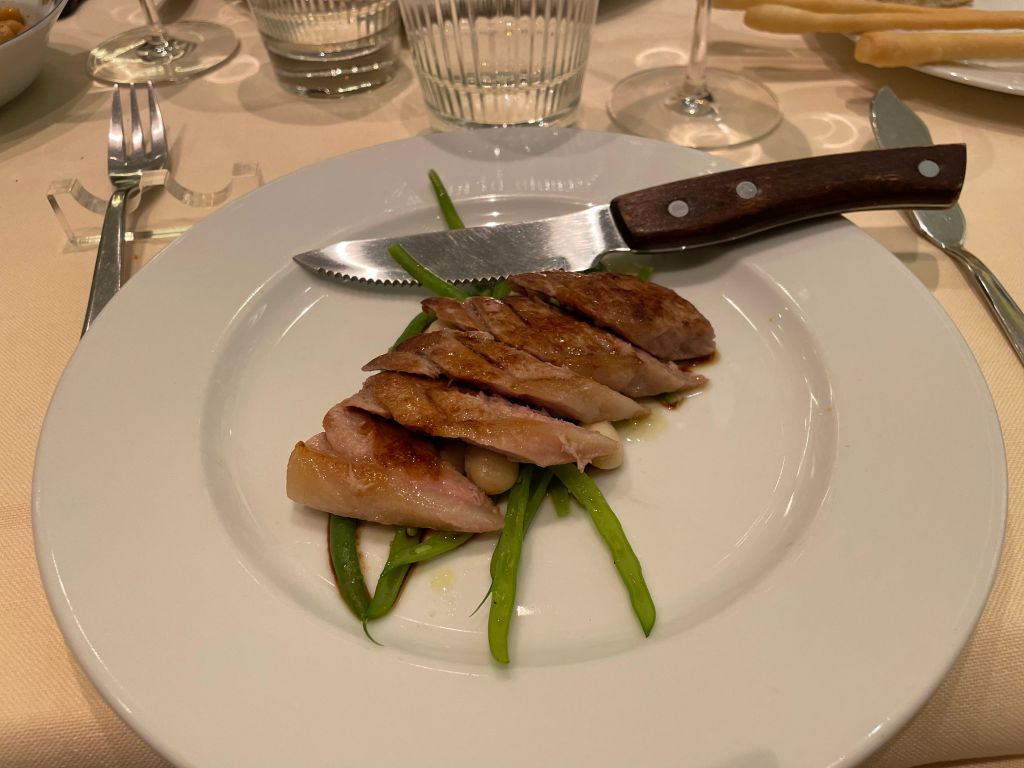
After nine weeks, my internship at Calino has come to an end. I learned how to clean different kinds of fish and seafood, how to prepare a wide range of vegetables, how to combine ingredients creatively, and how to plate the final dish with minimal and clean beauty.
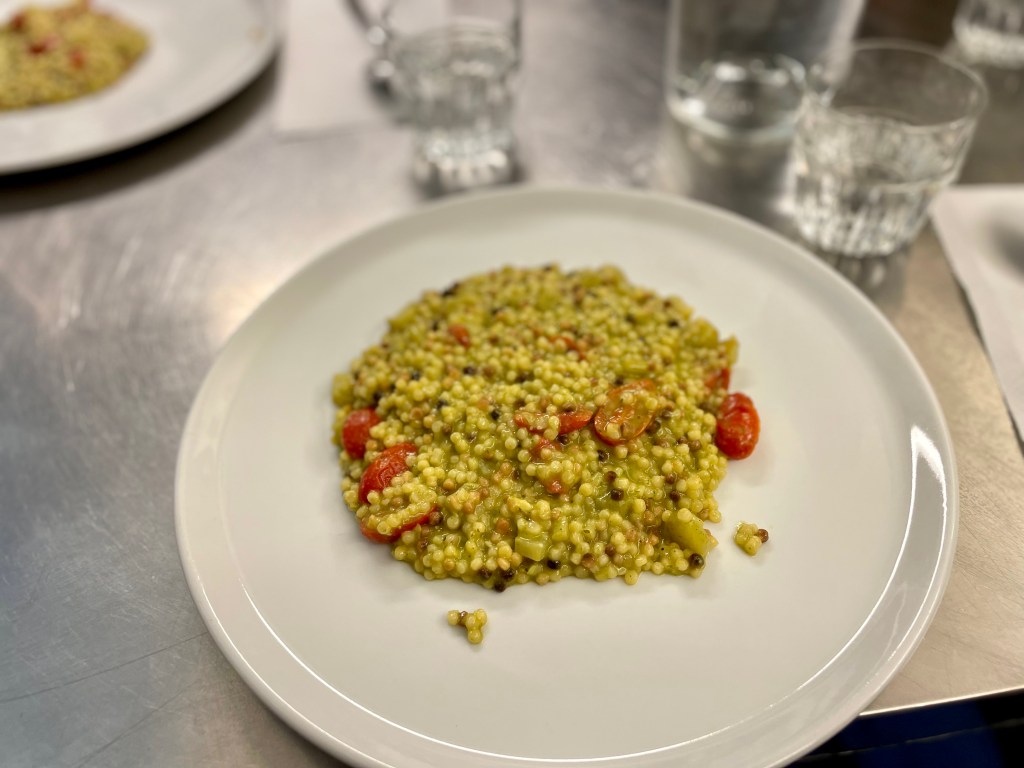
I am grateful for how patient and welcoming my colleagues were, despite my broken Italian and little knowledge of how to cook and work in a professional kitchen. I am lucky that Tommaso gave me the opportunity to learn at Calino and remain inspired by his infectious culinary enthusiasm and creativity. I will remember how Daniele paid close attention to giving me different tasks and teaching me new steps along the way. I will remember Alessio’s professionalism and introducing me to Fregola—a Sardinian pasta which he prepared with artichoke stems on one day. Delicious! I am grateful for Mamou’s motivation to communicate with me, and his caring attentiveness—preparing peach tea for all of us. The atmosphere between the team was friendly and empathetic. The tradition to sit down and eat lunch together made for many calm moments during the internship.
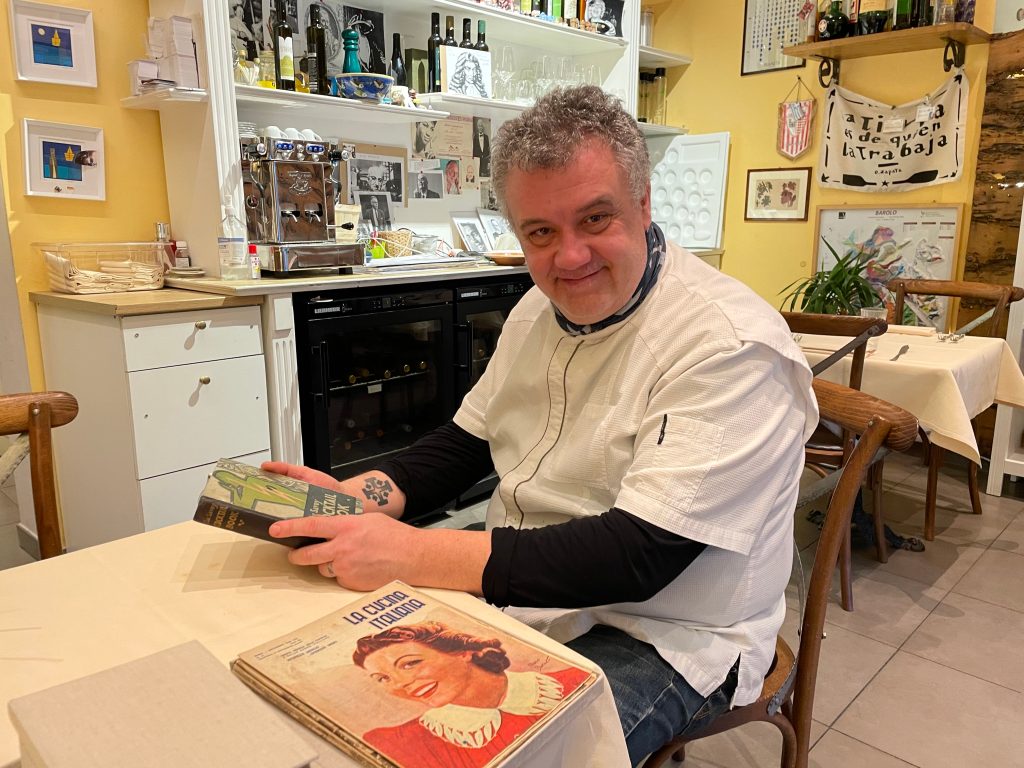
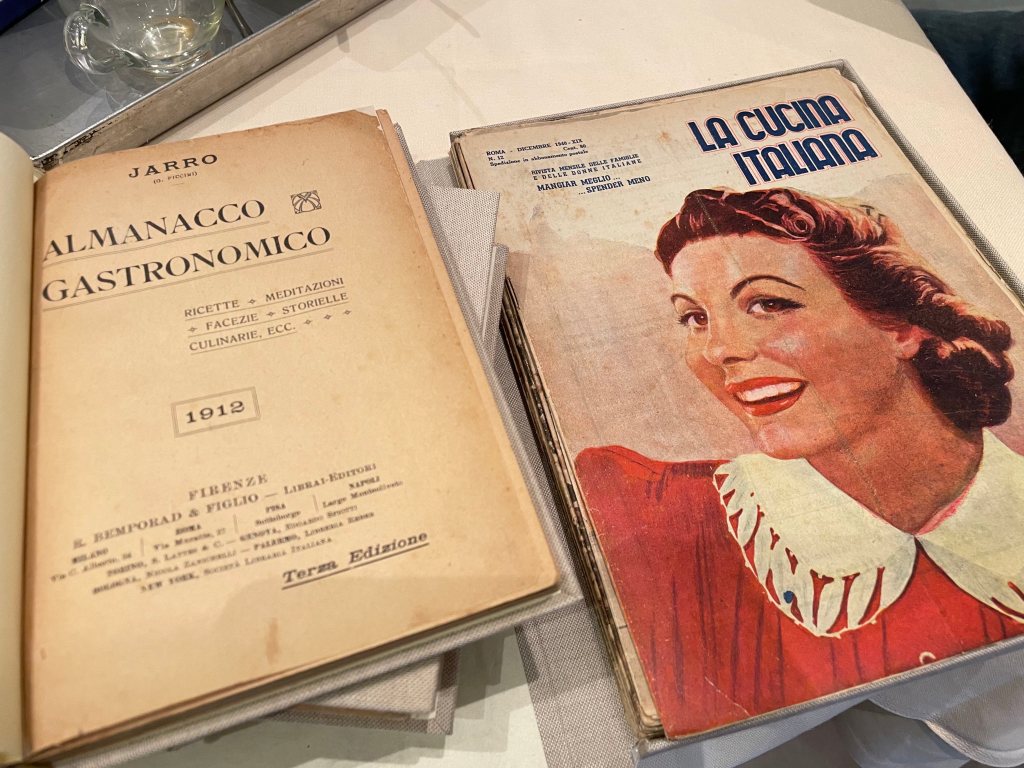
As a trained historian, used to calm libraries and year-long projects, I was often intimidated by the environment of a professional kitchen. Particularly the speed was so different compared to my work before. Sometimes you only have a few minutes or even seconds to prepare a dish. That is barely enough time to create one essay footnote. When you don’t always get a hundred percent of the Italian instruction, it can quickly feel overwhelming. Last week, however, Tommaso revealed his interest in historical cooking magazines and books. We sat down with a coffee, and he showed me publications from the 19th century and World War Two. For a precious and peaceful moment, it felt like the two parts of my year 2021 finally came together to make sense—studying history at Oxford and learning how to cook in Florence.

 lilly's menu