Dear Readers,
A blog is an inherently subjective medium, and often I am struck by the limitations of my perspective.
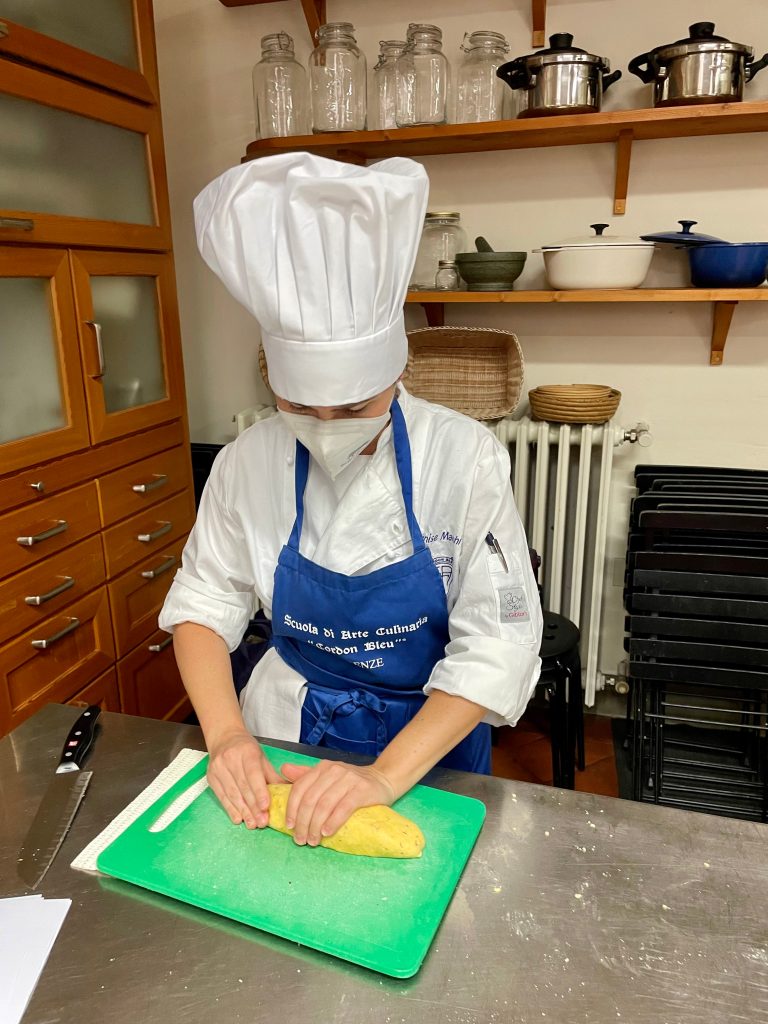
That is why this week, I asked two of my classmates at the Cordon Bleu Cooking School to share their thoughts on food and its preparation and their motivation to participate in our cooking class. Denise, a screenwriter and film producer, takes us on an appetising food tour through Brazil. She further explains how the current political climate in her home country pushed her to move to Italy. Leah is originally from Pennsylvania, United States. For the last years, she has lived in Berlin and organised travel tours across Germany and events of all sizes. In her responses, she reflects on her love for Sicilian cuisine and how she pictures incorporating her new culinary knowledge into her future profession.
Enjoy!
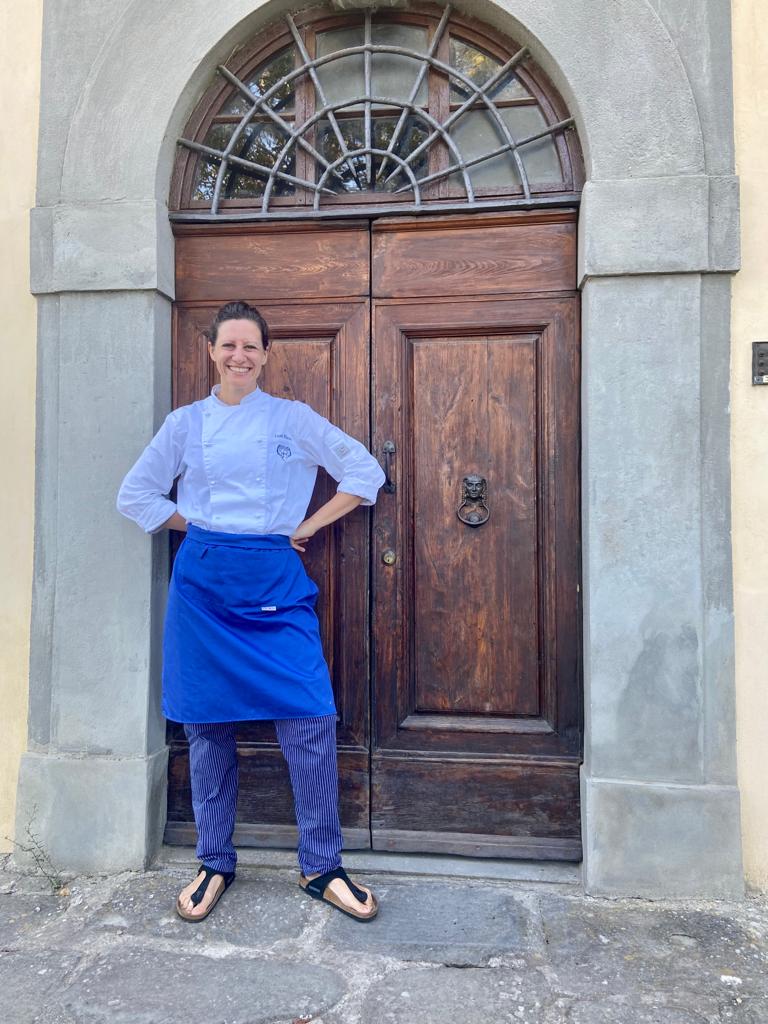
leah, 37, united states
I feel like I have just opened a door and put one little toe through – there is an entire world on the other side yet to explore!
Where are you from & what’s the cuisine in your country like?
I am from the US. As such a big country with so many people of different backgrounds and different histories, that means a massive variety of ‘traditional’ food.
Personally, I am from Pennsylvania, north of Philadelphia. It is a farming area with a large Mennonite and Pennsylvania Dutch population (in this case ‘Dutch’ actually means ‘German’: ‘Deutsch’ became ‘Dutch’), and so there are many foods with a historically German background that have taken the shape of the area over time. It is also between Philadelphia and New York, so there are influences from populations who settled in these two cities as well. Half of my family is Italian American, so I personally grew up with lot of Italian food. For example, I have memories of making cannoli with my great Grandmother as a child – and complaining with my brothers that Italian cookies were not sweet enough!
What dish to you feels like home?
It’s not exactly a ‘dish,’ but the first thing that comes to mind is an everything bagel with cream cheese! There is nothing like it and it only tastes right on the East Coast.
A small pet peeve of an American living in Europe: I see more and more bagel shops opening in Europe but no one does everything bagels. Get with it!
What was your profession before you joined the Cordon Bleu Cooking School?
I was working as a German to English translator. I have always loved writing and been interested in languages, so translation work was a natural step. Before that, I planned events and group travel throughout Germany – it was fun but also exhausting!
Why did you choose to attend the “Course for Cordon Bleu Cook” (& other classes at the school)?
Food has always been a point of focus. I come from a line of cooks – none professional but all damn good! – and it has always been the center of our family and community life. I absolutely love cooking and in recent years began spending more and more time doing it.
As I was spending most of my free time thinking about food, researching, planning meals, or cooking, I began to think seriously about training as a chef over the past year. Once I decided I wanted to go for it, Cordon Bleu Cooking School in Florence stood out to me for several reasons: four months is a very doable amount of time, it includes hands-on experience in the form of an internship, and Italian cuisine is close to my heart!
What are you most keen to learn about?
Everything! I feel like I have just opened a door and put one little toe through – there is an entire world on the other side yet to explore!
I have always had an interest in health and nutrition and the ways in which food connects us to our environment and the ecosystems we are a part of. I am interested in gaining skills in the kitchen as well as deepening my knowledge in that regard.
What are your thoughts on Tuscan cuisine?
Tuscan cuisine is delicious though at times a little meat-heavy for me! I absolutely love their gorgeous fruit, veggies, and legumes and am having a blast learning to cook in an area with such a rich culinary tradition. One thing that really stands out for me is the Tuscan connection to their land and what grows from it. I feel it in so many interactions – in our school, in the market, in small shops, speaking with friends and neighbours. I find it so beautiful and inspiring.
What other regions in Italy interest you in regard to their culinary culture?
I still have a lot of Italy to see, but I really feel most connected to and interested in Sicilian cuisine. The mix of influences and cultures that have shaped their culinary traditions is fascinating and, personally, closest to my cooking style. There are several Sicilian dishes that blew me away the first time I ate them. I can still remember them vividly. Caponata for example: the mix of sweet and sour, the exotic raisins and pine nuts – I simply hadn’t tasted anything like it before. Pasta alla Norma, a classic for a reason! It is made of very basic ingredients but has such a depth of flavor. Even in ‘simple’ sweets like granita alle mandorle (fun fact: granita is known as ‘water ice’ where I am from!), it feels like you can taste the sunshine.
Imagine you’re on the Mercato di Sant’Ambrogio – what products do you find most exciting?
Just thinking about the market makes me smile: the heaps of brightly coloured fruit and vegetables, big sacks of beautiful beans and lentils – oh and the pasta, the fresh pasta! It all looks so beautiful!
What are your plans after the course? What does the future hold for you?
I began this course with an interest in starting a catering & retreat business: I am interested in cooking for retreats and catering small events and have a few small projects in the works for next year. I could also see myself opening a small café & wine bar with beautiful snacks and homemade treats…we will see where I end up! Right now, I am very excited to start the internship, gain some practical experience in a professional kitchen, and see where that takes me.
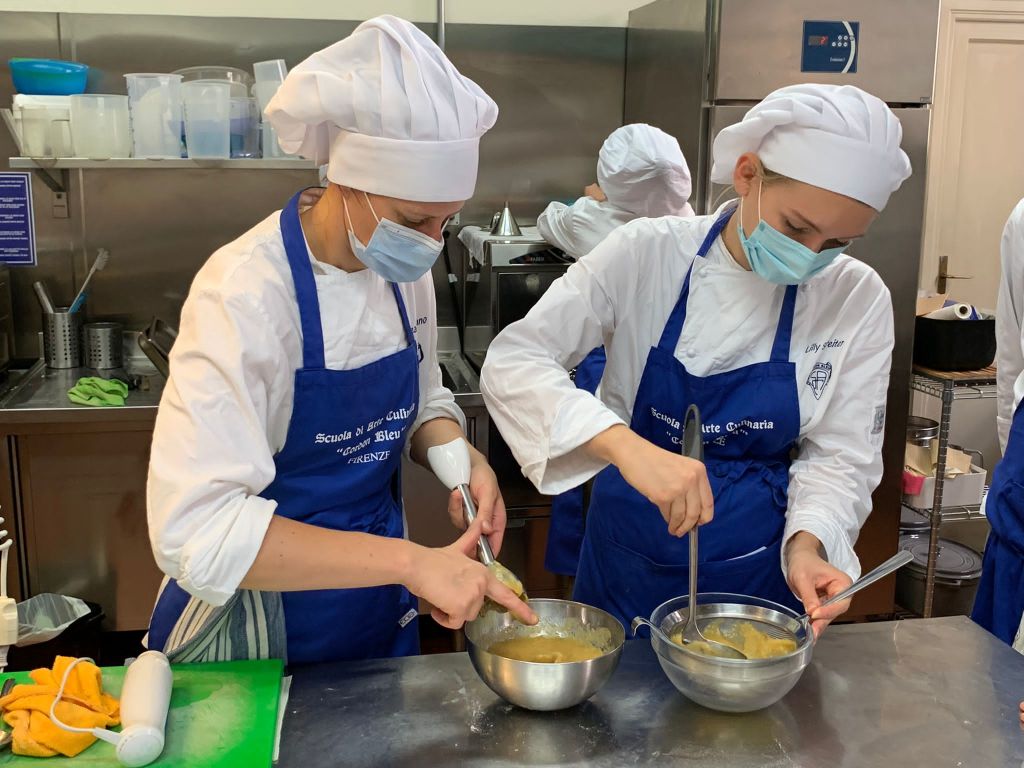
denise, 35, brazil
I guess what reminds me of home is the possibility of mixing flavours and experimenting with them. Of course I will not refuse a beautiful pão de queijo and a steamy Moqueca or Bobó de Camarão […].
Where are you from & what’s the cuisine in your country like? What dish to you feels like home? I am from Brazil, which is a very big country, so the cuisine is very diverse, each region has a more significant dish and its own flavour profile.
I have lived in quite a few places in Brazil, and have tasted things from different regions. I was born in São Paulo and cannot really talk about specific plates from that region because it is a cosmopolitan city and you can find food from all over the world. Immigrants came to Brazil during the First and Second World Wars, specially from Italy, Germany, Portugal and Japan, and so, in São Paulo, you find all these descendants from expats from many other countries and their culture is alive there. There are Japanese and Italian neighbourhoods, where you find food from their culture. But right next to São Paulo is another state called Minas Gerais, that’s where my father’s family is from and this state is surrounded by mountains (maybe cliffs? I don’t know what to call it exactly) and there you can find some real treats. Being a state with strong agriculture and cattle raising, coffee, cheese and sweets made with milk from that specific region are considered one of the best in the world (ok, maybe they are pushing a bit with the cheese). So, Pão de queijo which translates to “Cheese bread”, but the best English name would be “Cheese ball” is a cheesy dough that gets cooked in the oven and becomes very mushy and delicious. That with a cup of home-made coffee is heaven.
And then we have flavours from the North-east of Brazil. States from that region received a lot of slaves during the slave era, so there we have a huge African influence that is easily spotted in the flavour profile, with things like hot peppers, coriander, cumin and Dendê oil (which is an oil from an African palm tree abundant in this region of Brazil), and within the dishes themselves. Moqueca is a fish stew, cooked with Dendê oil, peppers, and lots of coriander. Acarajé is a fried dough made from white beans that are supposed to be really cheap and also dried shrimp, the shrimp that was not eaten fresh and then was seasoned and left to dry with its shell. And also, since the North-east region is by the sea, it is easy to find shellfish cooked in different ways, specially Lambreta (like a vongole) and crabs from the mangrove, both cooked in hot water with only onions and coriander. Delicious.
To finish this trip around Brazil, I also lived in the South region, actually in the southernmost state of the country, right next to Uruguay and Argentina. That region is famous for its meat. Churrasco is a famous barbecue style experience. We cannot call it a dish, because it is about meat cooked in a stick over hot coal, accompanied by different sides like rice, potato salad and lettuce. The main character is the meat and you can have all kinds of meat in different sticks (even chicken hearts – they are obligatory in our churrasco) and stay in a place eating for the whole day. That’s why it’s not only a dish, it is more like an experience.
Beside all that, I also grew up with my father who is from Italian descendance. Cooking pasta with different sauces – al sugo, alla matricciana and coniglio alla cacciatora – were a staple at home. Also my mother’s side cooking German dishes at family meetings. It is hard to choose only one thing as a dish that feels like home. I guess what reminds me of home is the possibility of mixing flavours and experimenting with them. Of course I will not refuse a beautiful pão de queijo and a steamy Moqueca or Bobó de Camarão whenever I see them, but still, I would never say only one of them. Oh, see, I wrote a lot about Brazilian food and haven’t even mentioned Feijoada. 🙂
What was your profession before you joined the Cordon Bleu Cooking School?
I work with cinema in Brazil, as a screenwriter and as a producer and sometimes as a director.
Why did you choose to attend the “Course for Cordon Bleu Cook” (& other classes at the school)?
I was a little disappointed with work even before the covid pandemic, but after that, our industry got hit even harder because our current president hates anything to do with art or education for all it matters, so making movies there became a little harder. I thought it was time to try something else, maybe learn a bit, open my mind to different possibilities and cooking has always been in my life, so I decided this was the moment to do it.
What are you most keen to learn about?
Oh, that’s a tough one. I guess I wanted to learn a little bit more about techniques and I don’t think that this was the course for that, but I am really happy about getting to understand the local flavours and learning about the history of Italian dishes and how they use some ingredients and spices in ways that are sometimes very different from the way I am used to.
What are your thoughts on Tuscan cuisine?
Well, I guess I never really thought about it. Of course I had an idea that Italian food is not the same in all the regions, just like Brazil, but I was definitely not able to differentiate between a dish from Lazio and one from Tuscany, for example. I guess now I am a little bit more aware, but I still have a lot to learn (and taste)!
What other regions in Italy interest you in regard to their culinary culture?
I am really excited about going south at some point, because they are so different from the Italy “we know” and the idea of being in a place that eats lots of fish and shellfish is always fascinating for me. And also I would like to go really north after the course to try to look at it – and its dishes – with new eyes to understand more about these differences we’ve been talking about.
Imagine you’re on the Mercato di Sant’Ambrogio – what products do you find most exciting?
Finocchio, carciofo, asparagi, pomodori, funghi and cheese. ❤
What are your plans after the course? What does the future hold for you?
Oh, come on! This one is impossible to answer!
I guess I would like to stay in Italy for a while, maybe not in Florence or Tuscany, but travel a bit and taste a little bit more from all of Italy and, meanwhile, think about doing something that can bring together my knowledge on cinema and culinary. Don’t know how yet, but I am trying to figure it out.
seasonal sweets
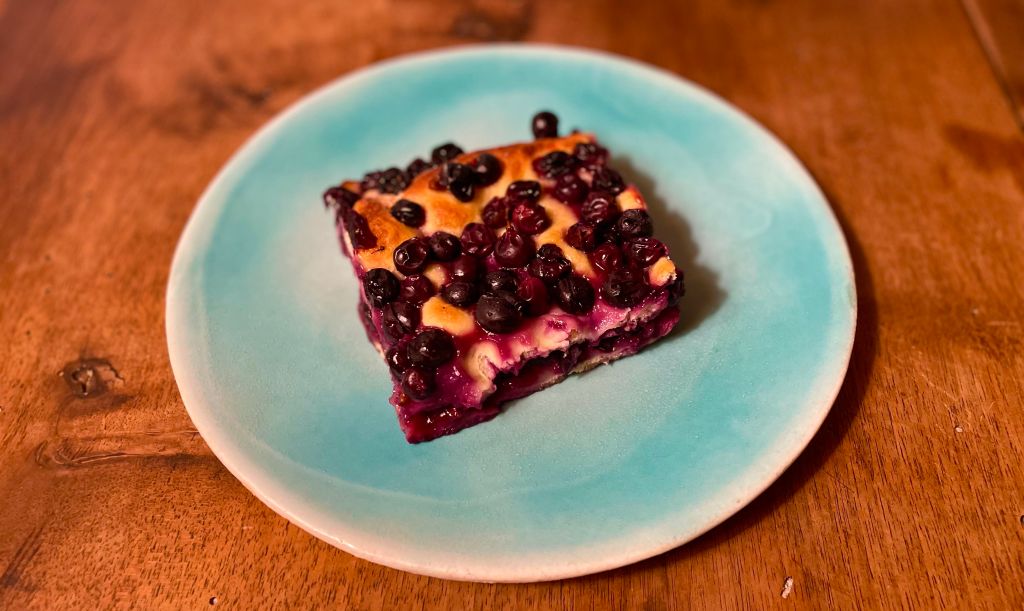
Before October comes to an end, I have to introduce you to a Tuscan seasonal treat called schiacciata con l’uva. The focaccia-like flat cake is sweetened with red grapes, typically canaiolo grapes. It is only sold during September and October, when the fruits are harvested. The grapes retain their seeds which give the schiacciata an intriguing crunchy consistency and an excellent play of bitter and sweet notes. Beware! If you order a schiacciata and forget to say “con l’uva”, you’ll get a salty bread, similar to ‘normal’ focaccia. It’s also delicious but quite different to the seasonal sweet schiacciata.
To buy schiacciata con l’uva, I can recommend Panificio Chicco di Grano, at Mercato di Sant’Ambrogio.
See you next week! Alla prossima!
Lilly

 lilly's menu