let’s get cooking!
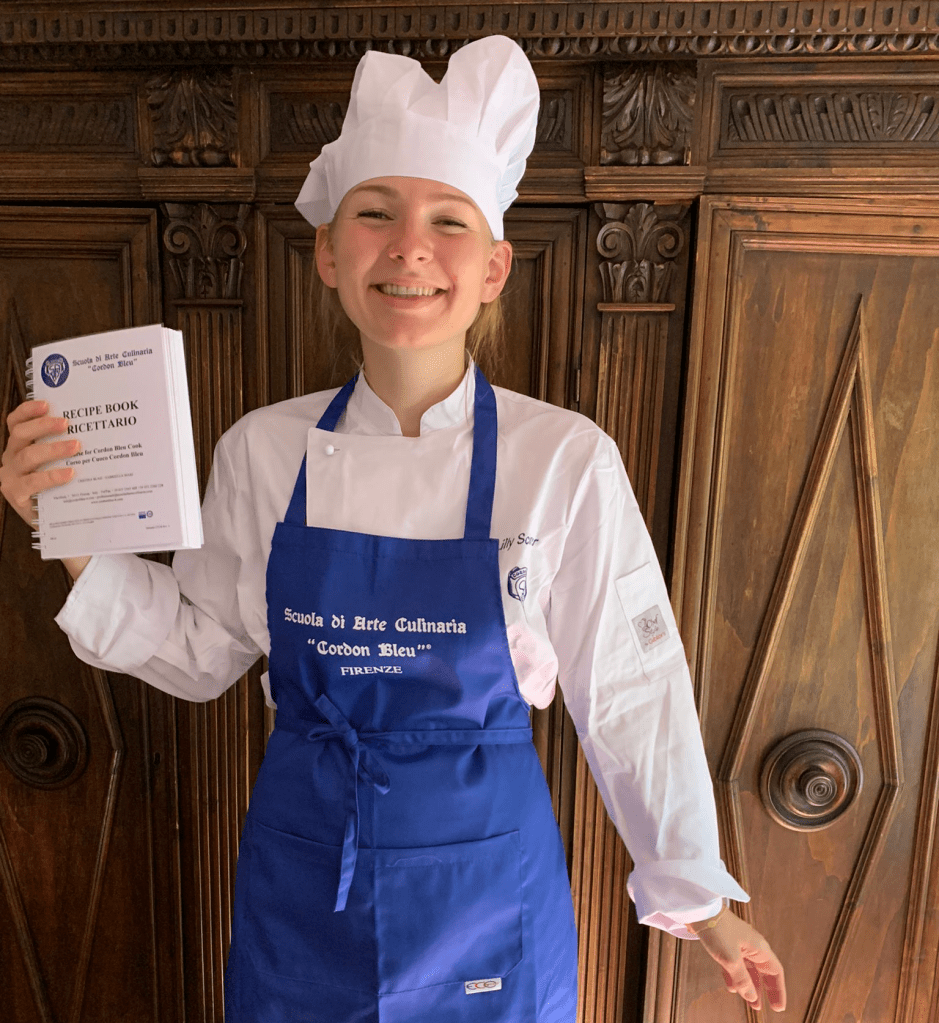
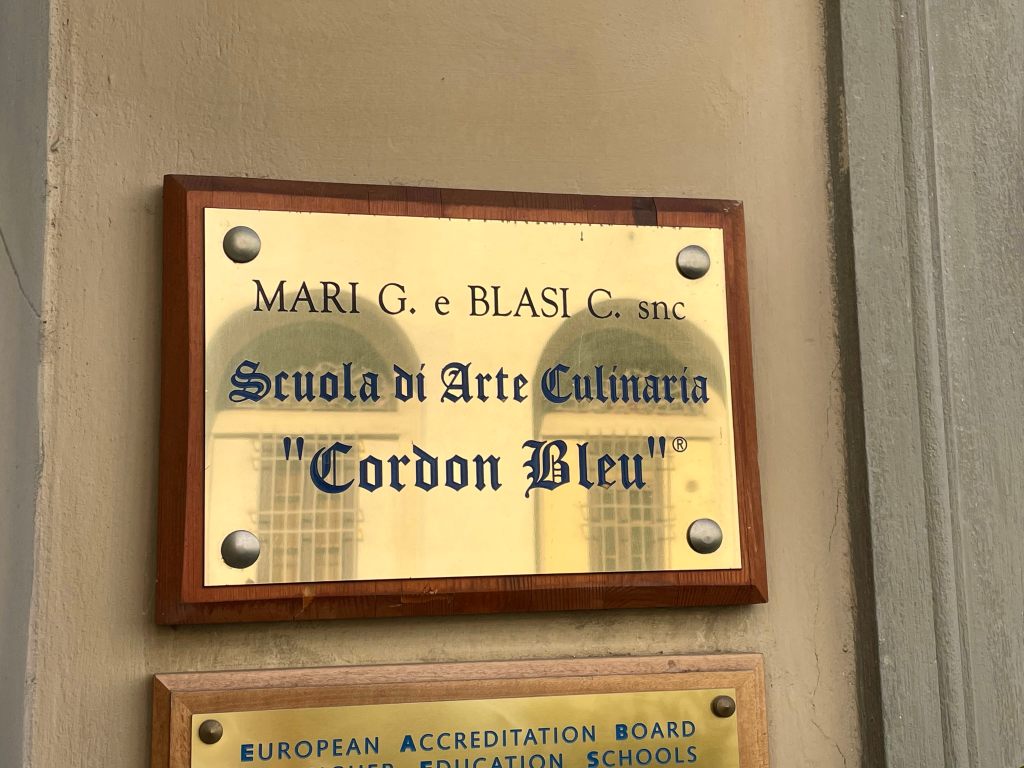
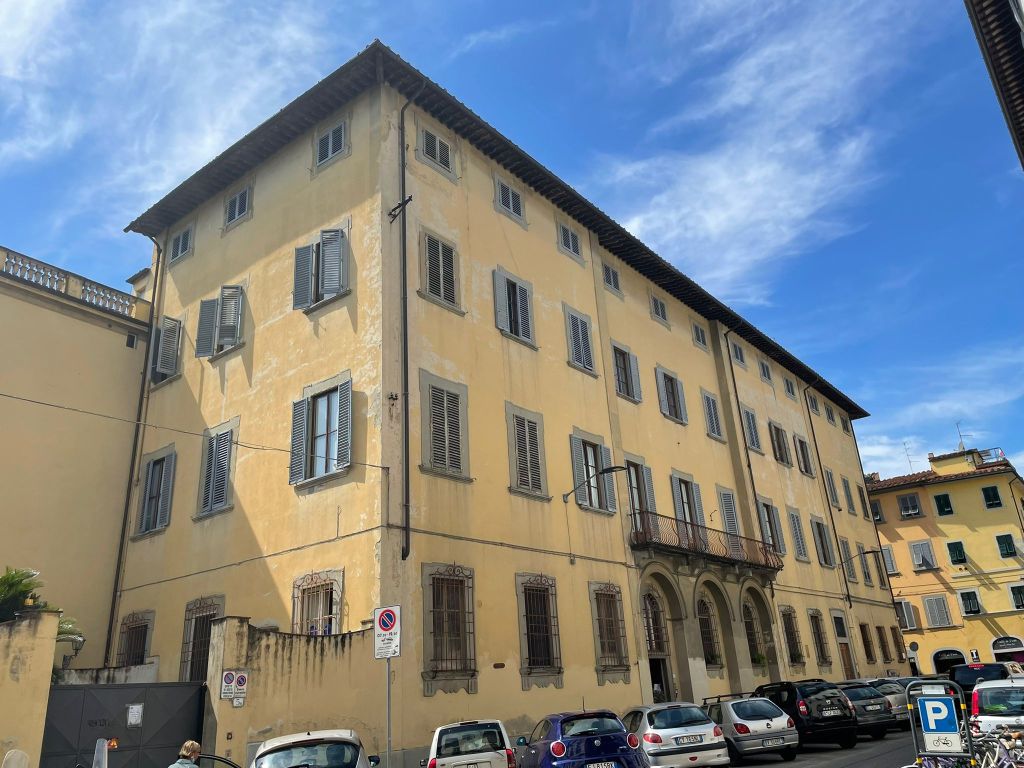
On Wednesday, my professional cooking course at the Scuola die Arte Culinaria “Cordon Bleu” commenced. The school is based in a 16th-century building, the Palazzo Panciatichi Ximenes, in the calm Via Giusti in Florence. Founded in 1985 by Gabriella Mari and Christina Blasi, the school offers a range of cooking classes, including academic and amateur programmes.
I chose to attend the “Course for Cordon Bleu Cook“, a basic professional cookery programme, covering everything from ingredient selection and cooking techniques to menu interpretation and preparation. For five weeks we have daily classes from 8.30 to 13.30. Then, an internship in a restaurant kitchen will follow.
The school’s atmosphere was welcoming. Upon arrival, the students introduced themselves and were encouraged to explain in-depth their motivation for participating. Some do a sabbatical. Others plan to reorientate professionally and enter the food & gastronomy industries. We received a fashionable outfit, consisting of a jacket, an apron and a chef hat. Wearing the hat, I feel like a cauliflower. A professionally cooking cauliflower. We’re given the school’s ricettario, the recipe book, which is filled to the brim with instructions, cooking techniques, and ingredient analyses. Theory comes alive through the knowledge and experience that the teachers share in the form of entertaining anecdotes.
The cooking class runs in two groups, one English-speaking, one Italian. Initially, I had planned to follow the course in English, feeling that my high-school knowledge of Italian is deeply buried in what seemed inaccessible parts of my brain. However, the longer I listened to the Italian-speaking students, the more I grew surprised that I did recognise some grammar and vocabulary. To take up the challenge and immerse myself in the full cultural experience, I switched to the Italian-speaking group. Now, I only understand about 70 % of what’s happening. But I have a secret weapon. I found a most delightful German-Italian dictionary from 1991 by Cédric Dumont for food vocabulary. It is called “Sprachführer für Gourmets” (dictionary for gourmets), published by Hallwag, and will undoubtedly be my best companion for the next months.
this week’s topics
- learning about the kitchen brigade system
- learning how to prepare and organise your workspace efficiently – the mise en place
- Tuscan and Italian ingredients
- ingredient storage
- kitchen utensils (in a professional kitchen)
- cooking techniques
- visiting Florence’s Mercato di Sant’Ambrogio
- preparing pesto genovese & sardine in olio
mercato di sant’ambrogio
On Friday, we visited the Mercato di Sant’Ambrogio, the oldest standing market hall in Florence. It dates back to 1873 and was designed by the architect Giuseppe Mengoni. Mengoni, originally trained in Bologna, played a significant role in integrating market halls in Florence’s urban structure in the 1870s. The city profited from being the capital of the young Italian nation-state (1865-1871) and underwent major architectural refurbishments. In addition to Sant’Ambrogio, Mengoni planned the Mercato di San Frediano and the Mercato di San Lorenzo, the latter known as the famous Mercato Centrale. These building initiatives were inspired by Parisian market halls, appearing after the city’s Haussmannian reinterpretation in the 1860s and built with fashionable cast iron from Belgium. If you are interested in the history of Mercato di Sant’Ambrogio, I recommend the article “Giuseppe Mengoni e Firenze Capitale: il sistema dei nuovi mercati alimentari” by historian Rita Panattoni.
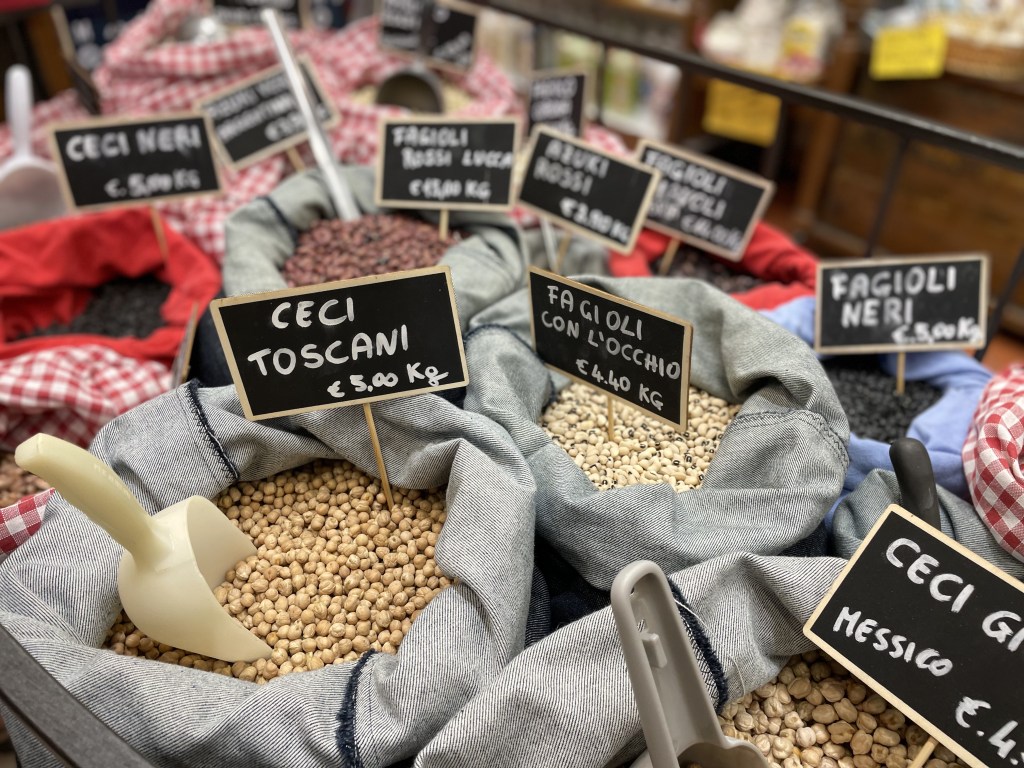
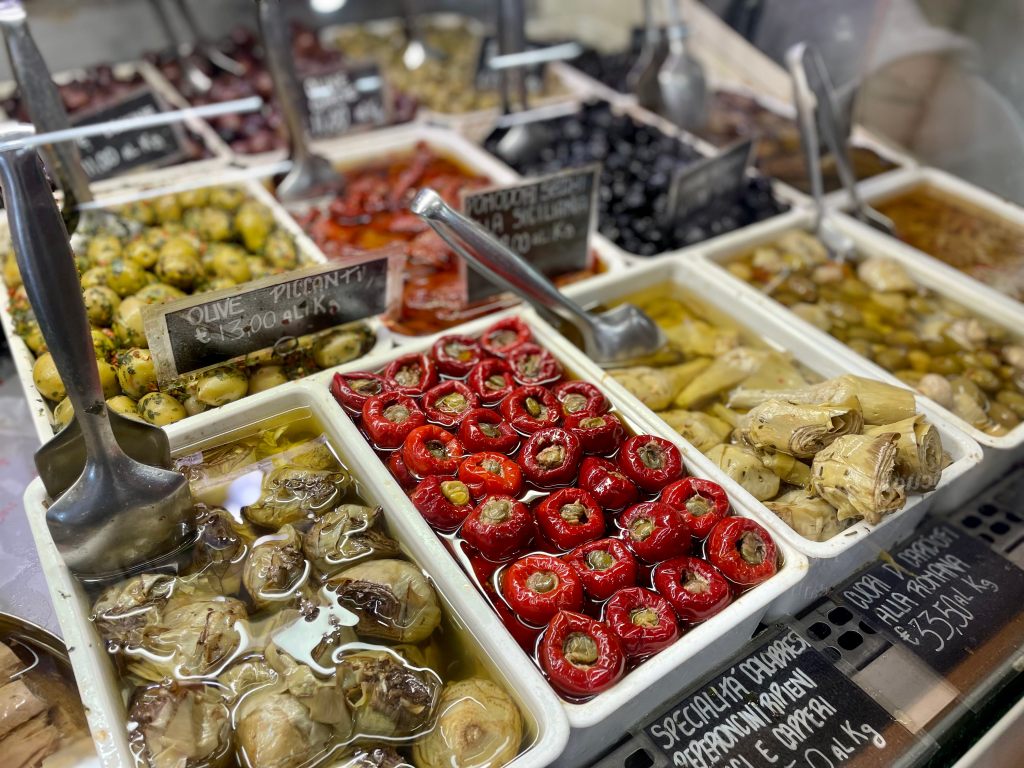
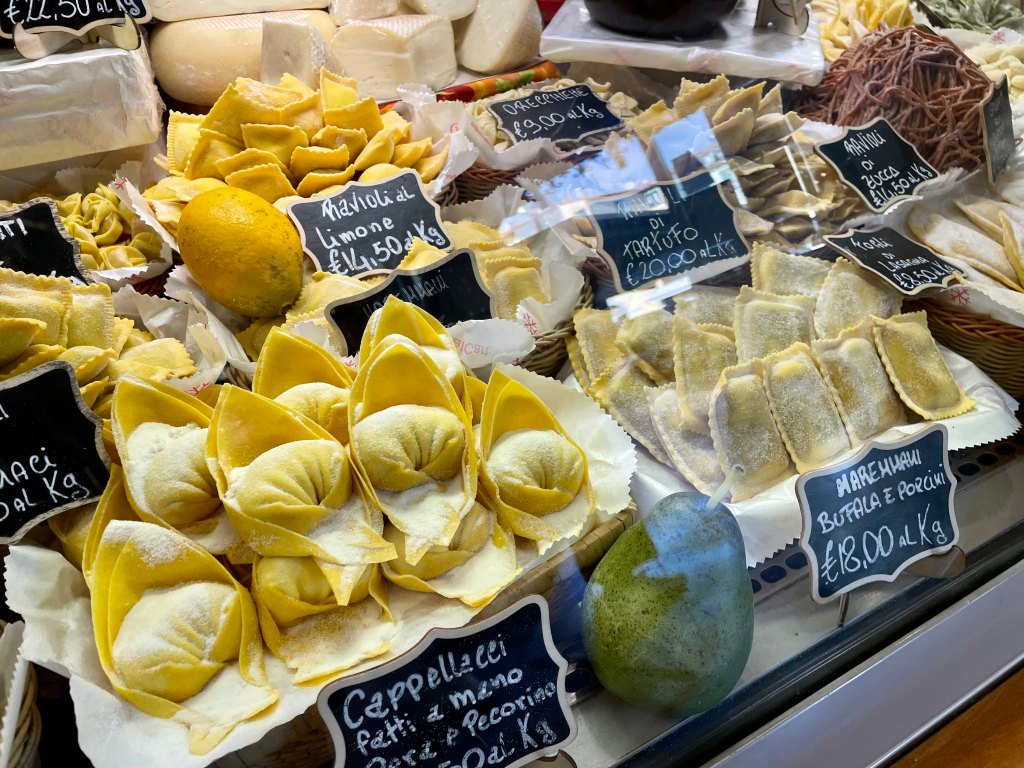
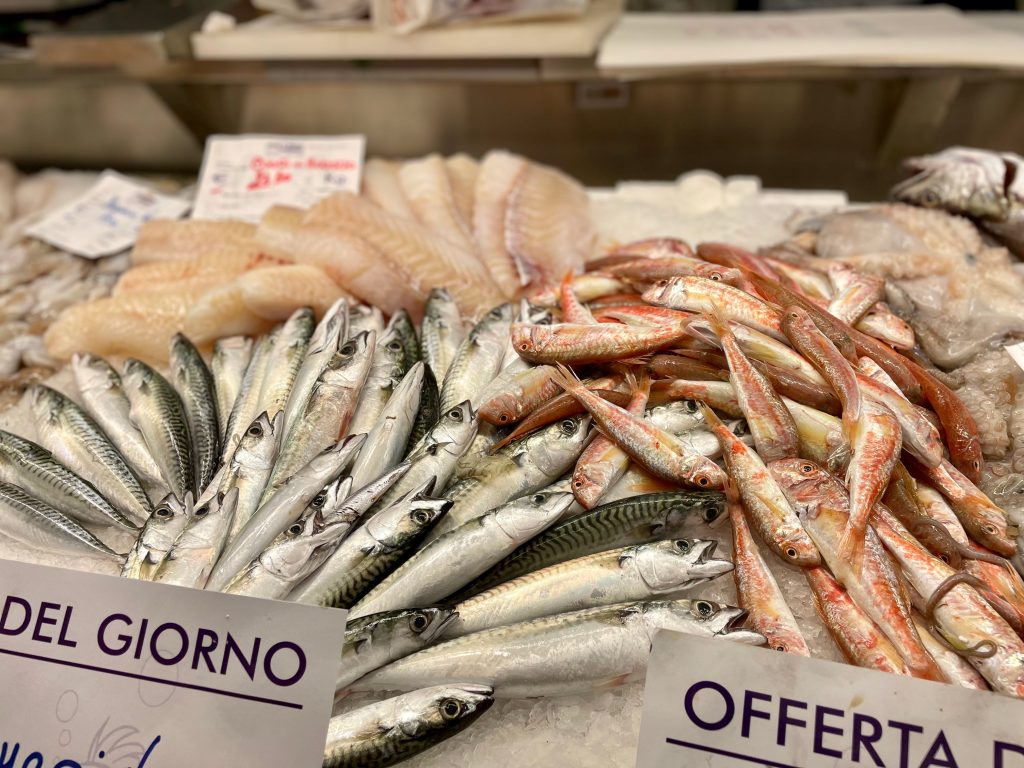
For my part, I was struck by the richness of colours, flavours, and textures I witnessed at the market. Bright red tomatoes and yellow courgette flowers guided me to the main entrance, where I was welcomed by wonderfully soft and plump pasta, such as cappellacci and gnocchi di patate. It was tempting not to push my hand into the little bags of Tuscan chickpeas, called ceci, or beans, fagioli. The fish looked crisp and fresh, and there was a ricotta al forno I simply cannot get out of my mind.
The Mercato di Sant’Ambrogio is open from Monday to Saturday, from 7 am to 2 pm, and I am already planning my return. Do take a moment to look at the pictures below, and indulge in the market’s mouth-watering products!

Next week, I will learn about ingredient organisation and preparing stocks, sauces, antipasti & primi piatti. I am thrilled to share this delicious journey with you and would be delighted to see you again on this blog. You can also join me on Instagram for more appetising food impressions.
Ci vediamo la prossima settimana,
Lilly

 lilly's menu